

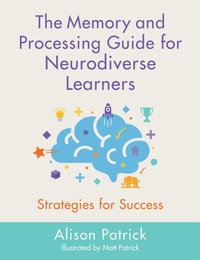
The Memory and Processing Guide for Neurodiverse Learners
Strategies for Success
Published on 18. June 2020
288 pages
978-1-78775-073-9 (ISBN)
Description

Armed with the wealth of understanding and strategies in this guide, students will discover how they can learn best, to make studying and revision more effective (and less stressful).
Packed with simple, tried and tested strategies and workarounds, this study guide for supporting kids and teens who learn differently (such as those with ADHD, dyslexia, dyspraxia or ASD) explains what memory and processing issues are, and how to work around them. Written by a tutor and specialist with years of experience of working with students with learning differences, this book enables the student to understand the best ways they learn and the reasons behind this.
Unpacking processing speed, sensory processing, metacognition, and executive functioning, including working memory, this uniquely relatable and empowering study guide will provide students with the self-understanding they need to manage exams and academic tasks at school with confidence and peace of mind.
Packed with simple, tried and tested strategies and workarounds, this study guide for supporting kids and teens who learn differently (such as those with ADHD, dyslexia, dyspraxia or ASD) explains what memory and processing issues are, and how to work around them. Written by a tutor and specialist with years of experience of working with students with learning differences, this book enables the student to understand the best ways they learn and the reasons behind this.
Unpacking processing speed, sensory processing, metacognition, and executive functioning, including working memory, this uniquely relatable and empowering study guide will provide students with the self-understanding they need to manage exams and academic tasks at school with confidence and peace of mind.
More details
Edition
Digital original
Language
English
Place of publication
London
United Kingdom
Target group
Professional and scholarly
Edition type
Digital original
Illustrations
10-12 black and white figures and illustrations
ISBN-13
978-1-78775-073-9 (9781787750739)
Copyright in bibliographic data and cover images is held by Nielsen Book Services Limited or by the publishers or by their respective licensors: all rights reserved.
Schweitzer Classification
Other editions
Additional editions
Book
06/2020
Jessica Kingsley Publishers
€26.50
Shipment within 15-20 days
Persons
Alison Patrick is a Specialist Teacher Assessor, working with dyslexia, dyspraxia/DCD, autistic spectrum conditions and ADHD. Alison has worked as a business information researcher and ICT teacher. As a result of her experience of working with dyslexic students, she trained as an SpLD teacher, specialising in teaching students with dyspraxia and ADHD.
Content
- Intro
- The Memory and Processing Guide for Neurodiverse Learners
- Cover
- By the same author
- Title Page
- Copyright
- Acknowledgements
- Contents
- Introduction
- Part One: Memory, Cognition and SpLDs
- 1. Memory, Processing and SpLDs
- Working memory
- Long-term memory
- Processing
- Memory, processing and individual SpLDs/SLDs
- Comorbidity of SpLDs/SLDs
- Memory and processing strategies: The secret weapon for SpLDs/SLDs
- 2. Cognition and SpLDs/SLDs
- Thinking and reasoning skills
- Problem-solving
- Metacognition
- Brain symmetry/handedness and SpLDs
- The impact of SpLDs/SLDs on performance
- Good days.bad days .
- Part Two: Visual and Auditory Brain
- 3. Visual Memory
- Visual episodic memory
- Visual working memory
- Visual memory strategies
- Key visual memory strategies
- 4. Visual Processing
- Reading and visual processing
- Types of visual processing
- Key strategies for visual processing
- Visual motor processing
- 5. Auditory Memory
- Auditory working memory
- Auditory memory strategies
- 6. Auditory Processing
- Underlying causes
- Auditory processing and SpLDs
- Types of auditory processing
- Key strategies for auditory processing
- Auditory training programmes
- Phonological processing
- Strategies for phonological processing
- Part Three: The Melting Pot: Mixed Memory and Processing Strategies
- 7. Mixed Memory Strategies
- Mixed classroom strategies
- Mixed learning styles
- Mixed memory strategies
- 8. Information Processing Strategies for Academic Literacy
- Academic reading comprehension
- Proofreading strategies
- The writing process
- 9. Strategies for Examinations
- Revision technique
- The exam room
- Part Four: Executive Function and Wellbeing
- 10. The Importance of Executive Function
- Central executive
- Executive function
- Executive function and SpLDs
- Strategies for executive function
- Achieving results
- 11. Wellbeing
- Emotional turbulence
- Attentional bias
- Stress, anxiety and worry
- Strategies for worry/anxiety
- Strategies for stress
- Sleep
- Strategies for sleep
- A final word
- Appendix 1. SpLD/SLD Labels
- Attention deficit hyperactivity disorder (ADHD)
- Auditory Processing Disorder (APD)
- Autistic spectrum condition/ASD
- DAMP (Deficits in Attention, Motor Control and Perception)
- Dysgraphia
- Dyscalculia
- Dyslexia
- Dyspraxia/DCD
- Visual Processing Disorder (VPD)
- Appendix 2. Psychometric Testing for SpLDs
- Assessment score interpretation
- Assessment score distribution
- Percentile scores
- Confidence intervals
- Resources
- Resource One
- Resource One : Revision Timetable
- Resource Two
- Resource Two: Key Memory Strategies
- Resource Three
- Resource Three: Revision Techniques
- Resource Four
- Resource Four: Foreign Language Revision
- Resource Five
- Resource Five: Organisation Checklist
- Resource Six
- Resource Six: Whiteboard Planning Template
- Resource Seven
- Resource Seven: Signal Words
- References
- Subject Index
- Author Index
