


Children in Difficulty
A guide to understanding and helping
3rd Edition
Published on 13. December 2011
Book
Hardback
296 pages
978-0-415-67255-9 (ISBN)
Description
Written by two leading experts in the field, this welcome third edition of Children in Difficulty: A guide to understanding and helping discusses some of the most common, yet incapacitating, difficulties that are frequently encountered by young children and adolescents.
This includes such topics as:
ADHD
disruptiveness and challenging behaviour in schools and classrooms
dyslexia and reading disability
eating disorders
oppositional defiance, conduct and attachment disorders
childhood depression
school refusal
developmental coordination disorder (dyspraxia)
less common mental health problems, such as bipolar disorder and obsessive compulsive disorder.
traumatic and stressful situations
drug and solvent abuse.
The third edition of this book includes brand new insights from the fields of genetics and neuroscience and ensures claims for the effectiveness of specific interventions are supported by rigorous, scientific evidence. By drawing upon high level scientific and clinical knowledge and distilling it in a way that is accessible to professionals from a range of child care disciplines, this book will be of significant value to those working in education, health or social care, and anyone who needs to be able to recognise and help children in difficulty.
This includes such topics as:
ADHD
disruptiveness and challenging behaviour in schools and classrooms
dyslexia and reading disability
eating disorders
oppositional defiance, conduct and attachment disorders
childhood depression
school refusal
developmental coordination disorder (dyspraxia)
less common mental health problems, such as bipolar disorder and obsessive compulsive disorder.
traumatic and stressful situations
drug and solvent abuse.
The third edition of this book includes brand new insights from the fields of genetics and neuroscience and ensures claims for the effectiveness of specific interventions are supported by rigorous, scientific evidence. By drawing upon high level scientific and clinical knowledge and distilling it in a way that is accessible to professionals from a range of child care disciplines, this book will be of significant value to those working in education, health or social care, and anyone who needs to be able to recognise and help children in difficulty.
More details
Edition
3rd edition
Language
English
Place of publication
London
United Kingdom
Publishing group
Taylor & Francis Ltd
Target group
College/higher education
Professional and scholarly
Academic, Postgraduate, Professional, Professional Practice & Development, and Undergraduate
Illustrations
7 s/w Abbildungen
7 Illustrations, black and white
Dimensions
Height: 234 mm
Width: 156 mm
Weight
710 gr
ISBN-13
978-0-415-67255-9 (9780415672559)
Copyright in bibliographic data and cover images is held by Nielsen Book Services Limited or by the publishers or by their respective licensors: all rights reserved.
Schweitzer Classification
Other editions
New editions
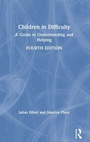
Book
08/2021
4th Edition
Routledge
€206.80
Shipment within 15-20 days
Additional editions
E-Book
07/2012
3rd Edition
Routledge
€81.19
Available for download
E-Book
07/2012
3rd Edition
Routledge
€81.19
Available for download
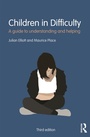
Book
12/2011
3rd Edition
Routledge
€69.51
Article exhausted; check for reprint
Previous edition
Book
05/2004
2nd Edition
Routledge Falmer
€155.99
Article exhausted; check for reprint
Persons
Julian Elliott is Principal of Collingwood College, and Professor of Education, at Durham University, UK.
Maurice Place is Visiting Professor of Child & Family Psychiatry at Northumbria University, UK.
Maurice Place is Visiting Professor of Child & Family Psychiatry at Northumbria University, UK.
Content
1. Introduction 2. Attention Deficit Hyperactivity Disorder 3. Attachment Disorder 4. Depression and Self Harm 5. Less common mental health problems 6. Oppositional defiance and conduct problems in young children 7. Disruption in school 8. Dyslexia 9. Traumatic and Stressful Events 10. School Refusal 11. Eating Disorders 12. Developmental coordination disorder (dyspraxia)