

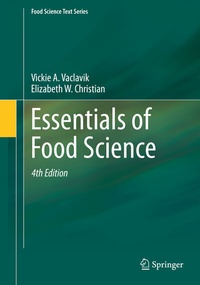
Essentials of Food Science
Description

The fourth edition of this classic text continues to use a multidisciplinary approach to expose the non-major food science student to the physical and chemical composition of foods. Additionally, food preparation and processing, food safety, food chemistry, and food technology applications are discussed in this single source of information.
The book begins with an Introduction to Food Components, Quality and Water. Next, it addresses Carbohydrates in Food, Starches, Pectins and Gums. Grains: Cereals, Flour, Rice and Pasta, and Vegetables and Fruits follow.
Proteins in Food, Meat, Poultry, Fish, and Dry Beans; Eggs and Egg Products, Milk and Milk Products as well as Fats and Oil Products, Food Emulsions and Foams are covered. Next, Sugar, Sweeteners, and Confections and a chapter on Baked Products Batters and Dough is presented.
A new section entitled Aspects of Food Processing covers information on Food Preservation, Food Additives, and Food Packaging.Food Safety and Government Regulation of the Food Supply and Labeling are also discussed in this text.
As appropriate, each chapter discusses the nutritive value and safety issues of the highlighted commodity. The USDA My Plate is utilized throughout the chapters. A Conclusion, Glossary and further References as well as Bibliography are included in each chapter.
Appendices at the end of the book include a variety of current topics such as Biotechnology, Functional Foods, Nutraceuticals, Phytochemicals, Medical Foods, USDA Choosemyplate.gov, Food Label Health Claims, Research Chefs Association certification, Human Nutrigenomics and New Product Development.
More details
Other editions
Additional editions
Previous edition
Persons
V. A. Vaclavik, Ph D, R.D., Retired. Dr. Vaclavik has taught for over 25 years at the college level in Dallas, Texas. Included among her students are nutrition students at the Dallas County Community College District; food science and management students at The University of Texas Southwestern Medical Center at Dallas, Nutrition Department; and culinary students at the International Culinary School at the Art Institute of Dallas. She is a graduate of Cornell University, human nutrition and food; Purdue University, restaurant, hotel, institution management; and Texas Woman's University, institution management and food science.
She has been lead author with Marjorie M. Devine Ph.D., Professor Emeritus, and Marcia H. Pimentel M.S., of Dimensions of Food since its third edition, having been a college student worker for the original edition. Her newest culinary text is The Art of Nutritional Cuisine , written with Amy C. Haynes, R.D.This book, Essentials of Food Science , written with Elizabeth W. Christian, is now in its fourth edition with two foreign translations.
Personally, she really likes passing on what she knows and enjoys. Prior to teaching and writing, Dr. Vaclavik worked in various foodservice operations-including hotel restaurants, Meals-on-Wheels, and more.
Elizabeth Christian, Ph. D. Elizabeth Christian has been an adjunct faculty member at Texas Woman's University in Denton for 22 years, teaching both face-to-face and online classes in the Nutrition and Food Science department. Food Science has been her passion since she was a freshman in high school. She obtained her B.S. and her Ph. D. in Food Science from the Leeds University, England. After working for five years as a research scientist at the Hannah Dairy Research Institute in Scotland, she married an American and moved to the United States. Elizabeth and her husband currently live in Longview, TX with theirtwo daughters, who are in college.
Content
Part I. Introduction to Food Components . - Evaluation of Food Quality.- Water.- Part II. Carbohydrates in Food .- Carbohydrates in Food: An Introduction.- Starches in Food.- Pectins and Gums.- Grains: Cereals, Flour, Rice, and Pasta.- Vegetables and Fruits.- Part III. Proteins in Food .- Proteins in Foods: An Introduction.- Meat, Poultry, Fish, and Dry Beans.- Eggs and Egg Products.- Milk and Milk Products.- Part IV. Fats in Food .- Fats and Oils in Products.- Food Emulsions and Foams.- Part V. Sugars, Sweeteners .- Sugars, Sweeteners, and Confections.- Part VI. Baked Products .- Baked Products: Batters and Dough.- Part VII. Aspects of Food Preservation .- Food Preservation.- Food Additives.- Food Packaging.- Part VIII. Food Safety .- Food Safety.- Part IX. Government Regulation of the Food Supply .- Government Regulation of the Food Supply and Labeling.- Appendices.
