

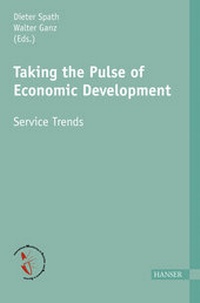
Taking the Pulse of Economic Development
Service Trends
1st Edition
Published on 7. June 2011
VIII, 152 pages
978-3-446-42831-7 (ISBN)
Description

Excellent service is the key to business success! Identifying trends and opportunities in the modern service economy and providing tips on how to actively shaping the future: This is what the various chapters of this volume set out to do. Find a collection of factual observation, empirical data and expert opinions on trends and perspectives on the future of services that can inspire strategy development and decision making in research, politics and business. The basis is the second international survey of "MARS" (International Monitoring of Activities and Research in Services).Highlights- Linking-up of economics, science and politics - Connecting to international trends- Creating market and opinion leadership
More details
Other editions
Additional editions
Book
06/2011
1st Edition
Hanser
€34.90
Article exhausted; check different version
Persons
EditorProfessor Dieter Spath is the head and Walter Ganz the Director of the Fraunhofer Institute IAO, Stuttgart.
Content
1 - Introduction [Seite 10]
1.1 - Taking the Pulse of Economic Development - Service Trends [Seite 10]
1.1.1 - Contours of New Value Creation - Impulses from Services Research [Seite 11]
1.1.2 - Service Trends - Impulses for a Research Agenda [Seite 14]
1.1.3 - A Glance at Potentiality Spaces [Seite 17]
2 - PART I Focus Management - Design of Research and Development for New Services [Seite 22]
2.1 - 1 »R&D Management for Services« [Seite 24]
2.1.1 - 1.1 Competitive Differentiation by Innovative Services [Seite 24]
2.1.2 - 1.2 Structures and Processes for Service Research and Development [Seite 26]
2.1.3 - 1.3 Results of the Expert Survey [Seite 28]
2.1.4 - 1.4 Conclusion [Seite 31]
2.2 - 2 »Customer Integration in New Service Development: Experiences from Sweden« [Seite 34]
2.2.1 - 2.1 Introduction [Seite 34]
2.2.2 - 2.2 Why listen and learn from customers? [Seite 35]
2.2.3 - 2.3 It pays to listen and learn from the customer! [Seite 38]
2.2.4 - 2.4 Customers have good ideas! [Seite 39]
2.2.5 - 2.5 Methods to listen and learn from the customer [Seite 40]
2.2.6 - 2.6 Future service companies listen and learn from customers [Seite 41]
2.2.7 - 2.7 Discussion and conclusion [Seite 42]
3 - PART II Focus Test - Visualise the Invisible Part of Services [Seite 44]
3.1 - 3 »Service Modelling and Simulation« [Seite 46]
3.1.1 - 3.1 Introduction [Seite 46]
3.1.2 - 3.2 Models for Services [Seite 47]
3.1.3 - 3.3 Modelling of Services [Seite 48]
3.1.4 - 3.4 Simulation of Services [Seite 49]
3.1.5 - 3.5 Conclusion [Seite 51]
3.2 - 4 »Service System Modelling« [Seite 54]
3.2.1 - 4.1 Introduction [Seite 54]
3.2.2 - 4.2 Fundamentals of Service Modelling [Seite 55]
3.2.3 - 4.3 Overview of the Four Modelling Areas [Seite 57]
3.2.4 - 4.4 Component Model [Seite 59]
3.2.5 - 4.5 Resource Model [Seite 61]
3.2.6 - 4.6 Product Model [Seite 63]
3.2.7 - 4.7 Process Model [Seite 64]
3.2.8 - 4.8 Application and Outlook [Seite 65]
4 - PART III Focus Man - Management of Talents, Skills and Competencies for Service Innovation [Seite 70]
4.1 - 5 »Humans at the Heart of Service Innovation. Challenges for Human Resource Management« [Seite 72]
4.1.1 - 5.1 Introduction [Seite 72]
4.1.2 - 5.2 Service Innovation and HRM as Objects of Study [Seite 73]
4.1.3 - 5.3 Challenges for HRM - What Do the Experts Say? [Seite 75]
4.1.4 - 5.4 Trends and Development in HRM [Seite 79]
4.2 - 6 »From Strategic to Integrated Human Resource Management for Service Innovation« [Seite 84]
4.2.1 - 6.1 Introduction [Seite 84]
4.2.2 - 6.2 Human Resource Management as an Object of Study for Service Innovation [Seite 85]
4.2.3 - 6.3 Characteristics of Integrated HRM Decisions for Service Innovation [Seite 87]
4.2.4 - 6.4 Requirements for Integrated HRM to Encourage Service Innovations [Seite 89]
4.2.5 - 6.5 Implementation of an Integrated HRM for Service Innovation [Seite 92]
4.2.6 - 6.6 Summary and Implications for Further Research [Seite 94]
5 - PART IV Focus Technology - Innovation by Interaction of Technology and Service [Seite 98]
5.1 - 7 About the Interaction of »Technological and Service Innovation« [Seite 100]
5.1.1 - 7.1 Introduction [Seite 100]
5.1.2 - 7.2 Technological and Service Innovation - A Neglected Relationship in Services Research? [Seite 100]
5.1.3 - 7.3 Challenges - What Do the Experts Say? [Seite 103]
5.1.4 - 7.4 Integration of Technological and Service Innovations - Trends and Developments [Seite 108]
5.2 - 8 »Innovation by Interaction of Technologies and Services« [Seite 112]
5.2.1 - 8.1 Cloud Computing [Seite 113]
5.2.2 - 8.2 Internet of Services [Seite 115]
5.2.3 - 8.3 Business Models [Seite 116]
5.2.4 - 8.4 Integrated Service Engineering [Seite 117]
6 - PART V Focus Future of Value Creation - From Value-in-exchange to Value-in-use [Seite 120]
6.1 - 9 »Hybrid Products/Services - Contours of a New Paradigm« [Seite 122]
6.1.1 - 9.1 Introduction [Seite 122]
6.1.2 - 9.2 From the Hybrid Product to Hybrid Value Creation [Seite 122]
6.1.3 - 9.3 Hybrid Value Creation - What Do Experts Say? [Seite 126]
6.1.4 - 9.4 Trends and Developments in the Area of Hybrid Products/Services [Seite 129]
6.2 - 10 »Alternative Logics for Service(s): From Hybrid Systems to Service Ecosystems« [Seite 132]
6.2.1 - 10.1 Introduction [Seite 132]
6.2.2 - 10.2 Goods-dominant logic [Seite 133]
6.2.3 - 10.3 Service-dominant logic [Seite 135]
6.2.4 - 10.4 Value networks and service ecosystems as venues for value co-creation [Seite 138]
6.2.5 - 10.5 Advantages of the S-D logic, service ecosystem perspective [Seite 140]
6.2.6 - 10.6 Conclusion [Seite 141]
7 - PART VI Outlook [Seite 146]
7.1 - 11 Service Trends - Future Perspectives [Seite 148]
7.1.1 - 11.1 Service Trends as a Strategic Perspective of New Value Creation [Seite 148]
7.1.2 - 11.2 New Thinking with Services [Seite 153]
7.2 - Biographical Notes about the MARS Experts and Guest Authors [Seite 156]
1.1 - Taking the Pulse of Economic Development - Service Trends [Seite 10]
1.1.1 - Contours of New Value Creation - Impulses from Services Research [Seite 11]
1.1.2 - Service Trends - Impulses for a Research Agenda [Seite 14]
1.1.3 - A Glance at Potentiality Spaces [Seite 17]
2 - PART I Focus Management - Design of Research and Development for New Services [Seite 22]
2.1 - 1 »R&D Management for Services« [Seite 24]
2.1.1 - 1.1 Competitive Differentiation by Innovative Services [Seite 24]
2.1.2 - 1.2 Structures and Processes for Service Research and Development [Seite 26]
2.1.3 - 1.3 Results of the Expert Survey [Seite 28]
2.1.4 - 1.4 Conclusion [Seite 31]
2.2 - 2 »Customer Integration in New Service Development: Experiences from Sweden« [Seite 34]
2.2.1 - 2.1 Introduction [Seite 34]
2.2.2 - 2.2 Why listen and learn from customers? [Seite 35]
2.2.3 - 2.3 It pays to listen and learn from the customer! [Seite 38]
2.2.4 - 2.4 Customers have good ideas! [Seite 39]
2.2.5 - 2.5 Methods to listen and learn from the customer [Seite 40]
2.2.6 - 2.6 Future service companies listen and learn from customers [Seite 41]
2.2.7 - 2.7 Discussion and conclusion [Seite 42]
3 - PART II Focus Test - Visualise the Invisible Part of Services [Seite 44]
3.1 - 3 »Service Modelling and Simulation« [Seite 46]
3.1.1 - 3.1 Introduction [Seite 46]
3.1.2 - 3.2 Models for Services [Seite 47]
3.1.3 - 3.3 Modelling of Services [Seite 48]
3.1.4 - 3.4 Simulation of Services [Seite 49]
3.1.5 - 3.5 Conclusion [Seite 51]
3.2 - 4 »Service System Modelling« [Seite 54]
3.2.1 - 4.1 Introduction [Seite 54]
3.2.2 - 4.2 Fundamentals of Service Modelling [Seite 55]
3.2.3 - 4.3 Overview of the Four Modelling Areas [Seite 57]
3.2.4 - 4.4 Component Model [Seite 59]
3.2.5 - 4.5 Resource Model [Seite 61]
3.2.6 - 4.6 Product Model [Seite 63]
3.2.7 - 4.7 Process Model [Seite 64]
3.2.8 - 4.8 Application and Outlook [Seite 65]
4 - PART III Focus Man - Management of Talents, Skills and Competencies for Service Innovation [Seite 70]
4.1 - 5 »Humans at the Heart of Service Innovation. Challenges for Human Resource Management« [Seite 72]
4.1.1 - 5.1 Introduction [Seite 72]
4.1.2 - 5.2 Service Innovation and HRM as Objects of Study [Seite 73]
4.1.3 - 5.3 Challenges for HRM - What Do the Experts Say? [Seite 75]
4.1.4 - 5.4 Trends and Development in HRM [Seite 79]
4.2 - 6 »From Strategic to Integrated Human Resource Management for Service Innovation« [Seite 84]
4.2.1 - 6.1 Introduction [Seite 84]
4.2.2 - 6.2 Human Resource Management as an Object of Study for Service Innovation [Seite 85]
4.2.3 - 6.3 Characteristics of Integrated HRM Decisions for Service Innovation [Seite 87]
4.2.4 - 6.4 Requirements for Integrated HRM to Encourage Service Innovations [Seite 89]
4.2.5 - 6.5 Implementation of an Integrated HRM for Service Innovation [Seite 92]
4.2.6 - 6.6 Summary and Implications for Further Research [Seite 94]
5 - PART IV Focus Technology - Innovation by Interaction of Technology and Service [Seite 98]
5.1 - 7 About the Interaction of »Technological and Service Innovation« [Seite 100]
5.1.1 - 7.1 Introduction [Seite 100]
5.1.2 - 7.2 Technological and Service Innovation - A Neglected Relationship in Services Research? [Seite 100]
5.1.3 - 7.3 Challenges - What Do the Experts Say? [Seite 103]
5.1.4 - 7.4 Integration of Technological and Service Innovations - Trends and Developments [Seite 108]
5.2 - 8 »Innovation by Interaction of Technologies and Services« [Seite 112]
5.2.1 - 8.1 Cloud Computing [Seite 113]
5.2.2 - 8.2 Internet of Services [Seite 115]
5.2.3 - 8.3 Business Models [Seite 116]
5.2.4 - 8.4 Integrated Service Engineering [Seite 117]
6 - PART V Focus Future of Value Creation - From Value-in-exchange to Value-in-use [Seite 120]
6.1 - 9 »Hybrid Products/Services - Contours of a New Paradigm« [Seite 122]
6.1.1 - 9.1 Introduction [Seite 122]
6.1.2 - 9.2 From the Hybrid Product to Hybrid Value Creation [Seite 122]
6.1.3 - 9.3 Hybrid Value Creation - What Do Experts Say? [Seite 126]
6.1.4 - 9.4 Trends and Developments in the Area of Hybrid Products/Services [Seite 129]
6.2 - 10 »Alternative Logics for Service(s): From Hybrid Systems to Service Ecosystems« [Seite 132]
6.2.1 - 10.1 Introduction [Seite 132]
6.2.2 - 10.2 Goods-dominant logic [Seite 133]
6.2.3 - 10.3 Service-dominant logic [Seite 135]
6.2.4 - 10.4 Value networks and service ecosystems as venues for value co-creation [Seite 138]
6.2.5 - 10.5 Advantages of the S-D logic, service ecosystem perspective [Seite 140]
6.2.6 - 10.6 Conclusion [Seite 141]
7 - PART VI Outlook [Seite 146]
7.1 - 11 Service Trends - Future Perspectives [Seite 148]
7.1.1 - 11.1 Service Trends as a Strategic Perspective of New Value Creation [Seite 148]
7.1.2 - 11.2 New Thinking with Services [Seite 153]
7.2 - Biographical Notes about the MARS Experts and Guest Authors [Seite 156]
