

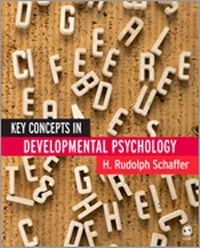
Key Concepts in Developmental Psychology
1st Edition
Published on 28. December 2006
272 pages
978-1-4462-0471-9 (ISBN)
Description

Perfect for courses in child development or developmental psychology and arranged thematically in sections corresponding to chapter headings usually found in textbooks, this book is ideal for students wanting an accessible book to enrich their learning experience.
Key Features:
- Provides an overview of the place of each concept in Developmental Psychology under three headings, namely its meaning, origins and current usage.
- Concepts are grouped into sections corresponding to the main themes usually covered in teaching.
- Relevant concepts in the book are emboldened and linked by listing at the end of each concept
- Guidance is provided to further reading on each of the concepts discussed.
The book will be centrally important to undergraduate students who need to learn the language used by developmental psychologists in describing their studies, but will also help more advanced readers in checking their ideas regarding the nature and uSAGE of particular concepts.
Key Features:
- Provides an overview of the place of each concept in Developmental Psychology under three headings, namely its meaning, origins and current usage.
- Concepts are grouped into sections corresponding to the main themes usually covered in teaching.
- Relevant concepts in the book are emboldened and linked by listing at the end of each concept
- Guidance is provided to further reading on each of the concepts discussed.
The book will be centrally important to undergraduate students who need to learn the language used by developmental psychologists in describing their studies, but will also help more advanced readers in checking their ideas regarding the nature and uSAGE of particular concepts.
Reviews / Votes
"Students of development psychology (at al levels) will appreciate how Professor Schaffer covers the important concepts that we all find fascinating and he does it in an approachable and informative way. Key Concepts in Developmental Psychology brings together an abundance of literature and ideas to create a book that could find a home in our libraries and classrooms." -- Neil J. SalkindAll prices
More details
Language
English
Place of publication
London
United Kingdom
Target group
College/higher education
ISBN-13
978-1-4462-0471-9 (9781446204719)
Copyright in bibliographic data and cover images is held by Nielsen Book Services Limited or by the publishers or by their respective licensors: all rights reserved.
Schweitzer Classification
Other editions
Additional editions
H. Rudolph Schaffer
Key Concepts in Developmental Psychology
Book
02/2007
1st Edition
SAGE Publications Inc
€180.90
Shipment within 15-20 days
H. Rudolph Schaffer
Key Concepts in Developmental Psychology
Book
12/2006
1st Edition
SAGE Publications Inc
€87.70
Shipment within 15-20 days
Person
H Rudolph Schaffer is Professor Emeritus in the Department of Psychology at the University of Strathclyde
Content
Conceptions of Development
Mechanisms of Change
Biological Aspects
Individuality
Cognitive Development
Social Cognition
Relationship Formation
Socialization
Linguistic and Communicative Development
Mechanisms of Change
Biological Aspects
Individuality
Cognitive Development
Social Cognition
Relationship Formation
Socialization
Linguistic and Communicative Development
