

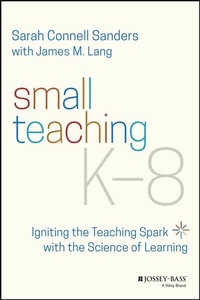
Small Teaching K-8
Igniting the Teaching Spark with the Science of Learning
1st Edition
Published on 15. November 2022
272 pages
978-1-119-86352-6 (ISBN)
Description

Cognitive science research-based teaching techniques any educator can implement in their K-8 classroom
In Small Teaching K-8, a team of veteran educators bridges the gap between cognitive theory and the K-8 classroom environment, applying the same foundational research found in author James Lang's bestselling Small Teaching: Everyday Lessons from the Science of Learning to the elementary and middle school setting. Via clear descriptions and step-by-step methods, the book demonstrates how to integrate simple interventions into pre-existing pedagogical techniques to dramatically improve student outcomes.
The interventions consist of classroom or online learning activities, one-time additions, or small modifications in course design or communication. Regardless of their form, they all deliver powerful, positive consequences.
In this book, readers will also find:
* Foundational concepts from up-to-date cognitive research that has implications for classroom teaching and the rationales for using them in a K-8 classroom
* Concrete examples of how interventions have been used by faculty in various disciplines
* Directions on the specific timing of each intervention, backed by evidence-based reasons
An essential resource for K-8 educators seeking ways to improve their efficacy in the classroom, Small Teaching K-8 offers teachers intuitive and actionable advice on helping students absorb and retain knowledge for the long-term.
In Small Teaching K-8, a team of veteran educators bridges the gap between cognitive theory and the K-8 classroom environment, applying the same foundational research found in author James Lang's bestselling Small Teaching: Everyday Lessons from the Science of Learning to the elementary and middle school setting. Via clear descriptions and step-by-step methods, the book demonstrates how to integrate simple interventions into pre-existing pedagogical techniques to dramatically improve student outcomes.
The interventions consist of classroom or online learning activities, one-time additions, or small modifications in course design or communication. Regardless of their form, they all deliver powerful, positive consequences.
In this book, readers will also find:
* Foundational concepts from up-to-date cognitive research that has implications for classroom teaching and the rationales for using them in a K-8 classroom
* Concrete examples of how interventions have been used by faculty in various disciplines
* Directions on the specific timing of each intervention, backed by evidence-based reasons
An essential resource for K-8 educators seeking ways to improve their efficacy in the classroom, Small Teaching K-8 offers teachers intuitive and actionable advice on helping students absorb and retain knowledge for the long-term.
More details
Other editions
Additional editions
Sanders
Small Teaching K-8: Igniting the Teaching Spark wi th the Science of Learning
Igniting the Teaching Spark with the Science of Learning
Book
01/2023
1st Edition
Jossey-Bass
€25.50
Article not available at the moment
Persons
SARAH CONNELL SANDERS is an accomplished educator and writer with a master's degree in education from Boston College. She is a regular correspondent for Worcester Magazine and the Worcester Telegram & Gazette.
JAMES M. LANG is a former professor of English and director of the D'Amour Center for Teaching Excellence at Assumption University. He is the author of six books, including the bestselling Small Teaching: Everyday Lessons from the Science of Learning.
JAMES M. LANG is a former professor of English and director of the D'Amour Center for Teaching Excellence at Assumption University. He is the author of six books, including the bestselling Small Teaching: Everyday Lessons from the Science of Learning.
Content
- Cover
- Title Page
- Copyright Page
- Contents
- About the Authors
- Foreword
- Introduction
- Part I Knowing: The Six-Minute Fix
- Chapter 1 Retrieving
- What's the Theory?
- In Short
- Models
- Three-Two-One
- Closing Questions
- Big Basket Quizzes
- Multi-Part Quizzes
- Polling
- Principles
- Frequency Matters
- Align Practice and Assessment
- Require Thinking
- Small Teaching Quick Tips: Retrieving
- Conclusion
- Chapter 2 Self-Explaining
- What's the Theory?
- In Short
- Models
- Think Aloud
- How Does This Connect to Our Goal?
- Turn-and-Talk
- Discussion Protocols
- Principles
- Scaffold Self-Explanation
- Point to Principles
- Utilize Peer Power
- Small Teaching Quick Tips: Self-Explaining
- Conclusion
- Chapter 3 Predicting
- What's the Theory?
- In Short
- Models
- Predict during Do Nows
- Pretesting
- Anticipation Guides
- Tea Party
- Closing Predictions
- Principles
- Stay Conceptual
- Provide Fast Feedback
- Leave Time for Reflection
- Small Teaching Quick Tips: Predicting
- Conclusion
- Chapter 4 Putting It All Together: Jennifer Hedrington, Grade 7 Teacher
- Part II Thinking: Strength and Conditioning
- Chapter 5 Synthesizing
- What's the Theory?
- In Short
- Models
- Synthesis Sentence Starters
- Knowledge Dumps
- Finding the Main Idea
- Concept Maps
- The Minute Thesis
- Principles
- Provide the Framework
- Facilitate Synthesis
- Leverage Peer Learning
- Small Teaching Quick Tips: Synthesis
- Conclusion
- Chapter 6 Practicing
- What's the Theory?
- In Short
- Models
- Unpack Your Assessments
- Parcel Them Out and Practice Them
- Provide Feedback
- Principles
- Make the Time for In-Class Practice
- Space It Out
- Practice Mindfully
- Small Teaching Quick Tips: Practice
- Conclusion
- Chapter 7 Mapping
- What's the Theory?
- In Short
- Models
- Year-Long Theme
- Writing an Objective
- Post an Agenda
- Principles
- Set a Timer
- Utilize Strong Verbs
- Don't Be Afraid to Dipstick
- Small Teaching Quick Tips: Mapping
- Conclusion
- Chapter 8 Putting It All Together: Jennessa Burks, Grade 4 Teacher
- Part III Transforming: Balance and Agility
- Chapter 9 Growing
- What's the Theory?
- In Short
- Models
- Reward Growth
- Give Growth-Language Feedback
- Promote Success Strategies
- Principles
- Design for Growth
- Communicate for Growth
- Feedback for Growth
- Small Teaching Quick Tips: Growing
- Conclusion
- Chapter 10 Motivating
- What's the Theory?
- In Short
- Models
- Positive Recognition
- Tell Great Stories
- Invoke Self-Transcendent Purpose
- Share Your Enthusiasm
- Show Compassion
- Principles
- Acknowledge the Emotions in the Room
- Make It Social
- Let Your Enthusiasm Show
- Small Teaching Quick Tips: Motivating
- Conclusion
- Chapter 11 Expanding
- Models, Principles, and Resources
- Project-Based Learning
- Community Service Learning
- Games and Simulations
- Resources
- Small Teaching Quick Tips: Expanding
- Conclusion
- Chapter 12 Putting It All Together: Matt Halpern, Kindergarten Teacher and Literacy Consultant
- Chapter 13 Conclusion
- References
- Index
- EULA
