

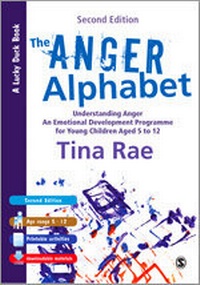
The Anger Alphabet
Understanding Anger - An Emotional Development Programme for Young Children aged 6-12
2nd Edition
Published on 13. November 2012
192 pages
978-1-4462-7119-3 (ISBN)
Description

'The Anger Alphabet is invaluable for those who work with young people as professionals in either education or social care. This second edition gives sound advice, practical activities, and a clearly structured programme of experiences with new illustrations, activities for outdoors and new practical tools such as charts, checklists and lists of strategies for young people, their parents and their teachers'
Terri Harrison, Nature Nurture Project, Camphill School, Aberdeen
An ideal resource for primary teachers, this practical book helps children understand anger and identify links with other emotions with an interactive programme using 26 elements. They will learn skills to effectively manage their anger with activities and exercises.
New to this edition is:
- information on recent initiatives on anger management in schools
- models and top tips for coping with anger
- new activities and ideas
- further information for young children aged 5-9
This instructional guide for teachers comes with photocopiable worksheets and activities suitable for both group and individual work for the whole-class which are available to download online.
Tina Rae has 25 years experience working with children, adults and families in both clinical and educational contexts within local authorities. She is currently a Professional and Academic tutor on the Doctorate in Child and Educational Psychology at University of East London.
Terri Harrison, Nature Nurture Project, Camphill School, Aberdeen
An ideal resource for primary teachers, this practical book helps children understand anger and identify links with other emotions with an interactive programme using 26 elements. They will learn skills to effectively manage their anger with activities and exercises.
New to this edition is:
- information on recent initiatives on anger management in schools
- models and top tips for coping with anger
- new activities and ideas
- further information for young children aged 5-9
This instructional guide for teachers comes with photocopiable worksheets and activities suitable for both group and individual work for the whole-class which are available to download online.
Tina Rae has 25 years experience working with children, adults and families in both clinical and educational contexts within local authorities. She is currently a Professional and Academic tutor on the Doctorate in Child and Educational Psychology at University of East London.
Reviews / Votes
'The Anger Alphabet is invaluable for those who work with young people as professionals in either education or social care. Like the previous edition, this book gives sound advice, practical activities, and a clearly structured programme of experiences and opportunities to help young people develop an internal locus of control over their emotions. This edition has new illustrations, activities for outdoors and new practical tools such as charts, checklists and lists of strategies for young people, their parents and their teachers.Coping with stress, anxiety and self doubt is a challenge for many, but for those who struggle with attachment difficulties or are on the autistic spectrum, these challenges can be overwhelming. The Anger Alphabet is a highly effective programme providing fun and stimulating sessions that help young people manage, not repress, their emotions. Helping young people to develop these skills can be important for the day to day management of a classroom or group. More importantly however, this programme provides lifelong strategies that can support mental and emotional health and wellbeing, the forming and maintaining of relationships, motivation and success in learning, the development of positive values and attitudes, and the building of self-confidence. Tina Rae has once again given professionals working with children and young people a highly effective tool for their toolkit'
-Terri Harrison, Nature Nurture Project, Camphill School, Aberdeen
More details
Series
Edition
Second Edition
Language
English
Place of publication
London
United Kingdom
Target group
Professional and scholarly
ISBN-13
978-1-4462-7119-3 (9781446271193)
Copyright in bibliographic data and cover images is held by Nielsen Book Services Limited or by the publishers or by their respective licensors: all rights reserved.
Schweitzer Classification
Other editions
Additional editions
Tina Rae
The Anger Alphabet
Understanding Anger - An Emotional Development Programme for Young Children aged 6-12
Book
11/2012
2nd Edition
SAGE Publications Ltd
€81.40
Shipment within 15-20 days

Tina Rae
The Anger Alphabet
Understanding Anger - An Emotional Development Programme for Young Children aged 6-12
Book
11/2012
2nd Edition
SAGE Publications Ltd
€182.70
Shipment within 15-20 days
Person
Tina Rae specializes in social, emotional and behavioral disorders and difficulties. She has undertaken research in the areas of engagement and disaffection with learning in young people, debriefing following critical incidents, attachment disorders, emotional well being and the psychological assessment of young offenders. Rae is experienced in assessing children and young people with respect to learning difficulties, emotional well being and relationships with carers.
She is a registered member of the Health Professions Council and a full member of the British Psychological Society. She is currently a Professional and Academic tutor on the Doctorate in Child and Educational Psychology at UEL. Tina is a member of the SEBDA executive and council and a member of ENSEC.
With 68 publications to date, she has written extensively on topics such as well-being, attachment, resilience, emotional literacy, behavioural problems, anger and stress management, critical incidents, cognitive behavioural therapy, motivational interviewing, solution focused brief therapy, loss and bereavement in young people, youth offending and social skills development.
She is a registered member of the Health Professions Council and a full member of the British Psychological Society. She is currently a Professional and Academic tutor on the Doctorate in Child and Educational Psychology at UEL. Tina is a member of the SEBDA executive and council and a member of ENSEC.
With 68 publications to date, she has written extensively on topics such as well-being, attachment, resilience, emotional literacy, behavioural problems, anger and stress management, critical incidents, cognitive behavioural therapy, motivational interviewing, solution focused brief therapy, loss and bereavement in young people, youth offending and social skills development.
Content
Introduction
THE PROGRAMME
A Is for Anger
B Is for Bottled-up
C Is for Cool It
D Is for Dynamite
E Is for Explosion
F Is for Fuse
G Is for Grumble Jar
H Is for Helping Yourself
I Is for 'I' Messages
J Is for Joke
K Is for Kettle Boiling
L Is for Listening
M Is for Move It
N Is for No
O Is for outside
P Is for Post It
Q Is for Quality Talk
R Is for Rules
S Is for Shield
T Is for Traffic Lights
U Is for Understanding
V Is for Vocabulary
W Is for Wind down
X Is for X-Ray Eyes
Y Is for Yell
Z Is for Zero
APPENDICES
Appendix 1: Anger Alphabet - Pre and Post Course Checklist
Appendix 2: Anger Models
Appendix 3: Pre and Post Course Observation Checklist
Appendix 4: Strong Feelings Diary
Appendix 5: Format for Group Work
Appendix 6: Time Out Vouchers
Appendix 7: Top Tips for Teachers
Appendix 8: Top Tips for Parents
Appendix 9: Top Tips/Strategies for Children
Appendix 10: Behaviour Monitoring Chart
Appendix 11: Reward Sticker Chart
Appendix 12: Information Sheet on Attachment Disorders
Appendix 13: Strategy Sheet: Attachment Disorders
Appendix 14: Nurture Group Information Sheet
THE PROGRAMME
A Is for Anger
B Is for Bottled-up
C Is for Cool It
D Is for Dynamite
E Is for Explosion
F Is for Fuse
G Is for Grumble Jar
H Is for Helping Yourself
I Is for 'I' Messages
J Is for Joke
K Is for Kettle Boiling
L Is for Listening
M Is for Move It
N Is for No
O Is for outside
P Is for Post It
Q Is for Quality Talk
R Is for Rules
S Is for Shield
T Is for Traffic Lights
U Is for Understanding
V Is for Vocabulary
W Is for Wind down
X Is for X-Ray Eyes
Y Is for Yell
Z Is for Zero
APPENDICES
Appendix 1: Anger Alphabet - Pre and Post Course Checklist
Appendix 2: Anger Models
Appendix 3: Pre and Post Course Observation Checklist
Appendix 4: Strong Feelings Diary
Appendix 5: Format for Group Work
Appendix 6: Time Out Vouchers
Appendix 7: Top Tips for Teachers
Appendix 8: Top Tips for Parents
Appendix 9: Top Tips/Strategies for Children
Appendix 10: Behaviour Monitoring Chart
Appendix 11: Reward Sticker Chart
Appendix 12: Information Sheet on Attachment Disorders
Appendix 13: Strategy Sheet: Attachment Disorders
Appendix 14: Nurture Group Information Sheet
