

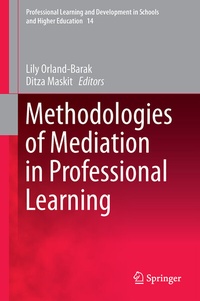
Methodologies of Mediation in Professional Learning
Description

This book critically explores the use of nine recognized methodologies for the mediation of professional learning in the context of teacher education: The story, the visual text, the case, the video, the simulation, the portfolio, lesson study, action research, and Information and Communication Technologies (ICT). Drawing on theories of mediation and professional learning, the book establishes connections between theoretical, empirical and practical-based aspects of each of these methodologies. It consolidates a body of knowledge that offers a holistic portrayal of these methodologies in terms of their purposes (what for), processes (how), and outcomes (what), both distinctively and inclusively.
Each chapter offers four perspectives on each methodology (1) theoretical groundings of the genre (2) research-based evidence on methodologies-as-pedagogies for mediating teacher learning (3) mediation tasks for teacher education as reported in studies and (4) a synthesis of recurrent themes identified from selected books and articles, including a comprehensive list of publications organized by decades. The last chapter presents an integrative framework that conceptualizes connections and weak links across the different methodologies of mediation.
Reviews / Votes
More details
Other editions
Additional editions
Persons
Content
Prologue: Getting to know the book.- Chapter One: Mediation in Professional Learning .- Chapter 2: Story as 'the telling of experience'.- Chapter 3: Visual as 'illustrations' of experience'.- Chapter 4: Cases as 'records of experience'.- Chapter 5: Video as 'observing experience'.- Chapter 6: Simulation as 'replicating experience'.- Chapter 7: Portfolio as 'documenting experience'.- Chapter 8: Lesson study as 'systematic analysis of experience'.- Chapter 9: Action Research as 'systematic investigation of experience'.-Chapter 10: Information and Communication Technologies (ICT) as 'communicating experience'.- Chapter 11: Putting it all together.
