

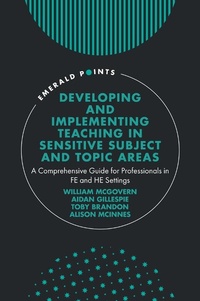
Developing and Implementing Teaching in Sensitive Subject and Topic Areas
A Comprehensive Guide for Professionals in FE and HE Settings
Published on 5. February 2024
176 pages
978-1-83753-126-4 (ISBN)
Description

Engaging with sensitive topics is crucial for students to develop classroom and workplace resilience. These should be taught in a way that supports the acquisition of new knowledge, skills, and attributes, and that enables students to prepare for and thrive in their future professional life.
Providing educators with a comprehensive understanding of the issues involved in teaching sensitive subjects and topics, this collected work invites them to consider their position and practice in the classroom, as well as the implications that this might for the learner and their learning experience. Presenting illustrative examples from the fields of public health, social care, psychology, social work, education, and criminology, contributors draw on the work of active academics and empirical researchers with extensive experience developing and designing relevant teaching activities. Recognising the range of sensitive concerns that staff may need to handle, chapters provide theoretical and practical guidance across a range of subjects, including cultural sensitivity, colonialism, faith and religion, homelessness, care experience, poverty, mental health, trauma, violence, and substance use.
Rooted in actual practice, Developing and Implementing Teaching in Sensitive Subject and Topic Areas identifies the best methodology for creating learning environments that feel both safe and critically stimulating for all involved.
Providing educators with a comprehensive understanding of the issues involved in teaching sensitive subjects and topics, this collected work invites them to consider their position and practice in the classroom, as well as the implications that this might for the learner and their learning experience. Presenting illustrative examples from the fields of public health, social care, psychology, social work, education, and criminology, contributors draw on the work of active academics and empirical researchers with extensive experience developing and designing relevant teaching activities. Recognising the range of sensitive concerns that staff may need to handle, chapters provide theoretical and practical guidance across a range of subjects, including cultural sensitivity, colonialism, faith and religion, homelessness, care experience, poverty, mental health, trauma, violence, and substance use.
Rooted in actual practice, Developing and Implementing Teaching in Sensitive Subject and Topic Areas identifies the best methodology for creating learning environments that feel both safe and critically stimulating for all involved.
More details
Series
Language
English
Place of publication
Bingley
United Kingdom
Target group
Professional and scholarly
File size
4,40 MB
ISBN-13
978-1-83753-126-4 (9781837531264)
Copyright in bibliographic data and cover images is held by Nielsen Book Services Limited or by the publishers or by their respective licensors: all rights reserved.
Schweitzer Classification
Other editions
Additional editions
William McGovern | Aidan Gillespie | Toby Brandon
Developing and Implementing Teaching in Sensitive Subject and Topic Areas
A Comprehensive Guide for Professionals in FE and HE Settings
Book
02/2024
Emerald Publishing Limited
€67.80
Shipment within 3-4 weeks
Persons
William McGovern is Associate Professor of Marginalised Communities, University of Northumbria.
Aidan Gillespie is Senior Lecturer in Primary Education, Leeds Trinity University.
Toby Brandon is Professor of Mental Health and Disability, University of Northumbria.
Alison McInnes is Associate Professor of Social Work, University of Northumbria.
Aidan Gillespie is Senior Lecturer in Primary Education, Leeds Trinity University.
Toby Brandon is Professor of Mental Health and Disability, University of Northumbria.
Alison McInnes is Associate Professor of Social Work, University of Northumbria.
Content
Foreword; Dr Claire Hart
Chapter 1. Key Concept and Concerns of Teaching Sensitive Subjects and Topics; David Nichol, Dr William McGovern, and Dr Ruth McGovern
Chapter 2. Cultural Sensitivity in the Curriculum; Dr Alison McInnes and Professor Janet Walker
Chapter 3. Teaching the Impacts of Colonialism to UK Higher Education Students; Dr Andie Reynolds
Chapter 4. Exploring, and Engaging with Faith and Religion in University Settings; Dr Aidan Gillespie
Chapter 5. Female, Muslim and British: A Personal Reflection on the Experiences of Holding Multiple Identities; Rahida Mohammed
Chapter 6. Teaching about Homelessness - Embodied Learning, Recognising Prior Learning and Experience, and The Key Role of Empathy; Dr Adele Irving, Dr Jamie Harding, and Dr Oliver Moss
Chapter 7. Educating the Educator- Teaching around Care Experience; Dr Hayley Alderson and Carrie Harrop
Chapter 8. Teaching about Perceptions of Care and Young Caring; Deborah Smart, Lucy Jane Henshall, and Libby Oldham
Chapter 9. "Teachers Need to Understand the Position That They Have": Discussing Poverty in Diverse Classes; Dr Pamela Louise Graham, Nicole Fisher, Connie Dalton, and Dr Richard Lee
Chapter 10. Accredited Research Training with People with Lived Experience of Mental Health?Distress; Chris Gibbs, Dr Toby Brandon, Dr Christina Cooper, and Dr Mick Hill
Chapter 11. 'Don't Just Say No': Managing Learning Around Substance use in a Demographically Diverse HE Institution; Craig Ancrum
Chapter 12. Using Lived Experience to Teach Trauma: Containment and Attunement for Yourself and your Students; Kevin Ward
Chapter 13. Teaching and Representing the Needs of Those who Experience Exploitation and Serious Violence; Lydia Lochhead
Chapter 14. Moving beyond Surviving to Supporting the Ability to Thrive: Sharing the Experiences of Young People whose Parents use Substances; Cassey Muir
Chapter 15. Sharing Life-stories about Recovery from Substance Use in Higher Education Settings; Rachel Wease, Trevor Croft, Dr Will McGovern, and Dr Ruth McGovern
Chapter 1. Key Concept and Concerns of Teaching Sensitive Subjects and Topics; David Nichol, Dr William McGovern, and Dr Ruth McGovern
Chapter 2. Cultural Sensitivity in the Curriculum; Dr Alison McInnes and Professor Janet Walker
Chapter 3. Teaching the Impacts of Colonialism to UK Higher Education Students; Dr Andie Reynolds
Chapter 4. Exploring, and Engaging with Faith and Religion in University Settings; Dr Aidan Gillespie
Chapter 5. Female, Muslim and British: A Personal Reflection on the Experiences of Holding Multiple Identities; Rahida Mohammed
Chapter 6. Teaching about Homelessness - Embodied Learning, Recognising Prior Learning and Experience, and The Key Role of Empathy; Dr Adele Irving, Dr Jamie Harding, and Dr Oliver Moss
Chapter 7. Educating the Educator- Teaching around Care Experience; Dr Hayley Alderson and Carrie Harrop
Chapter 8. Teaching about Perceptions of Care and Young Caring; Deborah Smart, Lucy Jane Henshall, and Libby Oldham
Chapter 9. "Teachers Need to Understand the Position That They Have": Discussing Poverty in Diverse Classes; Dr Pamela Louise Graham, Nicole Fisher, Connie Dalton, and Dr Richard Lee
Chapter 10. Accredited Research Training with People with Lived Experience of Mental Health?Distress; Chris Gibbs, Dr Toby Brandon, Dr Christina Cooper, and Dr Mick Hill
Chapter 11. 'Don't Just Say No': Managing Learning Around Substance use in a Demographically Diverse HE Institution; Craig Ancrum
Chapter 12. Using Lived Experience to Teach Trauma: Containment and Attunement for Yourself and your Students; Kevin Ward
Chapter 13. Teaching and Representing the Needs of Those who Experience Exploitation and Serious Violence; Lydia Lochhead
Chapter 14. Moving beyond Surviving to Supporting the Ability to Thrive: Sharing the Experiences of Young People whose Parents use Substances; Cassey Muir
Chapter 15. Sharing Life-stories about Recovery from Substance Use in Higher Education Settings; Rachel Wease, Trevor Croft, Dr Will McGovern, and Dr Ruth McGovern
