


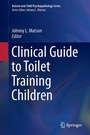
Clinical Guide to Toilet Training Children
Description

This book offers a comprehensive overview of the universal issue of toilet training in children and explores issues that need to be considered by clinicians and other professionals. The book begins with a historical overview of the field, including origins and reviews of current practices. It discusses various toileting problems and their side effects, risk factors, normal developmental milestones in toileting, and theories of toileting. Chapters identify behavior problems (e.g., self-injury, noncompliance) as well as medical conditions (e.g., diabetes, constipation) that can affect continence, with proven strategies for addressing these challenges in toilet training children, including those with intellectual and developmental disabilities. The book concludes with a discussion of the strengths of current toilet training practices as well as suggestions for areas where continued improvement is required.
Topics featured in this book include:
· Complications and side effects associated with the lack of toileting skills.
· Technology used in toilet training.
· Applications of operant-based behavioral principles to toilet training.
· Toilet training strategies involving modeling and modifications of the physical environment.
· Toilet training children with physical disabilities.
The Clinical Guide to Toilet Training Children is a must-have resource for researchers, graduate students, clinicians, and related therapists and professionals in clinical child and school psychology, pediatrics, family studies, developmental psychology, nursing, social work, and behavioral therapy/rehabilitation.
More details
Other editions
Additional editions
Person
Johnny L. Matson, Ph.D., is Professor and Distinguished Research Master in the Department of Psychology, Louisiana State University (LSU). Previously, he served as Assistant Professor of Psychiatry and Psychology (Clinical) at the University of Pittsburgh. He is the author of more than 800 publications, including 42 books. He is major professor to more than 60 Ph.D.s and is editor-in-chief of the Review Journal of Autism and Developmental Disorders .
Content
Chapter 1. Historical Development of Toilet Training.- Chapter 2. Complications and Side Effects Associated with a Lack of Toileting Skills.- Chapter 3. Risk Factors.- Chapter 4. Normal Developmental Milestones in Toileting.- Chapter 5. Theories of Toileting.- Chapter 6. Problems Associated with Toileting.- Chapter 7. Monitoring Progress in Toilet Training.- Chapter 8. Applications of Operant-Based Behavioral Principles to Toilet Training.- Chapter 9. Toilet Training: Strategies Involving Modeling and Modifications of the Physical Environmental.- Chapter 10. Technology used in Toilet Training.- Chapter 11. Nighttime Toilet Training.- Chapter 12. Medical Issues.- Chapter 13. Special Populations: Toilet Training Children with Disabilities.- Chapter 14. Overview and State of the Field.
