

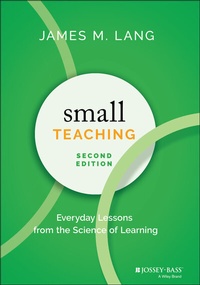
Small Teaching
Everyday Lessons from the Science of Learning
2nd Edition
Published on 21. July 2021
288 pages
978-1-119-75556-2 (ISBN)
Description

A freshly updated edition featuring research-based teaching techniques that faculty in any discipline can easily implement
Research into how we learn can help facilitate better student learning--if we know how to apply it. Small Teaching fills the gap in higher education literature between the primary research in cognitive theory and the classroom environment. In this book, James Lang presents a strategy for improving student learning with a series of small but powerful changes that make a big difference--many of which can be put into practice in a single class period. These are simple interventions that can be integrated into pre-existing techniques, along with clear descriptions of how to do so. Inside, you'll find brief classroom or online learning activities, one-time interventions, and small modifications in course design or student communication. These small tweaks will bring your classroom into alignment with the latest evidence in cognitive research.
Each chapter introduces a basic concept in cognitive research that has implications for classroom teaching, explains the rationale for offering it within a specific time period in a typical class, and then provides concrete examples of how this intervention has been used or could be used by faculty in a variety of disciplines. The second edition features revised and updated content including a newly authored preface, new examples and techniques, updated research, and updated resources.
* How can you make small tweaks to your teaching to bring the latest cognitive science into the classroom?
* How can you help students become good at retrieving knowledge from memory?
* How does making predictions now help us learn in the future?
* How can you build community in the classroom?
Higher education faculty and administrators, as well as K-12 teachers and teacher trainers, will love the easy-to-implement, evidence-based techniques in Small Teaching.
Research into how we learn can help facilitate better student learning--if we know how to apply it. Small Teaching fills the gap in higher education literature between the primary research in cognitive theory and the classroom environment. In this book, James Lang presents a strategy for improving student learning with a series of small but powerful changes that make a big difference--many of which can be put into practice in a single class period. These are simple interventions that can be integrated into pre-existing techniques, along with clear descriptions of how to do so. Inside, you'll find brief classroom or online learning activities, one-time interventions, and small modifications in course design or student communication. These small tweaks will bring your classroom into alignment with the latest evidence in cognitive research.
Each chapter introduces a basic concept in cognitive research that has implications for classroom teaching, explains the rationale for offering it within a specific time period in a typical class, and then provides concrete examples of how this intervention has been used or could be used by faculty in a variety of disciplines. The second edition features revised and updated content including a newly authored preface, new examples and techniques, updated research, and updated resources.
* How can you make small tweaks to your teaching to bring the latest cognitive science into the classroom?
* How can you help students become good at retrieving knowledge from memory?
* How does making predictions now help us learn in the future?
* How can you build community in the classroom?
Higher education faculty and administrators, as well as K-12 teachers and teacher trainers, will love the easy-to-implement, evidence-based techniques in Small Teaching.
More details
Other editions
Additional editions
James Lang
Small Teaching: Everyday Lessons from the Science of Learning
Everyday Lessons from the Science of Learning
Book
10/2021
2nd Edition
Jossey-Bass
€31.50
Available immediately
Person
JAMES M. LANG is Professor of English and Director of the D'Amour Center for Teaching Excellence at Assumption College. He is the author of five books.
He is a sought-after speaker and workshop leader on teaching and learning in higher education. He writes a monthly column on teaching for The Chronicle of Higher Education, and is a Senior Academic Consultant for OneHE.
He is a sought-after speaker and workshop leader on teaching and learning in higher education. He writes a monthly column on teaching for The Chronicle of Higher Education, and is a Senior Academic Consultant for OneHE.
Content
Acknowledgments
About the Author
Preface to the Second Edition
Introduction: Small Teaching
Part One: Knowledge
Chapter One: Predicting
Chapter Two: Retrieving
Chapter Three: Interleaving
Part Two: Understanding
Chapter Four: Connecting
Chapter Five: Practicing
Chapter Six: Explaining
Part Three: Inspiration
Chapter Seven: Belonging
Chapter Eight: Motivating
Chapter Nine: Learning
Conclusion: Beginning
Bibliography
Index
About the Author
Preface to the Second Edition
Introduction: Small Teaching
Part One: Knowledge
Chapter One: Predicting
Chapter Two: Retrieving
Chapter Three: Interleaving
Part Two: Understanding
Chapter Four: Connecting
Chapter Five: Practicing
Chapter Six: Explaining
Part Three: Inspiration
Chapter Seven: Belonging
Chapter Eight: Motivating
Chapter Nine: Learning
Conclusion: Beginning
Bibliography
Index
