

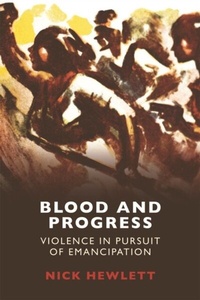
Blood and Progress
Description

How do we decide when violence in pursuit of emancipation is legitimate and what form - if any - should it take?
Every day, we hear about war, state repression, uprisings, suicide bombing, gang warfare, slavery and domestic abuse. Is it realistic to think of a future that is free from violence? And can we justify the paradox of violence in pursuit of a peaceful future? Nick Hewlett places the goal of a wholly peaceful society centre-stage to give us a new understanding of violence.
Hewlett brings together the modern history of capitalist violence and communist violence; political thought on insurgent violence; a passionate defence of the idea of peace and non-violence; and the political economy of contemporary capitalism. He explores topics ranging from the prospects for peace and non-violence to Fidel Castro's ethics of guerrilla warfare, and from the brutality of US foreign policy and the violence of historical communism to the meaning of terrorism today.
Strongly argued and supported by a wealth of facts, Blood and Progress is suffused with the profound belief that we need to go beyond the inequalities and injustices of the current age and towards societies characterised by equality, deep democracy and peace.
More details
Other editions
Additional editions
Content
- Intro
- BLOOD AND PROGRESS
- Copyright
- Contents
- ACKNOWLEDGEMENTS
- Introduction
- 1 Non-violence as an Imperative Goal
- 2 Capitalism, Communism and Violence
- 3 Castro, Humanism and Revolution
- 4 Marx, Engels and the Place of Violence in History
- 5 Terror and Terrorism
- Conclusions
- Bibliography
- Index
