

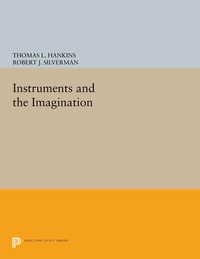
Instruments and the Imagination
1st Edition
Published on 14. July 2014
352 pages
978-1-4008-6411-9 (ISBN)
Description

Thomas Hankins and Robert Silverman investigate an array of instruments from the seventeenth through the nineteenth century that seem at first to be marginal to science--magnetic clocks that were said to operate by the movements of sunflower seeds, magic lanterns, ocular harpsichords (machines that played different colored lights in harmonious mixtures), Aeolian harps (a form of wind chime), and other instruments of "natural magic" designed to produce wondrous effects. By looking at these and the first recording instruments, the stereoscope, and speaking machines, the authors show that "scientific instruments" first made their appearance as devices used to evoke wonder in the beholder, as in works of magic and the theater.
The authors also demonstrate that these instruments, even though they were often "tricks," were seen by their inventors as more than trickery. In the view of Athanasius Kircher, for instance, the sunflower clock was not merely a hoax, but an effort to demonstrate, however fraudulently, his truly held belief that the ability of a flower to follow the sun was due to the same cosmic magnetic influence as that which moved the planets and caused the rotation of the earth. The marvels revealed in this work raise and answer questions about the connections between natural science and natural magic, the meaning of demonstration, the role of language and the senses in science, and the connections among art, music, literature, and natural science.
Originally published in 1995.
The Princeton Legacy Library uses the latest print-on-demand technology to again make available previously out-of-print books from the distinguished backlist of Princeton University Press. These editions preserve the original texts of these important books while presenting them in durable paperback and hardcover editions. The goal of the Princeton Legacy Library is to vastly increase access to the rich scholarly heritage found in the thousands of books published by Princeton University Press since its founding in 1905.
The authors also demonstrate that these instruments, even though they were often "tricks," were seen by their inventors as more than trickery. In the view of Athanasius Kircher, for instance, the sunflower clock was not merely a hoax, but an effort to demonstrate, however fraudulently, his truly held belief that the ability of a flower to follow the sun was due to the same cosmic magnetic influence as that which moved the planets and caused the rotation of the earth. The marvels revealed in this work raise and answer questions about the connections between natural science and natural magic, the meaning of demonstration, the role of language and the senses in science, and the connections among art, music, literature, and natural science.
Originally published in 1995.
The Princeton Legacy Library uses the latest print-on-demand technology to again make available previously out-of-print books from the distinguished backlist of Princeton University Press. These editions preserve the original texts of these important books while presenting them in durable paperback and hardcover editions. The goal of the Princeton Legacy Library is to vastly increase access to the rich scholarly heritage found in the thousands of books published by Princeton University Press since its founding in 1905.
More details
Other editions
Additional editions
Thomas L. Hankins | Robert J. Silverman
Instruments and the Imagination
Book
04/2016
Princeton University Press
€143.20
Article not available at the moment
Thomas L. Hankins | Robert J. Silverman
Instruments and the Imagination
Book
07/2014
Princeton University Press
€52.80
Shipment within 10-20 days
Thomas L. Hankins | Robert J. Silverman
Instruments and the Imagination
Book
01/1999
Princeton University Press
€23.50
Article exhausted; check different version

Thomas L. Hankins | Robert J. Silverman
Instruments and the Imagination
Book
09/1995
Princeton University Press
€76.88
Article exhausted; check different version
Persons
Thomas L. Hankins & Robert J. Silverman
Content
List of Illustrations
Acknowledgments
Ch. 1 Instruments and Images: Subjects for the Historiography of Science 3
Ch. 2 Athanasius Kircher's Sunflower Clock 14
Ch. 3 The Magic Lantern and the Art of Demonstration 37
Ch. 4 The Ocular Harpsichord of Louis-Bertrand Castel; or, The Instrument That Wasn't 72
Ch. 5 The Aeolian Harp and the Romantic Quest of Nature 86
Ch. 6 Science since Babel: Graphs, Automatic Recording Devices, and the Universal Language of Instruments 113
Ch. 7 The Giant Eyes of Science: The Stereoscope and Photographic Depiction in the Nineteenth Century 148
Ch. 8 Vox Mechanica: The History of Speaking Machines 178
Ch. 9 Conclusion 221
Notes 233
Bibliography 287
Index 325
Acknowledgments
Ch. 1 Instruments and Images: Subjects for the Historiography of Science 3
Ch. 2 Athanasius Kircher's Sunflower Clock 14
Ch. 3 The Magic Lantern and the Art of Demonstration 37
Ch. 4 The Ocular Harpsichord of Louis-Bertrand Castel; or, The Instrument That Wasn't 72
Ch. 5 The Aeolian Harp and the Romantic Quest of Nature 86
Ch. 6 Science since Babel: Graphs, Automatic Recording Devices, and the Universal Language of Instruments 113
Ch. 7 The Giant Eyes of Science: The Stereoscope and Photographic Depiction in the Nineteenth Century 148
Ch. 8 Vox Mechanica: The History of Speaking Machines 178
Ch. 9 Conclusion 221
Notes 233
Bibliography 287
Index 325
