

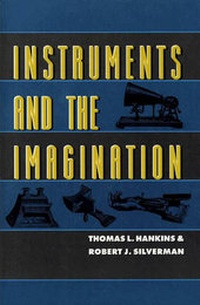
Instruments and the Imagination
Published on 31. January 1999
Book
Paperback/Softback
352 pages
978-0-691-00549-2 (ISBN)
Description
In this book, the authors investigate an array of instruments from the 17th to the 19th century that seem at first to be marginal to science - magnetic clocks that were said to operate by the movements of sunflower seeds, ocular harpsichords (machines that played different coloured lights in harmonious mixtures), Aeolian harps (a form of wind chime), and other instruments of "natural magic" designed to produce wonderous effects. By looking at these, and the first recording instruments, the stereoscope and speaking machines, they show that "scientific instruments" first made their appearance as devices used to evoke wonder in the beholder, as in works of magic and the theatre. The authors also demonstrate that these instruments, even though they were often tricks, were seen by their inventors as more than trickery. In the view of Athanasius Kircher, for instance, the sunflower clock was not merely a hoax, but an effort to demonstrate, however fraudulently, his truly held belief that the ability of a flower to follow the sun was due to the same cosmic magnetic influence as that which moved the planets and caused the rotation of the earth. The mechanical marvels revealed in this work
Reviews / Votes
[A] surprising and instructive book... A salutary perspective on a tale that is usually told very differently. -- A. C. Grayling Financial Times Hankins and Silverman illuminate not only the tools of science, but the changing character of the enterprise itself. -- Stephen Johnston New Scientist This imaginative and intellectually stimulating book reminds us that artifacts have an intellectual context, as well as a social one, and that a thick vein of the irrational runs through all of technology. -- George Basalla Technology and Culture Thomas Hankins and Robert Silverman provide a welcome contribution... Their avowed intention ... [is] to look at instruments on the margins ... to show the significance of such instruments to the history of science. By making instruments a starting point for historical inquiry, [they] illuminate not only the tools of science, but the changing character of the enterprise itself. Stephen Johnston, New ScientistMore details
Series
Language
English
Place of publication
New Jersey
United States
Target group
Professional and scholarly
College/higher education
Product notice
Paperback (trade)
Illustrations
90 halftones
Dimensions
Height: 254 mm
Width: 197 mm
Weight
510 gr
ISBN-13
978-0-691-00549-2 (9780691005492)
Copyright in bibliographic data and cover images is held by Nielsen Book Services Limited or by the publishers or by their respective licensors: all rights reserved.
Schweitzer Classification
Other editions
Additional editions
Thomas L. Hankins | Robert J. Silverman
Instruments and the Imagination
E-Book
07/2014
1st Edition
Princeton University Press
€79.49
Available for download
Content
List of Illustrations Ch. 2 Athanasius Kircher's Sunflower Clock Ch. 3 The Magic Lantern and the Art of Demonstration Ch. 4 The Ocular Harpsichord of Louis-Bertrand Castel; or, The Instrument That Wasn't Ch. 5 The Aeolian Harp and the Romantic Quest of Nature Ch. 6 Science since Babel: Graphs, Automatic Recording Devices, and the Universal Language of Instruments Ch. 7 The Giant Eyes of Science: The Stereoscope and Photographic Depiction in the Nineteenth Century Ch. 8 Vox Mechanica: The History of Speaking Machines Ch. 9 Conclusion Notes Bibliography Index