

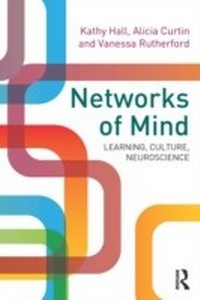
Networks of Mind: Learning, Culture, Neuroscience
1st Edition
Published on 13. December 2013
240 pages
978-1-317-91376-4 (ISBN)
Description

This ground breaking book is unique in bringing together two perspectives on learning - sociocultural theory and neuroscience. Drawing on both perspectives, it foregrounds important developments in our understanding of what learning is, where and how learning occurs and what we can do to understand learning as an everyday process.
Leading experts from both disciplines demonstrate how sociocultural ideas (such as the relevance of experience, opportunity to learn, environment, personal histories, meaning, participation, memory, and feelings of belonging) align with and reflect upon new understandings emerging from neuroscience concerning plasticity and neural networks.
Among the themes critically examined are the following:
Mind and brain
Culture
Ability and talent
Success and failure
Memory
Language
Emotion
Aimed at and accessible to a broad audience and drawing on both schools of thought, Networks of Mind employs case studies, vignettes and real life examples to demonstrate that, though the language of sociocultural theory and that of neuroscience appear very different, ultimately the concepts of both perspectives align and converge around some key ideas. The book shows where both perspectives overlap, collide and diverge in their assumptions and understanding of fundamental aspects of human flourishing. It shows how neuroscience confirms some of the key messages already well established by sociocultural theory, specifically the importance of opportunity to learn. It also argues that the ascendency of neuroscience may result in the marginalization of sociocultural science, though the latter, it argues, has enormous explanatory power for understanding and promoting learning, and for understanding how learning is afforded and constrained.
Leading experts from both disciplines demonstrate how sociocultural ideas (such as the relevance of experience, opportunity to learn, environment, personal histories, meaning, participation, memory, and feelings of belonging) align with and reflect upon new understandings emerging from neuroscience concerning plasticity and neural networks.
Among the themes critically examined are the following:
Mind and brain
Culture
Ability and talent
Success and failure
Memory
Language
Emotion
Aimed at and accessible to a broad audience and drawing on both schools of thought, Networks of Mind employs case studies, vignettes and real life examples to demonstrate that, though the language of sociocultural theory and that of neuroscience appear very different, ultimately the concepts of both perspectives align and converge around some key ideas. The book shows where both perspectives overlap, collide and diverge in their assumptions and understanding of fundamental aspects of human flourishing. It shows how neuroscience confirms some of the key messages already well established by sociocultural theory, specifically the importance of opportunity to learn. It also argues that the ascendency of neuroscience may result in the marginalization of sociocultural science, though the latter, it argues, has enormous explanatory power for understanding and promoting learning, and for understanding how learning is afforded and constrained.
More details
Language
English
Place of publication
London
United Kingdom
Publishing group
Taylor & Francis Ltd
Target group
College/higher education
Illustrations
5 s/w Abbildungen, 5 s/w Tabellen, 5 s/w Zeichnungen
5 Tables, black and white; 5 Line drawings, black and white; 5 Illustrations, black and white
File size
1,43 MB
ISBN-13
978-1-317-91376-4 (9781317913764)
Copyright in bibliographic data and cover images is held by Nielsen Book Services Limited or by the publishers or by their respective licensors: all rights reserved.
Schweitzer Classification
Other editions
Additional editions

Kathy Hall | Alicia Curtin | Vanessa Rutherford
Networks of Mind: Learning, Culture, Neuroscience
Learning, Culture, Neuroscience
Book
12/2013
1st Edition
Routledge
€251.90
Shipment within 15-20 days
Kathy Hall | Alicia Curtin | Vanessa Rutherford
Networks of Mind: Learning, Culture, Neuroscience
Learning, Culture, Neuroscience
Book
12/2013
1st Edition
Routledge
€74.80
Shipment within 15-20 days
Persons
Kathy Hall is Professor and Head of the School of Education, University College Cork.
Alicia Curtin is Lecturer in the School of Education, University College Cork.
Vanessa Rutherfordis Research Fellow in the School of Education, University College Cork.
Alicia Curtin is Lecturer in the School of Education, University College Cork.
Vanessa Rutherfordis Research Fellow in the School of Education, University College Cork.
Content
Introduction 1: Making the case for examining sociocultural theory & neuroscience 2. Defining Brain 3. The Making of Minds 4. The Making of Culture 5. A Heuristic for Avoiding a Totalising Concept of Culture 6. Making Connections, Learning and Pedagogy 7. Constructing Success and Failure 8. Explaining Talent: Opportunity to Learn 9. # Language 209 10. Emotion: My Many Coloured Days 11. Coming to Mind 12. Sociocultural and Neuroscientific Metaphors 13. Tensions and Struggles over Explanations for Learning 14. Conclusion: Claiming Science
