

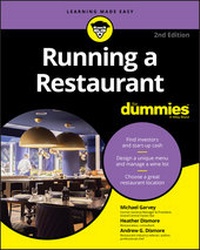
Running a Restaurant For Dummies
2nd Edition
Published on 3. May 2019
400 pages
978-1-119-60546-1 (ISBN)
Description

The easy way to successfully run a profitable restaurant
Millions of Americans dream of owning and running their own restaurant because they want to be their own boss, because their cooking always draws raves, or just because they love food. Running a Restaurant For Dummies covers every aspect of getting started for aspiring restaurateurs. From setting up a business plan and finding financing, to designing a menu and dining room, you'll find all the advice you need to start and run a successful restaurant.
Even if you don't know anything about cooking or running a business, you might still have a great idea for a restaurant and this handy guide will show you how to make your dream a reality. If you already own a restaurant, but want to see it get more successful, Running a Restaurant For Dummies offers unbeatable tips and advice for bringing in hungry customers. From start to finish, you'll learn everything you need to know to succeed.
* New information on designing, re-designing, and equipping a restaurant with all the essentials from the back of the house to the front of the house
* Determining whether to rent or buy restaurant property
* Updated information on setting up a bar and managing the wine list
* Profitable pointers on improving the bottom line
* The latest and greatest marketing and publicity options in a social-media world
* Managing and retaining key staff
* New and updated information on menu creation and the implementation of Federal labeling (when applicable), as well as infusing local, healthy, alternative cuisine to menu planning
Running a Restaurant For Dummies gives you the scoop on the latest trends that chefs and restaurant operators can implement in their new or existing restaurants.
P.S. If you think this book seems familiar, you re probably right. The Dummies team updated the cover and design to give the book a fresh feel, but the content is the same as the previous release of Running a Restaurant For Dummies (9781118027929). The book you see here shouldn t be considered a new or updated product. But if you re in the mood to learn something new, check out some of our other books. We re always writing about new topics!
Millions of Americans dream of owning and running their own restaurant because they want to be their own boss, because their cooking always draws raves, or just because they love food. Running a Restaurant For Dummies covers every aspect of getting started for aspiring restaurateurs. From setting up a business plan and finding financing, to designing a menu and dining room, you'll find all the advice you need to start and run a successful restaurant.
Even if you don't know anything about cooking or running a business, you might still have a great idea for a restaurant and this handy guide will show you how to make your dream a reality. If you already own a restaurant, but want to see it get more successful, Running a Restaurant For Dummies offers unbeatable tips and advice for bringing in hungry customers. From start to finish, you'll learn everything you need to know to succeed.
* New information on designing, re-designing, and equipping a restaurant with all the essentials from the back of the house to the front of the house
* Determining whether to rent or buy restaurant property
* Updated information on setting up a bar and managing the wine list
* Profitable pointers on improving the bottom line
* The latest and greatest marketing and publicity options in a social-media world
* Managing and retaining key staff
* New and updated information on menu creation and the implementation of Federal labeling (when applicable), as well as infusing local, healthy, alternative cuisine to menu planning
Running a Restaurant For Dummies gives you the scoop on the latest trends that chefs and restaurant operators can implement in their new or existing restaurants.
P.S. If you think this book seems familiar, you re probably right. The Dummies team updated the cover and design to give the book a fresh feel, but the content is the same as the previous release of Running a Restaurant For Dummies (9781118027929). The book you see here shouldn t be considered a new or updated product. But if you re in the mood to learn something new, check out some of our other books. We re always writing about new topics!
More details
Other editions
Additional editions
Michael Garvey | Andrew G. Dismore | Heather Dismore
Running a Restaurant for Dummies
Book
05/2019
2nd Edition
Wiley
€24.00
Shipment within 15-20 days
Previous edition
Michael Garvey | Heather Dismore | Andrew G. Dismore
Running a Restaurant For Dummies
E-Book
03/2011
Wiley
€14.99
Available for download
Content
- Intro
- Title Page
- Copyright Page
- Table of Contents
- Introduction
- About This Book
- Conventions Used in This Book
- What You're Not to Read
- Foolish Assumptions
- How This Book Is Organized
- Part 1: Getting Started
- Part 2: Putting Your Plan in Motion
- Part 3: Preparing to Open the Doors
- Part 4: Keeping Your Restaurant Running Smoothly
- Part 5: The Part of Tens
- Icons Used in This Book
- Beyond the Book
- Where to Go from Here
- Part 1 Getting Started
- Chapter 1 Grasping the Basics of the Restaurant Business
- Getting a Feel for the Restaurant World
- Laying the foundation
- Setting up shop (with a little help)
- Welcoming the world to your restaurant
- Finding Out Whether You Have What It Takes
- Monitoring your motivations
- Evaluating your expectations
- Tracking key traits of successful restaurateurs
- Chapter 2 Deciding What Kind of Restaurant to Run
- Figuring Out Where to Start
- Buying into a franchise
- Taking over an existing restaurant
- Partnering up with your current employer
- Starting from scratch
- Choosing the Right Type of Restaurant
- Dining in style
- Kicking back casual
- Placing an order - to go!
- Selecting self-service or fast-food
- Running a bar - with or without food
- Providing catering and banquet services
- Creating Your Concept
- Positioning your restaurant for success
- Identifying the emotional connection
- Creating a unique selling proposition
- Using consumer insights to develop and test your concept
- Developing your positioning statement
- Putting It All Together
- Thinking about theme and concept
- Choosing a name
- Creating a logo
- Signing off on signage
- Chapter 3 Researching the Marketplace
- Getting Your Mind Right: Profits Matter
- Exploring the Consumer's Buying Decision: The Big Why
- Identifying and Analyzing Potential Customers
- Figuring out who your customers are: Target segmentation
- Creating a profile of your Superfan, or brand hero
- Focusing your research
- Keeping an Eye on the Enemy
- Identifying your competitors
- Figuring out who they think their customers are
- Reconnaissance: Mystery shopping till you drop
- Developing and Implementing Your Battle Plan
- Doing a competitive analysis
- Acting on your information
- Adjusting to a changing battlefield
- Chapter 4 Writing a Business Plan
- Don't Fly Blind: Understanding Why a Business Plan Matters
- Laying Out a Business Plan
- Articulating the concept and theme
- Creating your menu now
- Analyzing your market
- Identifying your target audience
- The Bottom Line: Focusing on Financials
- Forecasting sales
- Forecasting expenses
- Breaking even
- Estimating profits
- Projecting cash flow
- Creating a balance sheet
- Selling Your Plan: The Unwritten Part of Your Business Plan
- Part 2 Putting Your Plan in Motion
- Chapter 5 Show Me the Money! Finding Financing
- Knowing How Much Money You Need
- Calculating start-up costs
- Opening with operating reserve
- Looking at How You Can Contribute
- Working with Investors
- Looking at types of investors
- Compensating your investors
- Getting a Loan
- Visiting your local bank
- Finding government assistance
- Chapter 6 Choosing a Location
- Looking at the Local Real Estate Market
- Examining Location Specifics
- Considering access and visibility
- Paying attention to traffic
- Knowing which locations to avoid
- Looking at other businesses in the area
- Considering security
- Factoring In Cost Considerations
- Chapter 7 Paying Attention to the Legalities
- Identifying the Help You Need
- Looking at the roles to fill
- Setting Up Shop on Legal Grounds
- Going it alone: Sole proprietorships
- Teaming up: Partnerships
- Almost teaming up: Limited partnerships
- Playing it safe: The corporate entity
- Blend of three: The LLC
- Knowing Your Local Laws
- Getting Permits and Licenses
- Acquiring a liquor license
- Heeding health codes
- Paying attention to building codes
- Considering fire codes and capacity
- Checking out other permits
- Taking up trademarks
- Buying the Insurance You Need
- Part 3 Preparing to Open the Doors
- Chapter 8 Creating the All-Important Menu
- Making Some Initial Decisions
- Matching your menu to your concept
- Considering customers: Feeding the need with an insights-driven menu
- Matching your menu to your kitchen
- Cutting your chef (if you have one) in on the action
- Figuring Out How Much to Charge
- Determining your menu price points
- Using food cost percentage to set prices
- Creating dishes and recipes and then costing them
- Dealing with price fluctuations
- Mixing your menu to meet an overall percentage goal
- Deciding When to Change Your Menu
- Staying flexible when you first open
- Revisiting your menu later on
- Offering specials
- Highlighting new news
- Choosing Your Menu Format
- Counting your main menu options
- Considering additional presentations
- Selling the Sizzle: Setting Up a Menu with Sales in Mind
- Directing eyes with menu engineering
- Getting people salivating: Considering visual representation on the menu
- Money for ink: Using lingo that sells
- Validating Your Menu before You Go Primetime
- Chapter 9 Setting Up the Front of the House
- Digging into Design
- Identifying pros who can help
- Getting the scoop on potential pros
- Thinking outside the Box: The Exterior
- Laying Out the Interior
- Allowing space for the flow
- Building your floor plan
- Creating space to wait
- Keeping Service Support Close
- Wait stations
- Point of sale (POS) stations
- Tabletop settings
- Setting Up a Reservation System
- Taking traditional reservations
- Accepting online reservations
- Reviewing Restrooms
- Providing public facilities
- Earmarking areas for employees
- Chapter 10 Setting Up the Back of the House
- Planning a Kitchen with the Menu in Mind
- Figuring out what you need to fix the food on your menu
- Reviewing the basic kitchen stations
- Taking control of your prep
- Laying out your kitchen
- Considering Your Water Supply: Why Water Quality Matters
- Adapting an Existing Kitchen
- Acquiring Your Kitchen Equipment
- Deciding whether to buy or lease
- Moving beyond name-brand equipment
- Getting purchasing advice
- Chapter 11 Setting Up a Bar and Beverage Program
- Setting Up Your Bar
- Figuring out furniture
- Selecting equipment
- Selecting smallwares
- Surveying supplies
- Keeping Your Bar Clean
- Drawing Drinking Crowds
- Running promotions
- Providing entertainment
- Offering great bartenders
- Get with the (Beverage) Program: Providing Liquid Refreshment
- Creating your beverage program
- Developing a robust nonalcoholic beverage program
- Becoming Beer Brainy
- Winning with Wine
- Creating your list
- Pricing your wine
- Storing your wine
- Lapping Up Some Liquor Learning
- Pour size and pricing
- Liquor lingo: Understanding cost and quality
- Serving Alcohol Responsibly
- Chapter 12 Hiring and Training Your Staff
- Deciding Which Roles Need to Be Filled
- Managing your quest for managers
- Staffing the kitchen
- Filling the front of the house
- Staffing the office
- Finding the Right People: Placing Ads and Sifting through Résumés
- Interviewing the Candidates
- Round 1: The meet and greet
- Round 2: Comparison shopping
- Bonus rounds: The inevitable re-staffing
- Hiring Foreign Nationals
- Double-checking the documents
- Evaluating the E-Verify system
- Petitioning for an employee
- Training Your Staff
- The employee manual: Identifying your company policies
- Operations manuals: Understanding specific job functions
- Creating a training schedule
- Chapter 13 Purchasing and Managing Supplies
- Preparing to Stock the Supply Room
- Listing what you need
- Considering premade items
- Finding and Working with Purveyors
- Finding and interviewing suppliers
- Comparing prices, quality, and service
- Considering the size of suppliers
- Getting the right quality at the right price
- Getting what you ask for the way you ask for it
- Building an Efficient Inventory System
- Managing the inventory
- Reducing waste
- Eliminating spoilage
- Chapter 14 Running Your Office
- Deciding Where to Put Your Office
- Creating a Communications Hub
- Counting on your computer
- Picking up the phone
- Using e-mail and online services
- Tracking sales with a point-of-sale system
- Interfacing your different systems
- Hardware (the Old-Fashioned Variety)
- Processing Payments
- Credit and debit card transactions
- Gift cards
- Contactless and proximity payments
- Preparing for Payroll
- Farming it out or doing it in-house
- Deciding on a payroll period
- Choosing salaries or hourly wages
- Choosing a method of payment
- Saving, Storing, and Protecting Your Records
- Chapter 15 Getting the Word Out
- Defining Your Message
- Focusing on the consumer and tailoring your message
- Communicating your concept
- Keeping up with the competition
- Getting tactical
- Building Public Relations
- Planning for the good and the bad
- Your PR campaign: Going it alone
- Getting some help with PR
- Creating an Advertising Plan
- Creating a Compelling Restaurant Website
- Sounding Off on Social Media
- Investigating your options
- Responding to reviews both positive and negative
- Part 4 Keeping Your Restaurant Running Smoothly
- Chapter 16 Managing Your Employees
- Selling Employees on Your (or Their) Restaurant
- Educating your employees
- Motivating your staff
- Making Staff Schedules
- Adding it all up: How many workers you need
- Putting names to numbers
- Setting Up Policies to Live (or Die) By
- Scheduling and attendance
- Smoking
- Drinking or using illegal drugs
- Uniforms and grooming standards
- Social media policies
- Disciplinary measures
- Offering Benefits
- Looking at health insurance
- Considering other benefits
- Chapter 17 Running a Safe and Clean Restaurant
- Making Sure Your Food Is Safe
- Blaming bacteria and viruses
- Battling illness: Time and temperature
- Preventing cross-contamination
- Monitoring food safety outside the kitchen
- Monitoring food safety outside the restaurant
- Critical control points: Following HACCP guidelines
- Staff education: Picking up food safety tools
- Implementing proper hand-washing procedures
- Keeping the Restaurant Clean
- Getting cleaning supplies
- Scheduling your cleaning
- Opening and closing procedures
- Taking Precautions to Protect Your Customers and Staff
- Food allergies and other dietary concerns
- First aid
- Exits: In the event of an emergency
- Providing a Pest-Free Place
- Handling the Health Inspection
- When the inspector arrives
- During the inspection
- Avoiding a bad inspection
- Chapter 18 Building a Clientele
- Understanding Who Your Customer Is
- Meeting and Exceeding Expectations
- Turning Unsatisfied Guests into Repeat Customers
- Making Social Media Work for You
- Chapter 19 Maintaining What You've Created
- Evaluating Financial Performance
- Daily business review
- Income statement
- Cash flow analysis
- Evaluating Operations
- Menu mix analysis
- Purchasing and inventory analysis
- Evaluating and Using Feedback
- Paying attention to customer feedback
- Responding to professional criticism and praise
- Listening to employee feedback
- Part 5 The Part of Tens
- Chapter 20 Ten Myths about Running a Restaurant
- Running a Restaurant Is Easy
- I'll Have a Place to Hang Out
- I Can Trust My Brother-in-Law
- The Neighbors Will Love Me
- I've Been to Culinary School, So I'm Ready to Run the Show
- I'm Going to Be a Celebrity Chef
- My Chili Rocks, So I Should Open a Place
- I Can Cut the Advertising Budget
- Wraps Are Here to Stay
- I'll Be Home for the Holidays
- Chapter 21 Ten True Restaurant Stories That You Just Couldn't Make Up
- Déjà Vu All Over Again
- Priceless
- Free Pie Guy
- Rat-atouille
- Frosty the Newbie
- Drinks Are on Me
- You Like My Tie?
- Chefs Behaving Badly
- Radio Fryer
- (Coat) Check, Please!
- Index
- EULA
