

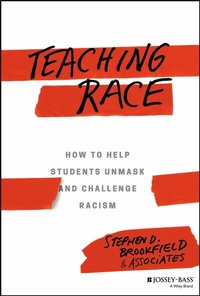
Teaching Race
Description

Educators and activists frequently call for the need to address the lingering presence of racism in higher education. Yet few books offer specific suggestions and advice on how to introduce race to students who believe we live in a post-racial world where racism is no longer a real issue. In Teaching Race the authors offer practical tools and techniques for teaching and discussing racial issues at predominately White institutions of higher education. As current events highlight the dynamics surrounding race and racism on campus and the world beyond, this book provides teachers with essential training to facilitate productive discussion and raise racial awareness in the classroom. A variety of teaching and learning experts provide insights, tips, and guidance on running classroom discussions on race. They present effective approaches and activities to bring reluctant students into a consideration of race and explore how White teachers can model racial awareness, thereby inviting students into the process of examining their own white identity.
Racism, whether evident in overt displays or subconscious bias, has repercussions that reverberate far beyond the campus grounds. As the cultural climate increasingly calls out for more research, education, and dialogue on race and racism, this book helps teachers spotlight issues related to race in a way that leads to effective classroom and campus conversation. The book provides guidance on how to:
* Create the conditions that facilitate respectful racial dialogue by building trust and effectively negotiating conflict
* Uncover each student's own subconscious bias and the intersectionality that exists even in the most homogenous-appearing classrooms
* Help students embrace discomfort, and adapt discussion methods to accommodate issues of race and positionality
* Avoid common traps, mistakes, and misconceptions encountered in anti-racist teaching
Predominantly White institutions face a number of challenges in dealing with race issues, including a lack of precedence, an absence of modeling by campus leaders, and little clear guidance on how teachers can identify and challenge racism on campus. Teaching Race is packed with activities, suggestions and exercises to provide practical real-world help for teachers trying to introduce race in class
More details
Other editions
Additional editions
Person
Content
About the Authors vii
Preface xv
Acknowledgments xxi
1. The Dynamics of Teaching Race 1
Stephen D. Brookfield
2. Guidelines for Whites Teaching About Whiteness 19
George Yancy
3. Teaching Whiteness in Predominantly White Classrooms 43
Susan Hadley
4. Creating a Brave Space Classroom through Writing 63
Lucia Pawlowski
5. Teaching Intersectionality through "I Am From..." 87
Mike Klein
6. Building Trust and Negotiating Conflict When Teaching Race 109
Pamela E. Barnett
7. Creating the Conditions for Racial Dialogues 131
Lisa R. Merriweather, Talmadge C. Guy, and Elaine Manglitz
8. Developing Working Alliances with Students 151
Consuelo E. Cavalieri, Bryana H. French, and Salina M. Renninger
9. Forming Classroom Communities to Help Students Embrace Discomfort 171
Buffy Smith
10. Adapting Discussion Methods to Teach Race 191
Stephen D. Brookfield
11. Teaching against Color Blindness 213
Wendy Yanow
12. Helping Students Uncover Positionality 233
Dianne Ramdeholl and Jaye Jones
13. Using Digital Storytelling to Unearth Racism and Galvanize Action 253
Mary E. Hess
14. Examining Mistakes to Advance Antiracist Teaching 273
Bobbi Smith
15. Avoiding Traps and Misconceptions in Teaching Race 293
Stephen D. Brookfield
Bibliography 311
Index 331
