

The Learning Landscape
Description

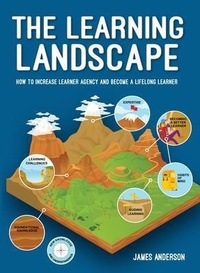
In The Learning Landscape, James Anderson outlines a powerful metaphor for visualising learning. Mapping the abstract concept of learning onto a physical journey in the real world, the learning process is made tangible and accessible to learners.
Students will be guided across the plains of the Learning Landscape, passing over the foundational knowledge that has come before them, while overcoming pits of challenging learning in an effort to climb to the peaks of expertise.
In The Learning Landscape, challenges are represented by four different types of Challenge Pit®s:
- The Learning Challenge
- The Performance Challenge
- The Downhill Challenge
- The Aspirational Challenge
Only by equipping students with powerful learning tools, such as the Habits of Mind, will they be prepared for the climb out of these Challenge Pit®s, as their mindsets determine how far they can travel and how high they can climb.
Drawing on the work of Nicholas Nassim Taleb, Art Costa and Bena Kallick, Anders Ericsson, and Carol Dweck, The Learning Landscape provides teachers with a tool to develop learner agency, creating more effective learners, improving engagement and, ultimately, learning outcomes.
More details
Person
Content
- Cover
- Title
- Copyright
- Contents
- Introduction
- What's in it for Learners?
- What's in it for Teachers?
- Chapter 1: The Learning Landscape
- Features of the Learning Landscape
- A Map of the Learning Landscape
- Learning in the Learning Landscape
- The Learners
- Teacher Action: Explaining the Learning Landscape
- Nadia Comaneci: Great, Not Good
- Chapter 2: Learners
- Above-the-Line and Below-the-Line Learners
- Defining Success
- Experience versus Expertise
- Backstories
- Six Types of Learners
- Teacher Action: Developing Learners
- Picasso: The Value of Backstory
- Mozart: The Hidden Backstory
- Chapter 3: Challenge
- Near Side and Far Side
- Types of Challenges
- The Real Benefit of Climbing
- How Different Learners Relate to Their Learning Zone
- Antifragile
- Teacher Action: Setting the Challenge
- About Learning Challenges and Learning PitsT
- Chapter 4: Habits of Mind
- What Goes in a Backpack?
- Becoming a Better Climber
- Developing the Habits of Mind
- The Benefits of Becoming a Better Climber
- How Different Learners Relate to Their Backpack
- Opportunities
- Teacher Action: Filling the Backpack
- Turia Pitt
- Chapter 5: Practice
- Virtuous Practice
- Climbing
- How Different Learners Relate to Mistakes and Feedback
- Teacher Action: Guiding the Climb
- Chapter 6: Mindset
- About Mindsets
- Symptoms of Mindset
- The Mindset Continuum
- Growth Mindset and Growth
- Changing Mindsets
- Teacher Action: Mindset Movers
- Why Many Growth Mindset Interventions Fail
- Chapter 7: Effort
- About Effort
- Effective Effort Matrix
- How Different Learners Respond to Effort
- Teacher Action: Effort
- Conclusion
- Glossary
- List of Figures
- Endnotes
- About the Author
