

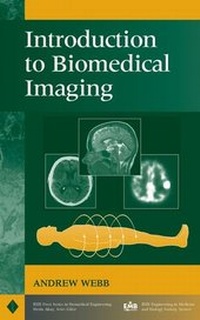
Introduction to Biomedical Imaging
Published on 10. January 2003
Book
Hardback
264 pages
978-0-471-23766-2 (ISBN)
Description
An integrated, comprehensive survey of biomedical imaging modalities
An important component of the recent expansion in bioengineering is the area of biomedical imaging. This book provides in-depth coverage of the field of biomedical imaging, with particular attention to an engineering viewpoint.
Suitable as both a professional reference and as a text for a one-semester course for biomedical engineers or medical technology students, Introduction to Biomedical Imaging covers the fundamentals and applications of four primary medical imaging techniques: magnetic resonance imaging, ultrasound, nuclear medicine, and X-ray/computed tomography.
Taking an accessible approach that includes any necessary mathematics and transform methods, this book provides rigorous discussions of:
* The physical principles, instrumental design, data acquisition strategies, image reconstruction techniques, and clinical applications of each modality
* Recent developments such as multi-slice spiral computed tomography, harmonic and sub-harmonic ultrasonic imaging, multi-slice PET scanning, and functional magnetic resonance imaging
* General image characteristics such as spatial resolution and signal-to-noise, common to all of the imaging modalities
An important component of the recent expansion in bioengineering is the area of biomedical imaging. This book provides in-depth coverage of the field of biomedical imaging, with particular attention to an engineering viewpoint.
Suitable as both a professional reference and as a text for a one-semester course for biomedical engineers or medical technology students, Introduction to Biomedical Imaging covers the fundamentals and applications of four primary medical imaging techniques: magnetic resonance imaging, ultrasound, nuclear medicine, and X-ray/computed tomography.
Taking an accessible approach that includes any necessary mathematics and transform methods, this book provides rigorous discussions of:
* The physical principles, instrumental design, data acquisition strategies, image reconstruction techniques, and clinical applications of each modality
* Recent developments such as multi-slice spiral computed tomography, harmonic and sub-harmonic ultrasonic imaging, multi-slice PET scanning, and functional magnetic resonance imaging
* General image characteristics such as spatial resolution and signal-to-noise, common to all of the imaging modalities
Reviews / Votes
"...we recommend this book to anyone with an interest in the challenging and expanding field of biomedical imaging." (Annals of Biomedical Engineering, December 2003) "...a useful resource for anyone working in biomedical imaging...recommended to anyone with an interest in the challenging and expanding field..." (Annals of Biomedical Engineering, Issue 31:11)"I recommend this book as a reference and education guide..." (Biomedical Instrumentation & Technology, July-August 2003)
"...a well-written book for all...highly recommended..." (Medical Physics, August 2003)
More details
Product info
gebunden
Series
Edition
1. Auflage
Language
English
Place of publication
United States
Publishing group
John Wiley & Sons Inc
Target group
Professional and scholarly
Illustrations
Photos: 25 B&W, 0 Color; Drawings: 75 B&W, 0 Color
Dimensions
Height: 24.2 cm
Width: 16.2 cm
Thickness: 1.8 cm
Weight
494 gr
ISBN-13
978-0-471-23766-2 (9780471237662)
Schweitzer Classification
Other editions
New editions
Book
12/2022
2nd Edition
Wiley-Blackwell
€141.07
Shipment within 15-20 days
Additional editions
Andrew Webb
Introduction to Biomedical Imaging
E-Book
11/2017
1st Edition
Wiley
€169.99
Available for download
Person
ANDREW WEBB, PhD, is a faculty member in the Department of Electrical and Computer Engineering and the Beckman Institute for Advanced Science and Technology at the University of Illinois at Urbana-Champaign. Dr. Webb has contributed to many areas of magnetic resonance imaging including developments in radiofrequency coil design, feedback control of thermal processes, techniques for localized spectroscopy, and functional brain mapping. He was awarded a Whitaker Foundation Research Award and a National Science Foundation Career Award in 1997, a Wolfgang-Paul Prize from the Alexander von Humbolt Foundation in 2001, and Xerox and Willett awards for young faculty in 2002. He is a Senior Member of the IEEE.
Content
Preface. Acknowledgments.
1. X-Ray Imaging and Computed Tomography.
1.1 General Principles of Imaging with X-Rays.
1.2 X-Ray Production.
1.3 Interactions of X-Rays with Tissue.
1.4 Linear and Mass Attenuation Coefficients of X-Rays in Tissue.
1.5 Instrumentation for Planar X-Ray Imaging.
1.6 X-Ray Image Characteristics.
1.7 X-Ray Contrast Agents.
1.8 X-Ray Imaging Methods.
1.9 Clinical Applications of X-Ray Imaging.
1.10 Computed Tomography.
1.11 Image Processing for Computed Tomography.
1.12 Spiral/Helical Computed Tomography.
1.13 Multislice Spiral Computed Tomography.
1.14 Radiation Dose.
1.15 Clinical Applications of Computed Tomography.
2. Nuclear Medicine.
2.1 General Principles of Nuclear Medicine.
2.2 Radioactivity.
2.3 The Production of Radionuclides.
2.4 Types of Radioactive Decay.
2.5 The Technetium Generator.
2.6 The Biodistribution of Technetium-Based Agents within the Body.
2.7 Instrumentation: The Gamma Camera.
2.8 Image Characteristics.
2.9 Single Photon Emission Computed Tomography.
2.10 Clinical Applications of Nuclear Medicine.
2.11 Positron Emission Tomography.
3. Ultrasonic Imaging.
3.1 General Principles of Ultrasonic Imaging.
3.2 Wave Propagation and Characteristic Acoustic Impedance.
3.3 Wave Reflection and Refraction.
3.4 Energy Loss Mechanisms in Tissue.
3.5 Instrumentation.
3.6 Diagnostic Scanning Modes.
3.7 Artifacts in Ultrasonic Imaging.
3.8 Image Characteristics.
3.9 Compound Imaging.
3.10 Blood Velocity Measurements Using Ultrasound.
3.11 Ultrasound Contrast Agents, Harmonic Imaging, and Pulse Inversion Techniques.
3.12 Safety and Bioeffects in Ultrasonic Imaging.
3.13 Clinical Applications of Ultrasound.
4. Magnetic Resonance Imaging.
4.1 General Principles of Magnetic Resonance Imaging.
4.2 Nuclear Magnetism.
4.3 Magnetic Resonance Imaging.
4.4 Instrumentation.
4.5 Imaging Sequences.
4.6 Image Characteristics.
4.7 MRI Contrast Agents.
4.8 Magnetic Resonance Angiography.
4.9 Diffusion-Weighted Imaging.
4.10 In Vivo Localized Spectroscopy.
4.11 Functional MRI.
4.12 Clinical Applications of MRI.
5. General Image Characteristics.
5.1 Introduction.
5.2 Spatial Resolution.
5.3 Signal-to-Noise Ratio.
5.4 Contrast-to-Noise Ratio.
5.5 Image Filtering.
5.6 The Receiver Operating Curve.
Appendix A: The Fourier Transform.
Appendix B: Backprojection and Filtered Backprojection.
Abbreviations.
Index.
1. X-Ray Imaging and Computed Tomography.
1.1 General Principles of Imaging with X-Rays.
1.2 X-Ray Production.
1.3 Interactions of X-Rays with Tissue.
1.4 Linear and Mass Attenuation Coefficients of X-Rays in Tissue.
1.5 Instrumentation for Planar X-Ray Imaging.
1.6 X-Ray Image Characteristics.
1.7 X-Ray Contrast Agents.
1.8 X-Ray Imaging Methods.
1.9 Clinical Applications of X-Ray Imaging.
1.10 Computed Tomography.
1.11 Image Processing for Computed Tomography.
1.12 Spiral/Helical Computed Tomography.
1.13 Multislice Spiral Computed Tomography.
1.14 Radiation Dose.
1.15 Clinical Applications of Computed Tomography.
2. Nuclear Medicine.
2.1 General Principles of Nuclear Medicine.
2.2 Radioactivity.
2.3 The Production of Radionuclides.
2.4 Types of Radioactive Decay.
2.5 The Technetium Generator.
2.6 The Biodistribution of Technetium-Based Agents within the Body.
2.7 Instrumentation: The Gamma Camera.
2.8 Image Characteristics.
2.9 Single Photon Emission Computed Tomography.
2.10 Clinical Applications of Nuclear Medicine.
2.11 Positron Emission Tomography.
3. Ultrasonic Imaging.
3.1 General Principles of Ultrasonic Imaging.
3.2 Wave Propagation and Characteristic Acoustic Impedance.
3.3 Wave Reflection and Refraction.
3.4 Energy Loss Mechanisms in Tissue.
3.5 Instrumentation.
3.6 Diagnostic Scanning Modes.
3.7 Artifacts in Ultrasonic Imaging.
3.8 Image Characteristics.
3.9 Compound Imaging.
3.10 Blood Velocity Measurements Using Ultrasound.
3.11 Ultrasound Contrast Agents, Harmonic Imaging, and Pulse Inversion Techniques.
3.12 Safety and Bioeffects in Ultrasonic Imaging.
3.13 Clinical Applications of Ultrasound.
4. Magnetic Resonance Imaging.
4.1 General Principles of Magnetic Resonance Imaging.
4.2 Nuclear Magnetism.
4.3 Magnetic Resonance Imaging.
4.4 Instrumentation.
4.5 Imaging Sequences.
4.6 Image Characteristics.
4.7 MRI Contrast Agents.
4.8 Magnetic Resonance Angiography.
4.9 Diffusion-Weighted Imaging.
4.10 In Vivo Localized Spectroscopy.
4.11 Functional MRI.
4.12 Clinical Applications of MRI.
5. General Image Characteristics.
5.1 Introduction.
5.2 Spatial Resolution.
5.3 Signal-to-Noise Ratio.
5.4 Contrast-to-Noise Ratio.
5.5 Image Filtering.
5.6 The Receiver Operating Curve.
Appendix A: The Fourier Transform.
Appendix B: Backprojection and Filtered Backprojection.
Abbreviations.
Index.