

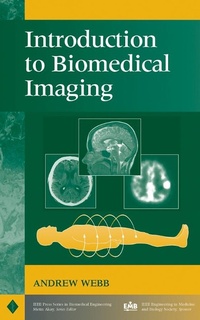
Introduction to Biomedical Imaging
1st Edition
Published on 20. November 2017
264 pages
978-1-119-48594-0 (ISBN)
Description

An integrated, comprehensive survey of biomedical imaging modalities
An important component of the recent expansion in bioengineering is the area of biomedical imaging. This book provides in-depth coverage of the field of biomedical imaging, with particular attention to an engineering viewpoint.
Suitable as both a professional reference and as a text for a one-semester course for biomedical engineers or medical technology students, Introduction to Biomedical Imaging covers the fundamentals and applications of four primary medical imaging techniques: magnetic resonance imaging, ultrasound, nuclear medicine, and X-ray/computed tomography.
Taking an accessible approach that includes any necessary mathematics and transform methods, this book provides rigorous discussions of:
* The physical principles, instrumental design, data acquisition strategies, image reconstruction techniques, and clinical applications of each modality
* Recent developments such as multi-slice spiral computed tomography, harmonic and sub-harmonic ultrasonic imaging, multi-slice PET scanning, and functional magnetic resonance imaging
* General image characteristics such as spatial resolution and signal-to-noise, common to all of the imaging modalities
An important component of the recent expansion in bioengineering is the area of biomedical imaging. This book provides in-depth coverage of the field of biomedical imaging, with particular attention to an engineering viewpoint.
Suitable as both a professional reference and as a text for a one-semester course for biomedical engineers or medical technology students, Introduction to Biomedical Imaging covers the fundamentals and applications of four primary medical imaging techniques: magnetic resonance imaging, ultrasound, nuclear medicine, and X-ray/computed tomography.
Taking an accessible approach that includes any necessary mathematics and transform methods, this book provides rigorous discussions of:
* The physical principles, instrumental design, data acquisition strategies, image reconstruction techniques, and clinical applications of each modality
* Recent developments such as multi-slice spiral computed tomography, harmonic and sub-harmonic ultrasonic imaging, multi-slice PET scanning, and functional magnetic resonance imaging
* General image characteristics such as spatial resolution and signal-to-noise, common to all of the imaging modalities
More details
Other editions
Additional editions
Andrew G. Webb
Introduction to Biomedical Imaging
Book
01/2003
Wiley-IEEE Press
Unfortunately, price unknown
Article exhausted; check for reprint
Content
Preface.
Acknowledgments.
1. X-Ray Imaging and Computed Tomography.
1.1 General Principles of Imaging with X-Rays.
1.2 X-Ray Production.
1.3 Interactions of X-Rays with Tissue.
1.4 Linear and Mass Attenuation Coefficients of X-Rays in
Tissue.
1.5 Instrumentation for Planar X-Ray Imaging.
1.6 X-Ray Image Characteristics.
1.7 X-Ray Contrast Agents.
1.8 X-Ray Imaging Methods.
1.9 Clinical Applications of X-Ray Imaging.
1.10 Computed Tomography.
1.11 Image Processing for Computed Tomography.
1.12 Spiral/Helical Computed Tomography.
1.13 Multislice Spiral Computed Tomography.
1.14 Radiation Dose.
1.15 Clinical Applications of Computed Tomography.
2. Nuclear Medicine.
2.1 General Principles of Nuclear Medicine.
2.2 Radioactivity.
2.3 The Production of Radionuclides.
2.4 Types of Radioactive Decay.
2.5 The Technetium Generator.
2.6 The Biodistribution of Technetium-Based Agents within the
Body.
2.7 Instrumentation: The Gamma Camera.
2.8 Image Characteristics.
2.9 Single Photon Emission Computed Tomography.
2.10 Clinical Applications of Nuclear Medicine.
2.11 Positron Emission Tomography.
3. Ultrasonic Imaging.
3.1 General Principles of Ultrasonic Imaging.
3.2 Wave Propagation and Characteristic Acoustic Impedance.
3.3 Wave Reflection and Refraction.
3.4 Energy Loss Mechanisms in Tissue.
3.5 Instrumentation.
3.6 Diagnostic Scanning Modes.
3.7 Artifacts in Ultrasonic Imaging.
3.8 Image Characteristics.
3.9 Compound Imaging.
3.10 Blood Velocity Measurements Using Ultrasound.
3.11 Ultrasound Contrast Agents, Harmonic Imaging, and Pulse
Inversion Techniques.
3.12 Safety and Bioeffects in Ultrasonic Imaging.
3.13 Clinical Applications of Ultrasound.
4. Magnetic Resonance Imaging.
4.1 General Principles of Magnetic Resonance Imaging.
4.2 Nuclear Magnetism.
4.3 Magnetic Resonance Imaging.
4.4 Instrumentation.
4.5 Imaging Sequences.
4.6 Image Characteristics.
4.7 MRI Contrast Agents.
4.8 Magnetic Resonance Angiography.
4.9 Diffusion-Weighted Imaging.
4.10 In Vivo Localized Spectroscopy.
4.11 Functional MRI.
4.12 Clinical Applications of MRI.
5. General Image Characteristics.
5.1 Introduction.
5.2 Spatial Resolution.
5.3 Signal-to-Noise Ratio.
5.4 Contrast-to-Noise Ratio.
5.5 Image Filtering.
5.6 The Receiver Operating Curve.
Appendix A: The Fourier Transform.
Appendix B: Backprojection and Filtered Backprojection.
Abbreviations.
Index.
Acknowledgments.
1. X-Ray Imaging and Computed Tomography.
1.1 General Principles of Imaging with X-Rays.
1.2 X-Ray Production.
1.3 Interactions of X-Rays with Tissue.
1.4 Linear and Mass Attenuation Coefficients of X-Rays in
Tissue.
1.5 Instrumentation for Planar X-Ray Imaging.
1.6 X-Ray Image Characteristics.
1.7 X-Ray Contrast Agents.
1.8 X-Ray Imaging Methods.
1.9 Clinical Applications of X-Ray Imaging.
1.10 Computed Tomography.
1.11 Image Processing for Computed Tomography.
1.12 Spiral/Helical Computed Tomography.
1.13 Multislice Spiral Computed Tomography.
1.14 Radiation Dose.
1.15 Clinical Applications of Computed Tomography.
2. Nuclear Medicine.
2.1 General Principles of Nuclear Medicine.
2.2 Radioactivity.
2.3 The Production of Radionuclides.
2.4 Types of Radioactive Decay.
2.5 The Technetium Generator.
2.6 The Biodistribution of Technetium-Based Agents within the
Body.
2.7 Instrumentation: The Gamma Camera.
2.8 Image Characteristics.
2.9 Single Photon Emission Computed Tomography.
2.10 Clinical Applications of Nuclear Medicine.
2.11 Positron Emission Tomography.
3. Ultrasonic Imaging.
3.1 General Principles of Ultrasonic Imaging.
3.2 Wave Propagation and Characteristic Acoustic Impedance.
3.3 Wave Reflection and Refraction.
3.4 Energy Loss Mechanisms in Tissue.
3.5 Instrumentation.
3.6 Diagnostic Scanning Modes.
3.7 Artifacts in Ultrasonic Imaging.
3.8 Image Characteristics.
3.9 Compound Imaging.
3.10 Blood Velocity Measurements Using Ultrasound.
3.11 Ultrasound Contrast Agents, Harmonic Imaging, and Pulse
Inversion Techniques.
3.12 Safety and Bioeffects in Ultrasonic Imaging.
3.13 Clinical Applications of Ultrasound.
4. Magnetic Resonance Imaging.
4.1 General Principles of Magnetic Resonance Imaging.
4.2 Nuclear Magnetism.
4.3 Magnetic Resonance Imaging.
4.4 Instrumentation.
4.5 Imaging Sequences.
4.6 Image Characteristics.
4.7 MRI Contrast Agents.
4.8 Magnetic Resonance Angiography.
4.9 Diffusion-Weighted Imaging.
4.10 In Vivo Localized Spectroscopy.
4.11 Functional MRI.
4.12 Clinical Applications of MRI.
5. General Image Characteristics.
5.1 Introduction.
5.2 Spatial Resolution.
5.3 Signal-to-Noise Ratio.
5.4 Contrast-to-Noise Ratio.
5.5 Image Filtering.
5.6 The Receiver Operating Curve.
Appendix A: The Fourier Transform.
Appendix B: Backprojection and Filtered Backprojection.
Abbreviations.
Index.
