

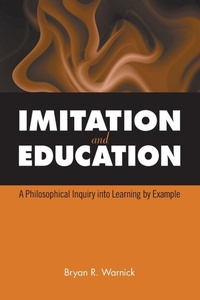
Imitation and Education
A Philosophical Inquiry into Learning by Example
Published on 8. January 2009
Book
Paperback/Softback
178 pages
978-0-7914-7428-0 (ISBN)
Description
Brings together current research in philosophy, cognitive science, and education to uncover and criticize the traditional assumptions of how and why we should learn through imitation.
Imitation and Education provides an in-depth reassessment of learning by example that places imitation in a larger social context. It is the first book to bring together ancient educational thought and startling breakthroughs in the fields of cognitive science, psychology, and philosophy to reconsider how we learn from the lives of others. Bryan R. Warnick addresses how we become exemplars, analyzes how exemplars inspire imitation, and assesses the meaning and value of imitation in education and society, including how teachers can better use examples and what should be done about problems such as the imitation of media violence. Warnick constructs a provocative, cautionary, yet hopeful account of learning by example that acknowledges the power of social contexts in shaping human lives.
Imitation and Education provides an in-depth reassessment of learning by example that places imitation in a larger social context. It is the first book to bring together ancient educational thought and startling breakthroughs in the fields of cognitive science, psychology, and philosophy to reconsider how we learn from the lives of others. Bryan R. Warnick addresses how we become exemplars, analyzes how exemplars inspire imitation, and assesses the meaning and value of imitation in education and society, including how teachers can better use examples and what should be done about problems such as the imitation of media violence. Warnick constructs a provocative, cautionary, yet hopeful account of learning by example that acknowledges the power of social contexts in shaping human lives.
Reviews / Votes
"...[Warnick's] investigation of imitation is quite meticulous." - Journal of Aesthetic Education"Warnick moves methodically through his argument, employing well-chosen examples throughout, and positions himself time and again to ask telling questions about both theoretical and practical consequences of exemplarity for education." - David T. Hansen, editor of John Dewey and Our Educational Prospect: A Critical Engagement with Dewey's Democracy and Education
"In an age of often simpleminded character education programs that urge role modeling, there is a real need for a book like this one, which both affirms the value of role modeling and also develops a critical version of imitation." - Kathleen Knight Abowitz, author of Making Meaning of Community in an American High School: A Feminist-Pragmatist Critique of the Liberal-Communitarian Debates
More details
Series
Language
English
Place of publication
Albany, NY
United States
Target group
Professional and scholarly
US School Grade: College Graduate Student and over
Product notice
Paperback (trade)
Illustrations
3 Figures
Dimensions
Height: 229 mm
Width: 152 mm
Thickness: 10 mm
Weight
270 gr
ISBN-13
978-0-7914-7428-0 (9780791474280)
Copyright in bibliographic data and cover images is held by Nielsen Book Services Limited or by the publishers or by their respective licensors: all rights reserved.
Schweitzer Classification
Other editions
Additional editions
E-Book
01/2009
1st Edition
De Gruyter
€35.49
Available for download
Person
Bryan R. Warnick is Assistant Professor of Philosophy of Education at the Ohio State University.
Content
Acknowledgments
1. The Problems of Imitation and Human Exemplarity
Introduction
The Mysteries of Learning by Example: An Outline 2. The Historical Tradition of Human Exemplarity Imitative Models of Human Exemplarity: The Standard Model
Enlightenment Criticism and Nonimitative Exemplars
The Historical Tradition: An Initial Assessment 3. How Do People Become Examples? The Nature of Examples
How Does Something Become an Example?
Educational Implications
Conclusion 4. How Do Examples Bring Out Imitation? The Link between Action and Perception
The Sense of Self and the Imitative Sorting Mechanism
The Narrative-Self Theory of Imitation
The Social Nature of Narrative and Imitation
Educational Implications
Conclusion5. The Social Meanings of Imitation The Meanings of Following an Example
Imitation and Community Identity
Imitation, Initiation, and Education
Factors Influencing Imitative Meaning
Imitation and Communities of Learning
Conclusion 6. Imitation, Exemplarity, and Moral Reason The Practical Objection to Imitating Examples
A Social Response to the Practical Objection
The Theoretical Objection to Imitating Examples
A Social Response to the Theoretical Objection
Conclusion 7. How Can We Evaluate Human Exemplars? Ancient Skepticism, Exemplarity, and Criticality
The Turn to Practices and Exemplar Rotation
A Critical Education and Exemplarity: A Conclusion8. A Social Analysis of Exemplarity and Imitation
Notes
References
Index
1. The Problems of Imitation and Human Exemplarity
Introduction
The Mysteries of Learning by Example: An Outline 2. The Historical Tradition of Human Exemplarity Imitative Models of Human Exemplarity: The Standard Model
Enlightenment Criticism and Nonimitative Exemplars
The Historical Tradition: An Initial Assessment 3. How Do People Become Examples? The Nature of Examples
How Does Something Become an Example?
Educational Implications
Conclusion 4. How Do Examples Bring Out Imitation? The Link between Action and Perception
The Sense of Self and the Imitative Sorting Mechanism
The Narrative-Self Theory of Imitation
The Social Nature of Narrative and Imitation
Educational Implications
Conclusion5. The Social Meanings of Imitation The Meanings of Following an Example
Imitation and Community Identity
Imitation, Initiation, and Education
Factors Influencing Imitative Meaning
Imitation and Communities of Learning
Conclusion 6. Imitation, Exemplarity, and Moral Reason The Practical Objection to Imitating Examples
A Social Response to the Practical Objection
The Theoretical Objection to Imitating Examples
A Social Response to the Theoretical Objection
Conclusion 7. How Can We Evaluate Human Exemplars? Ancient Skepticism, Exemplarity, and Criticality
The Turn to Practices and Exemplar Rotation
A Critical Education and Exemplarity: A Conclusion8. A Social Analysis of Exemplarity and Imitation
Notes
References
Index