


Curriculum, Plans, and Processes in Instructional Design
International Perspectives
Will be published approx. on 21. April 2004
Book
Hardback
400 pages
978-0-8058-4465-8 (ISBN)
Description
Curriculum, Plans, and Processes in Instructional Design: International Perspectives presents perspectives on the relationship between curriculum research and instructional design, as well as new developments in the use of information and communication technology. In their introductory chapter, the editors provide an overview of the volume and introduce the discussions found in three sections:
*The chapters in Part I (Theoretical Foundations and Innovations) describe and discuss new theoretical and innovative approaches to instructional design that integrate curriculum development with information and communication technologies.
*Part II (Curriculum Development, Instructional Design, and Information Technology) focuses on curriculum development and its impact on models of instructional design.
*Part III (Information and Communication Technology and Instructional Design) addresses the challenge of advancing information and communication technologies for instructional planning and curriculum development.
Prominent researchers and practitioners from instructional design, as well as the learning sciences--from both the U.S. and around the world--have contributed to this volume. This volume is a valuable resource for graduate students, scholars, and researchers in the fields of instructional design and educational technology, as well as for those who wish to develop expertise in training in industrial, military, public and academic organizations.
*The chapters in Part I (Theoretical Foundations and Innovations) describe and discuss new theoretical and innovative approaches to instructional design that integrate curriculum development with information and communication technologies.
*Part II (Curriculum Development, Instructional Design, and Information Technology) focuses on curriculum development and its impact on models of instructional design.
*Part III (Information and Communication Technology and Instructional Design) addresses the challenge of advancing information and communication technologies for instructional planning and curriculum development.
Prominent researchers and practitioners from instructional design, as well as the learning sciences--from both the U.S. and around the world--have contributed to this volume. This volume is a valuable resource for graduate students, scholars, and researchers in the fields of instructional design and educational technology, as well as for those who wish to develop expertise in training in industrial, military, public and academic organizations.
More details
Language
English
Place of publication
New York
United States
Publishing group
Taylor & Francis Inc
Target group
College/higher education
Professional and scholarly
Dimensions
Height: 235 mm
Width: 157 mm
Thickness: 26 mm
Weight
728 gr
ISBN-13
978-0-8058-4465-8 (9780805844658)
Copyright in bibliographic data and cover images is held by Nielsen Book Services Limited or by the publishers or by their respective licensors: all rights reserved.
Schweitzer Classification
Other editions
Additional editions
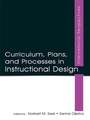
Norbert M. Seel | Sanne Dijkstra
Curriculum, Plans, and Processes in Instructional Design
International Perspectives
E-Book
07/2004
Routledge
€81.49
Available for download
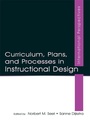
Norbert M. Seel | Sanne Dijkstra
Curriculum, Plans, and Processes in Instructional Design
International Perspectives
E-Book
07/2004
Routledge
€81.49
Available for download
Norbert M. Seel | Sanne Dijkstra
Curriculum, Plans, and Processes in Instructional Design
International Perspectives
E-Book
07/2004
1st Edition
Routledge
€166.09
Available for download
Norbert M. Seel | Sanne Dijkstra
Curriculum, Plans, and Processes in Instructional Design
International Perspectives
Book
04/2004
Routledge
€89.70
Shipment within 10-20 days
Persons
Seel, Norbert M.; Dijkstra, Sanne
Content
Contents: Preface. N.M. Seel, S. Dijkstra, Introduction: Instructional Design and Curriculum Development. S. Dijkstra, Part I: Theoretical Foundations of Learning and Instruction and Innovations of Instructional Design and Technology.J.W. Pellegrino, Complex Learning Environments: Connecting Learning Theory, Instructional Design, and Technology. N.M. Seel, Model-Centered Learning Environments: Theory, Instructional Design, and Effects. D. Jonassen, R. Marra, B. Palmer, Epistemological Development: An Implicit Entailment of Constructivist Learning Environments. J.L. Kolodner, P.J. Camp, D. Crismond, B. Fasse, J. Gray, J. Holbrook, M. Ryan, Promoting Deep Science Learning Through Case-Based Reasoning: Rituals and Practices in Learning by Design(TM) Classrooms. Y. Kafai, C. Ching, Children as Instructional Designers: Apprenticing, Questioning, and Evaluation in the Learning Science by Design Project. N.M. Seel, Part II: Curriculum Development, Instructional Design, and Information Technology.S. Dijkstra, The Integration of Curriculum Design, Instructional Design, and Media Choice. B.L. Grabowski, Needs Assessment--Informing Instructional Decision Making in a Large Technology-Based Project. F. Achtenhagen, Curriculum Development as Modeling of Complex Reality. H.J. Abs, Curriculum Work and Instructional Design as Different Perspectives on Teaching. B. Cornu, Information and Communication Technology Transforming the Teaching Profession. J. Lowyck, J. Elen, Linking ICT, Knowledge Domains, and Learning Support for the Design of Learning Environments. N.M. Seel, S. Dijkstra, Part III: Delivery Systems, Information and Communication Technology, and Media in Education.J.M. Spector, Multiple Uses of Information and Communication Technology in Education. D. Leutner, Instructional Design Principles for Adaptivity in Open Learning Environments. W. Savenye, Evaluating Web-Based Learning Systems and Software. E. Olkinuora, M. Mikkilae-Erdmann, S. Nurmi, Evaluating the Pedagogical Value of Multimedia Learning Material: An Experimental Study in Primary School. G. Weber, Case-Based Learning and Problem Solving in an Adaptive Web-Based Learning System.