

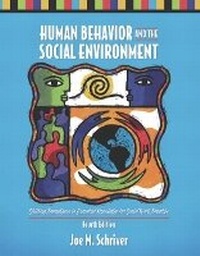
Human Behavior and the Social Environment
Shifting Paradigms in Essential Knowledge for Social Work Practice
4th Edition
Published on 17. February 2004
Book
Hardback
608 pages
978-0-205-37781-7 (ISBN)
Description
Human Behavior and the Social Environment: Shifting Paradigms in Essential Knowledge for Social Work Practice provides readers with a variety of traditional and alternative perspectives on human services issues, including diversity, feminism, client empowerment, individual development, families, groups, organizations, and communities. The author includes new and updated coverage of spirituality, global issues, diversity/cultural competency, aging theory, disabilities, and the impact of technology and the Internet on human services, and reflects the spirit and intent of the new CSWE Educational Policies and Standards (EPAS).
More details
Edition
4th edition
Language
English
Place of publication
United States
Publishing group
Pearson Education (US)
Target group
Professional and scholarly
Dimensions
Height: 198 mm
Width: 240 mm
Thickness: 27 mm
Weight
975 gr
ISBN-13
978-0-205-37781-7 (9780205377817)
Copyright in bibliographic data and cover images is held by Nielsen Book Services Limited or by the publishers or by their respective licensors: all rights reserved.
Schweitzer Classification
Other editions
New editions
Joe M. Schriver
Human Behavior and the Social Environment
Shifting Paradigms in Essential Knowledge for Social Work Practice
Book
04/2010
5th Edition
Pearson
€150.02
Article exhausted; check for reprint
Previous edition
Joe M. Schriver
Human Behavior and the Social Environment
Shifting Paradigms in Essential Knowledge for Social Work Practice
Book
11/2000
3rd Edition
Pearson
€83.13
Article exhausted; check for reprint
Content
Most chapters conclude with "Summary/Transition," "Study/Discussion Questions," "Internet Search Guide: Questions/Issues to Search," "References," "Chapter Content/Illustrative Readings Integrative Questions," and "Illustrative Readings."
Preface.
1. Human Behavior and the Social Environment (HBSE) and Paradigms Purposes, Foundations, and Assumptions.
Purposes of Social Work.
Paradigms and Social Work.
Paradigms and History.
Social Work History: Science and Art.
Paradigm Shift, Social Work, and Social Change.
Paradigms: Culture, Ethnicity, and Race.
2. Traditional and Alternative Paradigms.
Dimensions of Traditional and Dominant Paradigms.
Dimensions of Alternative/Possible Paradigms.
Interpretive/Intuitive/Subjective/Qualitative: Ways of Knowing.
Feminisms.
Diversities.
Interrelated/Personal/Integrative.
Oppressions.
3. Paradigm Thinking and Social Work Knowledge for Practice.
Topics Addressed in This Chapter:
Tools and Terms for Thinking About Thinking.
Tools for Social Workers: Theories for Practice.
Traditional Theoretical Approaches.
Mid-range Theoretical Approaches.
Alternative Theoretical Approaches.
Strengths-Based Perspective.
Wellness.
Empowerment.
Cultural Competence.
Transpersonal/Spiritual Approaches.
Alternative Extensions of Systems Approaches.
Chaos/Complexity.
Gaia.
4. Traditional/Dominant Perspectives on Individuals.
Topics Addressed in This Chapter.
Critiques of Traditional Stage-Based Theories of Individual development.
Developmental Perspectives: Commonality and Diversity.
Normal and Abnormal: Traditional and Alternative Perspectives.
Traditional Notions of Intelligence.
Developmental Paradigms and Social Work.
Developmental Paradigms: The Traditional and the Possible (Alternatives).
Traditional and Dominant Developmental Theories.
Freud.
Piaget.
Kohlberg.
Erikson.
Levinson: Adult Development.
Disengagement Theory of Aging.
Resiliency Theory and Aging.
Traditional Developmental Theories and Multiracial People.
Themes Regarding People of Color in Traditional Developmental Approaches.
5. Alternative and Possible Perspectives on Individuals.
Alternative and Possible Developmental Theories.
Identity Development.
Spirituality and Development.
Focus: People of Color.
Focus: Whiteness/White Identity.
Focus: Women.
Focus: Sexual Orientation.
Focus: Persons with Disabilities.
Focus: Men.
6. Perspectives on Familiness.
Familiness.
Social Work and Families.
(SEHB): The Social Environment and Family.
The Digital Divide: Technology and Families-The Influence of Race, Income.
Approaches to Understanding Familiness.
Traditional Models.
The Alternative/Possible.
Focus: People of Color.
Focus: Women.
Focus: Sexual Orientation.
Focus: Spirituality/Belief Systems and Families.
7. Perspectives on Groups.
Definitions.
Historical Perspective.
Traditional and Alternative Perspectives.
8. Perspectives on Organizations.
Historical Perspectives on Organizations.
Basic Concepts/Definitions.
Types of Organizations.
Technology, Organizations, and Social Policy.
Traditional Paradigms.
Alternative Paradigms.
9. Perspectives on Community(ies).
Historical Perspectives on Community.
Defining Community.
Traditional Perspectives.
Alternative Perspectives on Community.
Nonplace Community.
10. Global Perspectives and Theories.
Historical Perspectives on International Social Work.
SEHB: A Global Context.
Theories of the State.
Family and Global Issues: Immigration.
Immigrants and Oppression/Discrimination.
Impact of Immigration on Families.
11. Putting It All Together: Toward More Comprehensive and Complex Views of Humans and Knowledge About Us.
Ending Is Beginning.
Interconnections.
Beginnings.
Index.
Preface.
1. Human Behavior and the Social Environment (HBSE) and Paradigms Purposes, Foundations, and Assumptions.
Purposes of Social Work.
Paradigms and Social Work.
Paradigms and History.
Social Work History: Science and Art.
Paradigm Shift, Social Work, and Social Change.
Paradigms: Culture, Ethnicity, and Race.
2. Traditional and Alternative Paradigms.
Dimensions of Traditional and Dominant Paradigms.
Dimensions of Alternative/Possible Paradigms.
Interpretive/Intuitive/Subjective/Qualitative: Ways of Knowing.
Feminisms.
Diversities.
Interrelated/Personal/Integrative.
Oppressions.
3. Paradigm Thinking and Social Work Knowledge for Practice.
Topics Addressed in This Chapter:
Tools and Terms for Thinking About Thinking.
Tools for Social Workers: Theories for Practice.
Traditional Theoretical Approaches.
Mid-range Theoretical Approaches.
Alternative Theoretical Approaches.
Strengths-Based Perspective.
Wellness.
Empowerment.
Cultural Competence.
Transpersonal/Spiritual Approaches.
Alternative Extensions of Systems Approaches.
Chaos/Complexity.
Gaia.
4. Traditional/Dominant Perspectives on Individuals.
Topics Addressed in This Chapter.
Critiques of Traditional Stage-Based Theories of Individual development.
Developmental Perspectives: Commonality and Diversity.
Normal and Abnormal: Traditional and Alternative Perspectives.
Traditional Notions of Intelligence.
Developmental Paradigms and Social Work.
Developmental Paradigms: The Traditional and the Possible (Alternatives).
Traditional and Dominant Developmental Theories.
Freud.
Piaget.
Kohlberg.
Erikson.
Levinson: Adult Development.
Disengagement Theory of Aging.
Resiliency Theory and Aging.
Traditional Developmental Theories and Multiracial People.
Themes Regarding People of Color in Traditional Developmental Approaches.
5. Alternative and Possible Perspectives on Individuals.
Alternative and Possible Developmental Theories.
Identity Development.
Spirituality and Development.
Focus: People of Color.
Focus: Whiteness/White Identity.
Focus: Women.
Focus: Sexual Orientation.
Focus: Persons with Disabilities.
Focus: Men.
6. Perspectives on Familiness.
Familiness.
Social Work and Families.
(SEHB): The Social Environment and Family.
The Digital Divide: Technology and Families-The Influence of Race, Income.
Approaches to Understanding Familiness.
Traditional Models.
The Alternative/Possible.
Focus: People of Color.
Focus: Women.
Focus: Sexual Orientation.
Focus: Spirituality/Belief Systems and Families.
7. Perspectives on Groups.
Definitions.
Historical Perspective.
Traditional and Alternative Perspectives.
8. Perspectives on Organizations.
Historical Perspectives on Organizations.
Basic Concepts/Definitions.
Types of Organizations.
Technology, Organizations, and Social Policy.
Traditional Paradigms.
Alternative Paradigms.
9. Perspectives on Community(ies).
Historical Perspectives on Community.
Defining Community.
Traditional Perspectives.
Alternative Perspectives on Community.
Nonplace Community.
10. Global Perspectives and Theories.
Historical Perspectives on International Social Work.
SEHB: A Global Context.
Theories of the State.
Family and Global Issues: Immigration.
Immigrants and Oppression/Discrimination.
Impact of Immigration on Families.
11. Putting It All Together: Toward More Comprehensive and Complex Views of Humans and Knowledge About Us.
Ending Is Beginning.
Interconnections.
Beginnings.
Index.