

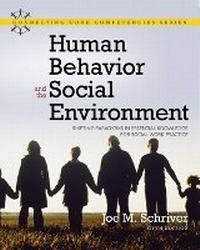
Human Behavior and the Social Environment
Shifting Paradigms in Essential Knowledge for Social Work Practice
5th Edition
Published on 23. April 2010
Book
Hardback
576 pages
978-0-205-52097-8 (ISBN)
Description
Human Behavior and the Social Environment, 5/e, explores, compares, and contrasts both traditional and alternative models in examining human behavior and the social environment.
This text is part of the Connecting Core Competencies Series, designed to guide students in becoming skilled at the Council on Social Work's core competencies. Each chapter reflects and integrates the latest CSWE competency standards (EPAS). End-of-chapter assessment reinforces this integration, and MySocialWorkLab provides activites and supports the mastery of CSWE's core competencies through activities, tests, an extensive library of videos and cases, and much more.
This text is part of the Connecting Core Competencies Series, designed to guide students in becoming skilled at the Council on Social Work's core competencies. Each chapter reflects and integrates the latest CSWE competency standards (EPAS). End-of-chapter assessment reinforces this integration, and MySocialWorkLab provides activites and supports the mastery of CSWE's core competencies through activities, tests, an extensive library of videos and cases, and much more.
More details
Edition
5th edition
Language
English
Place of publication
United States
Publishing group
Pearson Education (US)
Target group
Professional and scholarly
Dimensions
Height: 204 mm
Width: 253 mm
Thickness: 27 mm
Weight
953 gr
ISBN-13
978-0-205-52097-8 (9780205520978)
Copyright in bibliographic data and cover images is held by Nielsen Book Services Limited or by the publishers or by their respective licensors: all rights reserved.
Schweitzer Classification
Other editions
New editions
Joe Schriver
Human Behavior and the Social Environment
Shifting Paradigms in Essential Knowledge for Social Work Practice with Enhanced Pearson eText -- Access Card Package
Book
11/2014
6th Edition
Pearson
€184.93
Article exhausted; check for reprint
Joe Schriver
Human Behavior and the Social Environment
Shifting Paradigms in Essential Knowledge for Social Work Practice
Book
08/2014
6th Edition
Pearson
€207.97
Article is exhausted; no reprint
Previous edition
Joe M. Schriver
Human Behavior and the Social Environment
Shifting Paradigms in Essential Knowledge for Social Work Practice
Book
02/2004
4th Edition
Pearson
€89.32
Article exhausted; check for reprint
Person
Joe M. Schriver is the founding Director of the University of Arkansas School of Social Work. He is currently writing and publishing in the areas of Human Behavior and the Social Environment, social welfare history (social and economic justice), multicultural issues in social work education, and a Multi-System Life Course model for MSW education. He recently published the 5th edition of his book, Human Behavior and the Social Environment: Shifting Paradigms in Essential Knowledge for Social Work Practice. He is the founding Editor-in-Chief of the Journal of Baccalaureate Social Work. Schriver has served on the Board of Directors of the National Association of Baccalaureate Social Work Program Directors, the Board of Directors of the Council on Social Work Education (CSWE) and on the Commission on Educational Policy of the CSWE. He teaches in the areas of Human Behavior and the Social Environment, Community Practice, and Global Social and Economic Justice and Oppression.
Content
Preface.
1. Human Behavior and the Social Environment (HBSE) and Paradigms Purposes, Foundations, and Assumptions.
Purposes of Social Work.
Paradigms and Social Work.
Paradigms and History.
Social Work History: Science and Art.
Paradigm Shift, Social Work, and Social Change.
Paradigms: Culture, Ethnicity, and Race.
2. Traditional and Alternative Paradigms.
Dimensions of Traditional and Dominant Paradigms.
Dimensions of Alternative/Possible Paradigms.
Interpretive/Intuitive/Subjective/Qualitative: Ways of Knowing.
Feminisms.
Diversities.
Interrelated/Personal/Integrative.
Oppressions.
3. Paradigm Thinking and Social Work Knowledge for Practice.
Topics Addressed in This Chapter:
Tools and Terms for Thinking About Thinking.
Tools for Social Workers: Theories for Practice.
Traditional Theoretical Approaches.
Mid-range Theoretical Approaches.
Alternative Theoretical Approaches.
Strengths-Based Perspective.
Wellness.
Empowerment.
Cultural Competence.
Transpersonal/Spiritual Approaches.
Alternative Extensions of Systems Approaches.
Chaos/Complexity.
Gaia.
4. Traditional/Dominant Perspectives on Individuals.
Topics Addressed in This Chapter.
Critiques of Traditional Stage-Based Theories of Individual development.
Developmental Perspectives: Commonality and Diversity.
Normal and Abnormal: Traditional and Alternative Perspectives.
Traditional Notions of Intelligence.
Developmental Paradigms and Social Work.
Developmental Paradigms: The Traditional and the Possible (Alternatives).
Traditional and Dominant Developmental Theories.
Freud.
Piaget.
Kohlberg.
Erikson.
Levinson: Adult Development.
Disengagement Theory of Aging.
Resiliency Theory and Aging.
Traditional Developmental Theories and Multiracial People.
Themes Regarding People of Color in Traditional Developmental Approaches.
5. Alternative and Possible Perspectives on Individuals.
Alternative and Possible Developmental Theories.
Identity Development.
Spirituality and Development.
Focus: People of Color.
Focus: Whiteness/White Identity.
Focus: Women.
Focus: Sexual Orientation.
Focus: Persons with Disabilities.
Focus: Men.
6. Perspectives on Familiness.
Familiness.
Social Work and Families.
(SEHB): The Social Environment and Family.
Approaches to Understanding Familiness.
Traditional Models.
The Alternative/Possible.
Focus: People of Color.
Focus: Women.
Focus: Sexual Orientation.
Focus: Spirituality/Belief Systems and Families.
7. Perspectives on Groups.
Definitions.
Historical Perspective.
Traditional and Alternative Perspectives.
8. Perspectives on Organizations.
Historical Perspectives on Organizations.
Basic Concepts/Definitions.
Types of Organizations.
Technology, Organizations, and Social Policy.
Traditional Paradigms.
Alternative Paradigms.
9. Perspectives on Community(ies).
Historical Perspectives on Community.
Defining Community.
Traditional Perspectives.
Alternative Perspectives on Community.
Nonplace Community.
10. Global Perspectives and Theories.
Historical Perspectives on International Social Work.
SEHB: A Global Context.
Family and Global Issues: Immigration.
Immigrants and Oppression/Discrimination.
Impact of Immigration on Families.
Index.
1. Human Behavior and the Social Environment (HBSE) and Paradigms Purposes, Foundations, and Assumptions.
Purposes of Social Work.
Paradigms and Social Work.
Paradigms and History.
Social Work History: Science and Art.
Paradigm Shift, Social Work, and Social Change.
Paradigms: Culture, Ethnicity, and Race.
2. Traditional and Alternative Paradigms.
Dimensions of Traditional and Dominant Paradigms.
Dimensions of Alternative/Possible Paradigms.
Interpretive/Intuitive/Subjective/Qualitative: Ways of Knowing.
Feminisms.
Diversities.
Interrelated/Personal/Integrative.
Oppressions.
3. Paradigm Thinking and Social Work Knowledge for Practice.
Topics Addressed in This Chapter:
Tools and Terms for Thinking About Thinking.
Tools for Social Workers: Theories for Practice.
Traditional Theoretical Approaches.
Mid-range Theoretical Approaches.
Alternative Theoretical Approaches.
Strengths-Based Perspective.
Wellness.
Empowerment.
Cultural Competence.
Transpersonal/Spiritual Approaches.
Alternative Extensions of Systems Approaches.
Chaos/Complexity.
Gaia.
4. Traditional/Dominant Perspectives on Individuals.
Topics Addressed in This Chapter.
Critiques of Traditional Stage-Based Theories of Individual development.
Developmental Perspectives: Commonality and Diversity.
Normal and Abnormal: Traditional and Alternative Perspectives.
Traditional Notions of Intelligence.
Developmental Paradigms and Social Work.
Developmental Paradigms: The Traditional and the Possible (Alternatives).
Traditional and Dominant Developmental Theories.
Freud.
Piaget.
Kohlberg.
Erikson.
Levinson: Adult Development.
Disengagement Theory of Aging.
Resiliency Theory and Aging.
Traditional Developmental Theories and Multiracial People.
Themes Regarding People of Color in Traditional Developmental Approaches.
5. Alternative and Possible Perspectives on Individuals.
Alternative and Possible Developmental Theories.
Identity Development.
Spirituality and Development.
Focus: People of Color.
Focus: Whiteness/White Identity.
Focus: Women.
Focus: Sexual Orientation.
Focus: Persons with Disabilities.
Focus: Men.
6. Perspectives on Familiness.
Familiness.
Social Work and Families.
(SEHB): The Social Environment and Family.
Approaches to Understanding Familiness.
Traditional Models.
The Alternative/Possible.
Focus: People of Color.
Focus: Women.
Focus: Sexual Orientation.
Focus: Spirituality/Belief Systems and Families.
7. Perspectives on Groups.
Definitions.
Historical Perspective.
Traditional and Alternative Perspectives.
8. Perspectives on Organizations.
Historical Perspectives on Organizations.
Basic Concepts/Definitions.
Types of Organizations.
Technology, Organizations, and Social Policy.
Traditional Paradigms.
Alternative Paradigms.
9. Perspectives on Community(ies).
Historical Perspectives on Community.
Defining Community.
Traditional Perspectives.
Alternative Perspectives on Community.
Nonplace Community.
10. Global Perspectives and Theories.
Historical Perspectives on International Social Work.
SEHB: A Global Context.
Family and Global Issues: Immigration.
Immigrants and Oppression/Discrimination.
Impact of Immigration on Families.
Index.