

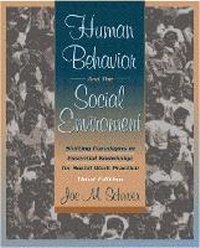
Human Behavior and the Social Environment
Shifting Paradigms in Essential Knowledge for Social Work Practice
3rd Edition
Published on 2. November 2000
Book
Hardback
576 pages
978-0-205-32969-4 (ISBN)
Description
This text compares and contrasts both traditional (dominant) and alternative paradigms or worldviews in examining human behavior and the social environment.
Professor Schriver's text is innovative in its examination of new paradigms that include diversity, feminism, client empowerment, and other perspectives that are mandated by CSWE. Both traditional and alternative perspectives on individual development, families, groups, organizations, and communities are explored in the book.
At each system level, attention is focused on the need for multiple perspectives that respect the vast diversity of persons and environments with whom social workers work. For example, in addition to traditional perspectives on individual development such as those of Freud, Kohlberg, Erikson, and Piaget, alternative perspectives on development are provided from feminist, multicultural, and gay-lesbian/bisexual perspectives such as Gilligan, Parham, Helms, and Cass.
In each chapter, human diversity, oppression, social and economic justice, social work values and ethics, and populations-at-risk are an integral part of the content presented.
Professor Schriver's text is innovative in its examination of new paradigms that include diversity, feminism, client empowerment, and other perspectives that are mandated by CSWE. Both traditional and alternative perspectives on individual development, families, groups, organizations, and communities are explored in the book.
At each system level, attention is focused on the need for multiple perspectives that respect the vast diversity of persons and environments with whom social workers work. For example, in addition to traditional perspectives on individual development such as those of Freud, Kohlberg, Erikson, and Piaget, alternative perspectives on development are provided from feminist, multicultural, and gay-lesbian/bisexual perspectives such as Gilligan, Parham, Helms, and Cass.
In each chapter, human diversity, oppression, social and economic justice, social work values and ethics, and populations-at-risk are an integral part of the content presented.
More details
Edition
3rd edition
Language
English
Place of publication
United States
Publishing group
Pearson Education (US)
Target group
Professional and scholarly
Dimensions
Height: 242 mm
Width: 184 mm
Thickness: 32 mm
Weight
1014 gr
ISBN-13
978-0-205-32969-4 (9780205329694)
Copyright in bibliographic data and cover images is held by Nielsen Book Services Limited or by the publishers or by their respective licensors: all rights reserved.
Schweitzer Classification
Other editions
New editions
Joe M. Schriver
Human Behavior and the Social Environment
Shifting Paradigms in Essential Knowledge for Social Work Practice
Book
02/2004
4th Edition
Pearson
€89.32
Article exhausted; check for reprint
Previous edition

Joe M. Schriver
Human Behavior Social Environment
Shifting Paradigms in Essential Knowledge for Social Work Practice
Book
01/1997
2nd Edition
Pearson Education (US)
€71.98
Article exhausted; check different version
Content
Most chapters conclude with "Summary/Transition," "Internet Search Guide," "References," and "Illustrative Readings."
Preface to Third Edition.
1. Human Behavior and the Social Environment (HBSE) and Paradigms.
Purposes, Foundations, and Assumptions.
Paradigms and Social Work.
Paradigms: Culture, Ethnicity, and Race.
2. Traditional and Alternative Paradigms.
Dimensions of Traditional and Dominant Paradigm.
Dimensions of Alternative/Possible Paradigms.
3. Paradigm Thinking and Social Work Knowledge.
Tools and Terms for Thinking about Thinking.
Tools for Social Workers: Theories for Practice.
4. Traditional/Dominant Perspectives on Individuals.
A Critical Perspective on Developmental Journeys: Ladders to Climb?.
Traditional and Dominant Development Theories.
Erikson's "Eight Ages of Man."
5. Alternative/Possible Perspectives on Individuals.
Alternative and Possible Developmental Theories.
Focus: People of Color.
Focus: Whiteness/White Identity.
Focus: Women.
Focus: Sexual Orientation.
Focus: Persons with Disabilities.
Focus: Men.
6. Perspectives on Familiness.
Familiness.
Social Work and Families.
Approaches to Understanding Familiness.
Traditional Models.
The Alternative/Possible.
Focus: People of Color.
Focus: Women.
Focus: Sexual Orientation.
7. Perspectives on Groups.
Definitions.
Historical Perspective.
Traditional and Alternative Perspectives.
8. Perspectives on Organizations.
Historical Perspectives on Organizations.
Basic Concepts/Definitions.
Technology, Organizations, and Social Policy.
Traditional Paradigms.
Strengths/Weaknesses/Criticisms.
Alternative Paradigms.
Conclusion.
9. Perspectives on Community(ies).
Historical Perspectives on Community.
Traditional Perspectives on Community.
Alternative Perspectives on Community.
10. Putting It All Together: Toward More Comprehensive and Complex Views of Humans and Knowledge about Us.
Ending is Beginning.
Interconnections.
Beginnings.
References
Index.
Preface to Third Edition.
1. Human Behavior and the Social Environment (HBSE) and Paradigms.
Purposes, Foundations, and Assumptions.
Paradigms and Social Work.
Paradigms: Culture, Ethnicity, and Race.
2. Traditional and Alternative Paradigms.
Dimensions of Traditional and Dominant Paradigm.
Dimensions of Alternative/Possible Paradigms.
3. Paradigm Thinking and Social Work Knowledge.
Tools and Terms for Thinking about Thinking.
Tools for Social Workers: Theories for Practice.
4. Traditional/Dominant Perspectives on Individuals.
A Critical Perspective on Developmental Journeys: Ladders to Climb?.
Traditional and Dominant Development Theories.
Erikson's "Eight Ages of Man."
5. Alternative/Possible Perspectives on Individuals.
Alternative and Possible Developmental Theories.
Focus: People of Color.
Focus: Whiteness/White Identity.
Focus: Women.
Focus: Sexual Orientation.
Focus: Persons with Disabilities.
Focus: Men.
6. Perspectives on Familiness.
Familiness.
Social Work and Families.
Approaches to Understanding Familiness.
Traditional Models.
The Alternative/Possible.
Focus: People of Color.
Focus: Women.
Focus: Sexual Orientation.
7. Perspectives on Groups.
Definitions.
Historical Perspective.
Traditional and Alternative Perspectives.
8. Perspectives on Organizations.
Historical Perspectives on Organizations.
Basic Concepts/Definitions.
Technology, Organizations, and Social Policy.
Traditional Paradigms.
Strengths/Weaknesses/Criticisms.
Alternative Paradigms.
Conclusion.
9. Perspectives on Community(ies).
Historical Perspectives on Community.
Traditional Perspectives on Community.
Alternative Perspectives on Community.
10. Putting It All Together: Toward More Comprehensive and Complex Views of Humans and Knowledge about Us.
Ending is Beginning.
Interconnections.
Beginnings.
References
Index.