


Developing Attachment in Early Years Settings
Nurturing secure relationships from birth to five years
2nd Edition
Published on 19. May 2014
Book
Hardback
146 pages
978-0-415-82556-6 (ISBN)
Description
Providing an accessible introduction to attachment thinking, this practical book offers early years practitioners' advice on translating attachment principles into practice in their settings. It clearly explains how knowledge about attachment theory underpins everyday practice and highlights the crucial role of secure attachments in young children's learning and development.
Developing Attachments in Early Years Settings examines the importance of emotional' 'holding' and the nurturing of individual relationships within group childcare. The book aims to help you make a real difference to young children's sense of self and emotional security by being 'tuned in', available, responsive and consistent.
With a strong focus on facilitating secure attachments from the beginning and guidance on how to observe young children effectively, this new edition has been thoroughly updated and revised to include:
How to make a positive contribution to good practice for Government funded 2 year olds
A new chapter on the Emotional Environment and the Developing Brain
Expansion of material on the importance of the outdoors, as well as Nurture group practice
Additional material about working in partnership with parents and developing positive relationships
Each chapter includes a personal reflection exercise and a positive contribution to good practice section. With its accessible approach, this book is essential reading for both practitioners and students looking for guidance on how to nurture secondary attachment relationships in group care settings.
Developing Attachments in Early Years Settings examines the importance of emotional' 'holding' and the nurturing of individual relationships within group childcare. The book aims to help you make a real difference to young children's sense of self and emotional security by being 'tuned in', available, responsive and consistent.
With a strong focus on facilitating secure attachments from the beginning and guidance on how to observe young children effectively, this new edition has been thoroughly updated and revised to include:
How to make a positive contribution to good practice for Government funded 2 year olds
A new chapter on the Emotional Environment and the Developing Brain
Expansion of material on the importance of the outdoors, as well as Nurture group practice
Additional material about working in partnership with parents and developing positive relationships
Each chapter includes a personal reflection exercise and a positive contribution to good practice section. With its accessible approach, this book is essential reading for both practitioners and students looking for guidance on how to nurture secondary attachment relationships in group care settings.
Reviews / Votes
"The author of this excellent book has taken quite a scholarly approach, which she uses to convey quite complex issues. You can rest assured, however, because she manages to masterfully convey important material and findings in an accessible manner. There is a great deal of material about the developing brain and the extent of the impact that the emotional environment has on young children in our care. It is vital that we translate attachment principles and put them into practice in our settings for the sake of the youngest and most vunerable children in our care, and this book is the vital tool to help you do just that." - Martine Horvath, eye magazineMore details
Edition
2nd edition
Language
English
Place of publication
London
United Kingdom
Publishing group
Taylor & Francis Ltd
Target group
Professional and scholarly
Professional and Professional Practice & Development
Illustrations
14 s/w Photographien bzw. Rasterbilder
14 Halftones, black and white
Dimensions
Height: 250 mm
Width: 175 mm
Thickness: 13 mm
Weight
447 gr
ISBN-13
978-0-415-82556-6 (9780415825566)
Copyright in bibliographic data and cover images is held by Nielsen Book Services Limited or by the publishers or by their respective licensors: all rights reserved.
Schweitzer Classification
Other editions
Additional editions
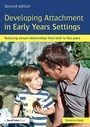
Veronica Read
Developing Attachment in Early Years Settings
Nurturing secure relationships from birth to five years
E-Book
05/2014
2nd Edition
Routledge
€36.99
Available for download
Veronica Read
Developing Attachment in Early Years Settings
Nurturing secure relationships from birth to five years
E-Book
05/2014
2nd Edition
Routledge
€36.99
Available for download
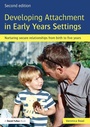
Veronica Read
Developing Attachment in Early Years Settings
Nurturing secure relationships from birth to five years
Book
05/2014
2nd Edition
Routledge
€41.30
Shipment within 15-20 days
Previous edition

Veronica Read
Developing Attachment in Early Years Settings
Nurturing Secure Relationships from Birth to Five Years
Book
10/2009
1st Edition
David Fulton Publishers Ltd
€133.70
Article exhausted; check for reprint
Persons
Veronica Read is a Group Analyst and an Independent Educational Consultant. She writes and delivers workshops on attachment for early years practitioners. She worked for many years in a local education authority (LEA) as a specialist teacher where she had extensive experience of working with children with social, emotional and behavioural difficulties.
Content
1. The Emotional Environment and Brain Development
2. Beginnings
3. The Strange Situation: Understanding about secure and insecure attachments
4. A Unique Child
5. Positive Relationships: Why the key person approach really matters
6. Enabling Environments: How the wider context and its living web of relationships influences the core of early Years practice
7. Learning and Development: Attachment, emotional growth and learning
8. Endings: Arriving back where we began
2. Beginnings
3. The Strange Situation: Understanding about secure and insecure attachments
4. A Unique Child
5. Positive Relationships: Why the key person approach really matters
6. Enabling Environments: How the wider context and its living web of relationships influences the core of early Years practice
7. Learning and Development: Attachment, emotional growth and learning
8. Endings: Arriving back where we began