

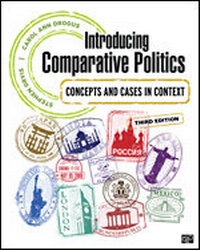
Introducing Comparative Politics
Concepts and Cases in Context
3rd Edition
Published on 13. March 2014
Book
Paperback/Softback
768 pages
978-1-4522-4152-4 (ISBN)
Description
Organized thematically around important questions in comparative politics-Who rules? What explains political behavior? Where and why?-Introducing Comparative Politics integrates a set of extended case studies of 11 core countries into the narrative. Serving as touchstones, the cases are set in chapters where they make the most sense topically-not separated from theory or in a separate volume-and vividly illustrate issues in cross-national context. The book's hybrid organization allows you to teach the way you want to teach and gives students a more accurate sense of comparative study.
Reviews / Votes
"The presentation of core concepts is written in a clear, concise, and lively fashion that hooks the reader and doesn't overload with technical detail, while setting out most of the ideas I try to cover in my course. In general, the Orvis and Drogus text covers a wide range of country cases that are well selected for examining the themes and issues under discussion and is written in an engaging style that holds the reader's attention while covering concepts and explanations that are often quite sophisticated." -- Stephen P. Mumme "The hybrid approach is the primary reason I picked this book. Given my thematic approach, generic case studies that don't directly relate to a particular comparison or theme aren't very useful, so I appreciate the balance between thematic and case elements in the Orvis and Drogus text. My students have responded much more positively to this book than the previous offering. I think they find the writing level to be an attainable challenge." -- John Hulsey "The content of the case studies is excellent. Students easily grow bored with lengthy chapters on specific cases, but the thematic approach to the cases in the Orvis and Drogus text is much more interesting to my students." -- M. Casey Kane LoveMore details
Edition
3rd Revised edition
Language
English
Place of publication
Washington
United States
Publishing group
SAGE Publications Inc
Target group
College/higher education
Edition type
Revised edition
Dimensions
Height: 254 mm
Width: 203 mm
Weight
1147 gr
ISBN-13
978-1-4522-4152-4 (9781452241524)
Copyright in bibliographic data and cover images is held by Nielsen Book Services Limited or by the publishers or by their respective licensors: all rights reserved.
Schweitzer Classification
Other editions
New editions
Book
02/2017
4th Edition
CQ Press
€130.73
Shipment within 15-20 days
Previous edition
Carol Ann Drogus | Stephen Walter Orvis
Introducing Comparative Politics
Concepts and Cases in Context
Book
08/2011
2nd Edition
CQ Press
€106.66
Article exhausted; check for reprint
Persons
Stephen Orvis is Professor of Government at Hamilton College. He is a specialist on sub-Saharan Africa (Kenya in particular), identity politics, democratic transitions, and the political economy of development. He has been teaching introduction to comparative politics for more than twenty-five years, as well as courses on African politics, nationalism and the politics of identity, political economy of development, and weak states. He has written a book and articles on agricultural development in Kenya, as well as several articles on civil society in Africa and Kenya, and is currently doing research on political institutions in Africa.
Carol Ann Drogus is a retired Professor of Government at Hamilton College. She is a specialist on Brazil, religion, and women's political participation. She taught introduction to comparative politics for more than twenty years, as well as courses on Latin American politics, gender and politics, and women in Latin America. She has written two books and numerous articles on the political participation of women in religious movements in Brazil.
Carol Ann Drogus is a retired Professor of Government at Hamilton College. She is a specialist on Brazil, religion, and women's political participation. She taught introduction to comparative politics for more than twenty years, as well as courses on Latin American politics, gender and politics, and women in Latin America. She has written two books and numerous articles on the political participation of women in religious movements in Brazil.
Content
Regional and Country Coverage
Preface
PART I A Framework for Understanding Comparative Politics
CHAPTER 1. INTRODUCTION
The Big Issues
Comparative Politics: What Is It? Why Study It? How to Study It?
Three Key Questions in Comparative Politics
Plan of the Book
Key Concepts
Works Cited
Resources for Further Study
Web Resources
CHAPTER 2. THE MODERN STATE
Characteristics of the Modern State
Historical Origins of Modern States
Strong, Weak, and Failed States
Case Studies of State Formation
Conclusion
Key Concepts
Works Cited
Resources for Further Study
Web Resources
CHAPTER 3. STATES, CITIZENS, AND REGIMES
Citizens and Civil Society
Regimes, Ideologies, and Citizens
Conclusion
Key Concepts
Works Cited
Resources for Further Study
Web Resources
CHAPTER 4. STATES AND IDENTITY
The Debate over Identity
Identity-Based Political Mobilization and Violence
Nations and Nationalism
Ethnicity and Religion
Race
Conclusion
Key Concepts
Works Cited
Resources for Further Study
Web Resources
CHAPTER 5. STATES AND MARKETS
The Market, Capitalism, and the State
Key Economic Debates
Globalization: A New World Order, or Deja Vu All Over Again?
States and Markets around the World
Conclusion
Key Concepts
Works Cited
Resources for Further Study
Web Resources
PART II Political Systems and How They Work
CHAPTER 6. GOVERNING INSTITUTIONS IN DEMOCRACIES
Executives and Legislatures
Comparing Executive-Legislative Institutions
Judiciary
Bureaucracy
Federalism
Conclusion
Key Concepts
Works Cited
Resources for Further Study
Web Resources
CHAPTER 7. INSTITUTIONS OF PARTICIPATION AND REPRESENTATION IN DEMOCRACIES
Formal Institutions: The Electoral System
Formal Institutions: Political Parties and Party Systems
Civil Society
Patron-Client Relationships
Case Studies in Participation and Representation
Conclusion
Key Concepts
Works Cited
Resources for Further Study
Web Resources
CHAPTER 8. AUTHORITARIAN INSTITUTIONS
Authoritarian Rule around the World
Governing Institutions in Authoritarian Regimes
Elections, Parties, and Civil Society in Authoritarian Regimes
Conclusion
Key Concepts
Works Cited
Resources for Further Study
Web Resources
CHAPTER 9. REGIME CHANGE
The Military in Politics: Coups d'Etat
Revolution
Democratization
Conclusion
Key Concepts
Works Cited
Resources for Further Study
Web Resources
PART III Issues and Policies
CHAPTER 10. GLOBALIZATION, ECONOMIC SOVEREIGNTY, AND DEVELOPMENT
Wealthy Countries: Globalization and Economic Sovereignty
Development and Globalization
Conclusion
Key Concepts
Works Cited
Resources for Further Study
Web Resources
CHAPTER 11. PUBLIC POLICIES WHEN MARKETS FAIL: WELFARE, HEALTH, AND THE ENVIRONMENT
"Welfare": Social Policy in Comparative Perspective
Health Care and Health Policy
Environmental Problems and Policy
Conclusion
Key Concepts
Works Cited
Resources for Further Study
Web Resources
CHAPTER 12. POLICIES AND POLITICS OF INCLUSION AND CLASHING VALUES
The Debate over Inclusion and Group Rights
Politics of Inclusion and the Modern State
Religion: Recognition, Autonomy, and the Secular State
Gender: The Continuing Struggle for Equal Social Status, Representation, and Participation
Sexual Orientation: Assimilation or Liberation?
State Responses to the LGBT Movement
Conclusion
Key Concepts
Works Cited
Resources for Further Study
Web Resources
Glossary
Index
Photo Credits
Preface
PART I A Framework for Understanding Comparative Politics
CHAPTER 1. INTRODUCTION
The Big Issues
Comparative Politics: What Is It? Why Study It? How to Study It?
Three Key Questions in Comparative Politics
Plan of the Book
Key Concepts
Works Cited
Resources for Further Study
Web Resources
CHAPTER 2. THE MODERN STATE
Characteristics of the Modern State
Historical Origins of Modern States
Strong, Weak, and Failed States
Case Studies of State Formation
Conclusion
Key Concepts
Works Cited
Resources for Further Study
Web Resources
CHAPTER 3. STATES, CITIZENS, AND REGIMES
Citizens and Civil Society
Regimes, Ideologies, and Citizens
Conclusion
Key Concepts
Works Cited
Resources for Further Study
Web Resources
CHAPTER 4. STATES AND IDENTITY
The Debate over Identity
Identity-Based Political Mobilization and Violence
Nations and Nationalism
Ethnicity and Religion
Race
Conclusion
Key Concepts
Works Cited
Resources for Further Study
Web Resources
CHAPTER 5. STATES AND MARKETS
The Market, Capitalism, and the State
Key Economic Debates
Globalization: A New World Order, or Deja Vu All Over Again?
States and Markets around the World
Conclusion
Key Concepts
Works Cited
Resources for Further Study
Web Resources
PART II Political Systems and How They Work
CHAPTER 6. GOVERNING INSTITUTIONS IN DEMOCRACIES
Executives and Legislatures
Comparing Executive-Legislative Institutions
Judiciary
Bureaucracy
Federalism
Conclusion
Key Concepts
Works Cited
Resources for Further Study
Web Resources
CHAPTER 7. INSTITUTIONS OF PARTICIPATION AND REPRESENTATION IN DEMOCRACIES
Formal Institutions: The Electoral System
Formal Institutions: Political Parties and Party Systems
Civil Society
Patron-Client Relationships
Case Studies in Participation and Representation
Conclusion
Key Concepts
Works Cited
Resources for Further Study
Web Resources
CHAPTER 8. AUTHORITARIAN INSTITUTIONS
Authoritarian Rule around the World
Governing Institutions in Authoritarian Regimes
Elections, Parties, and Civil Society in Authoritarian Regimes
Conclusion
Key Concepts
Works Cited
Resources for Further Study
Web Resources
CHAPTER 9. REGIME CHANGE
The Military in Politics: Coups d'Etat
Revolution
Democratization
Conclusion
Key Concepts
Works Cited
Resources for Further Study
Web Resources
PART III Issues and Policies
CHAPTER 10. GLOBALIZATION, ECONOMIC SOVEREIGNTY, AND DEVELOPMENT
Wealthy Countries: Globalization and Economic Sovereignty
Development and Globalization
Conclusion
Key Concepts
Works Cited
Resources for Further Study
Web Resources
CHAPTER 11. PUBLIC POLICIES WHEN MARKETS FAIL: WELFARE, HEALTH, AND THE ENVIRONMENT
"Welfare": Social Policy in Comparative Perspective
Health Care and Health Policy
Environmental Problems and Policy
Conclusion
Key Concepts
Works Cited
Resources for Further Study
Web Resources
CHAPTER 12. POLICIES AND POLITICS OF INCLUSION AND CLASHING VALUES
The Debate over Inclusion and Group Rights
Politics of Inclusion and the Modern State
Religion: Recognition, Autonomy, and the Secular State
Gender: The Continuing Struggle for Equal Social Status, Representation, and Participation
Sexual Orientation: Assimilation or Liberation?
State Responses to the LGBT Movement
Conclusion
Key Concepts
Works Cited
Resources for Further Study
Web Resources
Glossary
Index
Photo Credits