

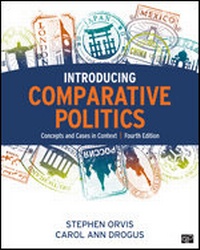
Introducing Comparative Politics
Concepts and Cases in Context
4th Edition
Published on 28. February 2017
Book
Paperback/Softback
760 pages
978-1-5063-7546-5 (ISBN)
Description
This book weaves a set of extended case studies of 11 core countries into its narrative. Serving as touchstones, the cases are set in chapters where they make the most sense topically-not separated from theory or in a separate volume-and vividly illustrate issues in cross-national context. In this edition, a new chapter on Contentious Politics ties together content on ethnic fragmentation, social movements, civil war, and revolutions, and adds significant new material from the growing literature on political violence.
Reviews / Votes
"Introducing Comparative Politics provides a solid introduction to the key concepts and themes of Comparative Politics for undergraduate students. The book successfully resolves the decades long question of whether to teach concepts or countries by integrating concise case study material within chapters focused on concepts and themes. This approach allows students to grasp key understandings of comparative politics, develop a lexicon of terms and concepts, and then apply the concepts using the comparative method. Therefore, Orvis & Drogus impart to students not only a better understanding of our world; they also train them on using a valuable skill-thinking like a Comparativist." -- Neal G. Jesse "Introducing Comparative Politics is the perfect text for introducing college students to the language and methods of comparative politics. The country specific case studies are the perfect length for illustrating the concepts and themes, and rather than overwhelm students with extensive histories of countries' political development, the cases provide rich and relevant vignettes about foreign people and places in ways that are meaningful and inspiring to students of all levels. The material is accessible to students new to political analysis, yet sophisticated enough to engage more advanced students eager to deepen their knowledge about the global political landscape." -- Carolyn J. CraigMore details
Edition
4th Revised edition
Language
English
Place of publication
Washington
United States
Publishing group
SAGE Publications Inc
Target group
College/higher education
Edition type
Revised edition
Dimensions
Height: 254 mm
Width: 203 mm
Weight
1330 gr
ISBN-13
978-1-5063-7546-5 (9781506375465)
Copyright in bibliographic data and cover images is held by Nielsen Book Services Limited or by the publishers or by their respective licensors: all rights reserved.
Schweitzer Classification
Other editions
Previous edition
Stephen Walter Orvis | Carol Ann Drogus
Introducing Comparative Politics
Concepts and Cases in Context
Book
03/2014
3rd Edition
CQ Press
€163.42
Article exhausted; check for reprint
Persons
Stephen Orvis is professor of government and Associate Dean of Students for Academics at Hamilton College. He is a specialist on sub-Saharan Africa (Kenya in particular), identity politics, democratic transitions, and the political economy of development. He has taught introduction to comparative politics for 25 years, as well as courses on African politics, nationalism and the politics of identity, political economy of development, and weak states. He has written a book and articles on agricultural development in Kenya, has written several articles on civil society in Africa and Kenya, and is currently doing research on political institutions in Africa.
Carol Ann Drogus is Senior Associate Director of Off-Campus Study at Colgate University. She is a specialist on Brazil, religion, and women's political participation. She taught introduction to comparative politics for 15 years, as well as courses on Latin American politics, gender and politics, and women in Latin America. She has written two books and numerous articles on the political participation of women in religious movements in Brazil.
Carol Ann Drogus is Senior Associate Director of Off-Campus Study at Colgate University. She is a specialist on Brazil, religion, and women's political participation. She taught introduction to comparative politics for 15 years, as well as courses on Latin American politics, gender and politics, and women in Latin America. She has written two books and numerous articles on the political participation of women in religious movements in Brazil.
Content
World Map
Regional and Country Coverage
Preface
About the Authors
PART I A FRAMEWORK FOR UNDERSTANDING COMPARATIVE POLITICS
CHAPTER 1. INTRODUCTION
The Big Issues
Comparative Politics: What Is It? Why Study It? How to Study It?
Three Key Questions in Comparative Politics
Plan of the Book
Key Concepts
Works Cited
Resources for Further Study
Web Resources
CHAPTER 2. THE MODERN STATE
Characteristics of the Modern State
Historical Origins of Modern States
Strong, Weak, and Failed States
Case Studies of State Formation
Conclusion
Key Concepts
Works Cited
Resources for Further Study
Web Resources
CHAPTER 3. STATES, CITIZENS, AND REGIMES
Citizens and Civil Society
Regimes, Ideologies, and Citizens
Conclusion
Key Concepts
Works Cited
Resources for Further Study
Web Resources
CHAPTER 4. STATES AND IDENTITY
Understanding Identity
The Policy Debate
Nations and Nationalism
Ethnicity
Race
Religion: Recognition, Autonomy, and the Secular State
Gender and Sexual Orientation: The Continuing Struggle for Recognition, Social Status, and Representation
Conclusion
Key Concepts
Works Cited
Resources for Further Study
Web Resources
PART II POLITICAL SYSTEMS AND HOW THEY WORK
CHAPTER 5. GOVERNING INSTITUTIONS IN DEMOCRACIES
Executives and Legislatures
Comparing Executive-Legislative Institutions
Judiciary
Bureaucracy
Federalism
Conclusion
Key Concepts
Works Cited
Resources for Further Study
Web Resources
CHAPTER 6. INSTITUTIONS OF PARTICIPATION AND REPRESENTATION IN DEMOCRACIES
The Electoral System
Formal Institutions: Political Parties and Party Systems
Civil Society
Case Studies in Participation and Representation
Conclusion
Key Concepts
Works Cited
Resources for Further Study
Web Resources
CHAPTER 7. CONTENTIOUS POLITICS: SOCIAL MOVEMENTS, POLITICAL VIOLENCE, AND REVOLUTION
Framing Contentious Politics
Political Violence
Revolution
Conclusion
Key Concepts
Works Cited
Resources for Further Study
Web Resources
CHAPTER 8. AUTHORITARIAN INSTITUTIONS
Authoritarian Rule around the World
Governing Institutions in Authoritarian Regimes
Elections, Parties, and Civil Society in Authoritarian Regimes
Conclusion
Key Concepts
Works Cited
Resources for Further Study
Web Resources
CHAPTER 9. REGIME CHANGE
The Military in Politics: Coups d'Etat
Revolution
Democratization
Transitions to Democracy
Explaining Democratization, Consolidation, and Breakdown
Conclusion
Key Concepts
Works Cited
Resources for Further Study
Web Resources
PART III POLITICAL ECONOMY AND POLICY
CHAPTER 10. POLITICAL ECONOMY OF WEALTH
The Market, Capitalism, and the State
Key Economic Debates
Types of Capitalist Economies
Globalization: A New World Order, or Deja Vu All Over Again?
States and Markets around the World
Conclusion
Key Concepts
Works Cited
Resources for Further Study
Web Resources
CHAPTER 11. POLITICAL ECONOMY OF DEVELOPMENT
What Is "Development"?
Development and Globalization
The Development Debate
Case Studies in Development
Conclusion
Key Concepts
Works Cited
Resources for Further Study
Web Resources
CHAPTER 12. PUBLIC POLICIES WHEN MARKETS FAIL: WELFARE, HEALTH, AND THE ENVIRONMENT
"Welfare": Social Policy in Comparative Perspective
Health Care and Health Policy
Environmental Problems and Policy
Conclusion
Key Concepts
Works Cited
Resources for Further Study
Web Resources
Glossary
Index
Regional and Country Coverage
Preface
About the Authors
PART I A FRAMEWORK FOR UNDERSTANDING COMPARATIVE POLITICS
CHAPTER 1. INTRODUCTION
The Big Issues
Comparative Politics: What Is It? Why Study It? How to Study It?
Three Key Questions in Comparative Politics
Plan of the Book
Key Concepts
Works Cited
Resources for Further Study
Web Resources
CHAPTER 2. THE MODERN STATE
Characteristics of the Modern State
Historical Origins of Modern States
Strong, Weak, and Failed States
Case Studies of State Formation
Conclusion
Key Concepts
Works Cited
Resources for Further Study
Web Resources
CHAPTER 3. STATES, CITIZENS, AND REGIMES
Citizens and Civil Society
Regimes, Ideologies, and Citizens
Conclusion
Key Concepts
Works Cited
Resources for Further Study
Web Resources
CHAPTER 4. STATES AND IDENTITY
Understanding Identity
The Policy Debate
Nations and Nationalism
Ethnicity
Race
Religion: Recognition, Autonomy, and the Secular State
Gender and Sexual Orientation: The Continuing Struggle for Recognition, Social Status, and Representation
Conclusion
Key Concepts
Works Cited
Resources for Further Study
Web Resources
PART II POLITICAL SYSTEMS AND HOW THEY WORK
CHAPTER 5. GOVERNING INSTITUTIONS IN DEMOCRACIES
Executives and Legislatures
Comparing Executive-Legislative Institutions
Judiciary
Bureaucracy
Federalism
Conclusion
Key Concepts
Works Cited
Resources for Further Study
Web Resources
CHAPTER 6. INSTITUTIONS OF PARTICIPATION AND REPRESENTATION IN DEMOCRACIES
The Electoral System
Formal Institutions: Political Parties and Party Systems
Civil Society
Case Studies in Participation and Representation
Conclusion
Key Concepts
Works Cited
Resources for Further Study
Web Resources
CHAPTER 7. CONTENTIOUS POLITICS: SOCIAL MOVEMENTS, POLITICAL VIOLENCE, AND REVOLUTION
Framing Contentious Politics
Political Violence
Revolution
Conclusion
Key Concepts
Works Cited
Resources for Further Study
Web Resources
CHAPTER 8. AUTHORITARIAN INSTITUTIONS
Authoritarian Rule around the World
Governing Institutions in Authoritarian Regimes
Elections, Parties, and Civil Society in Authoritarian Regimes
Conclusion
Key Concepts
Works Cited
Resources for Further Study
Web Resources
CHAPTER 9. REGIME CHANGE
The Military in Politics: Coups d'Etat
Revolution
Democratization
Transitions to Democracy
Explaining Democratization, Consolidation, and Breakdown
Conclusion
Key Concepts
Works Cited
Resources for Further Study
Web Resources
PART III POLITICAL ECONOMY AND POLICY
CHAPTER 10. POLITICAL ECONOMY OF WEALTH
The Market, Capitalism, and the State
Key Economic Debates
Types of Capitalist Economies
Globalization: A New World Order, or Deja Vu All Over Again?
States and Markets around the World
Conclusion
Key Concepts
Works Cited
Resources for Further Study
Web Resources
CHAPTER 11. POLITICAL ECONOMY OF DEVELOPMENT
What Is "Development"?
Development and Globalization
The Development Debate
Case Studies in Development
Conclusion
Key Concepts
Works Cited
Resources for Further Study
Web Resources
CHAPTER 12. PUBLIC POLICIES WHEN MARKETS FAIL: WELFARE, HEALTH, AND THE ENVIRONMENT
"Welfare": Social Policy in Comparative Perspective
Health Care and Health Policy
Environmental Problems and Policy
Conclusion
Key Concepts
Works Cited
Resources for Further Study
Web Resources
Glossary
Index