

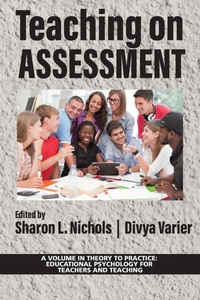
Teaching on Assessment
Published on 9. March 2021
Book
Paperback/Softback
324 pages
978-1-64802-427-6 (ISBN)
Description
In an age where the quality of teacher education programs has been called into question, it is more important than ever that teachers have a fundamental understanding of the principles of human learning, motivation, and development. Theory to Practice: Educational Psychology for Teachers and Teaching is a series for those who teach educational psychology in teacher education programs. At a time when educational psychology is at risk of becoming marginalized, it is imperative that we, as educators, "walk our talk" in serving as models of what effective instruction looks like. Each volume in the series draws upon the latest research to help instructors model fundamental principles of learning, motivation, and development to best prepare their students for the diverse, multidimensional, uncertain, and socially-embedded environments in which these future educators will teach.
The inaugural volume, Teaching on Assessment, is centered on the role of assessment in teaching and learning. Each chapter translates current research on critical topics in assessment for educational psychology instructors and teacher educators to consider in their teaching of future teachers. Written for practitioners, the aim is to present contemporary issues and ideas that would help teachers engage in meaningful assessment practice. This volume is important not only because of the dwindling presence of assessment-related instructional content in teacher preparation programs, but also because the policy changes in the last two decades have transformed the meaning and use of assessment in K-12 classrooms.
The inaugural volume, Teaching on Assessment, is centered on the role of assessment in teaching and learning. Each chapter translates current research on critical topics in assessment for educational psychology instructors and teacher educators to consider in their teaching of future teachers. Written for practitioners, the aim is to present contemporary issues and ideas that would help teachers engage in meaningful assessment practice. This volume is important not only because of the dwindling presence of assessment-related instructional content in teacher preparation programs, but also because the policy changes in the last two decades have transformed the meaning and use of assessment in K-12 classrooms.
Reviews / Votes
This thought-provoking book brings together perspectives from educational psychology and teacher education to examine how assessment can best support student motivation, engagement, and learning. In the volume, editors Nichols and Varier present a set of chapters written by leaders in the field to examine critical questions about how to best prepare teachers to make instructional decisions, understand assessment within the context of learning and motivation theory, and draw on assessment in ways which can meet the needs of diverse learners. Written in a highly accessible language and style, each chapter contains clear takeaway messages designed for educational psychologists, teacher educators, teachers, and pre-service teachers. This book is essential reading for anyone involved in teaching or developing our future teaching professionals."" - Lois R. Harris, Australian Catholic University""This impressive book provides a wealth of contemporary and engaging resources, ideas and perspectives that educational psychology instructors will find relevant for helping students understand the complexity of assessment decision-making as an essential component of instruction. Traditional assessment principles are integrated with contemporary educational psychology research that will enhance prospective teachers' decision-making about classroom assessments that promote all students' learning and motivation. It is unique in showing how to best leverage both formative and summative assessment to boost student engagement and achievement, enabling students to understand how to integrate practical classroom constraints and realities with current knowledge about self-regulation, intrinsic motivation, and other psychological constructs that assessment needs to consider. The chapters are written by established experts who are able to effectively balance presentation of research and theory with practical applications. Notably, the volume includes very important topics rarely emphasized in other assessment texts, including assessment literacy frameworks, diversity, equity, assessment strategies for students with special needs, and data-driven decision making. The book will be an excellent supplement for educational psychology classes or for assessment courses, introducing students to current thinking about how to effectively integrate assessment with instruction."" - James McMillan, Virginia Commonwealth University.
More details
Series
Language
English
Place of publication
United States
Publishing group
Emerald Publishing Inc
Target group
Professional and scholarly
Dimensions
Height: 234 mm
Width: 156 mm
Thickness: 18 mm
Weight
494 gr
ISBN-13
978-1-64802-427-6 (9781648024276)
Copyright in bibliographic data and cover images is held by Nielsen Book Services Limited or by the publishers or by their respective licensors: all rights reserved.
Schweitzer Classification
Other editions
Additional editions
Sharon L. Nichols
Teaching on Assessment
E-Book
01/2021
1st Edition
Information Age Publishing
from
€62.33
Available for download
Persons
Sharon L. Nichols, The University of Texas at San Antonio
Divya Varier, George Mason University
Divya Varier, George Mason University
Content
Acknowledgements.
Endorsements.
Introduction: Toward a Better Understanding of Assessment in Teaching and Teacher Preparation; Divya Varier and Sharon L. Nichols.
Section I. Overview And General Introduction.
Chapter 1. Preparing Pre-Service Teachers for Assessment of, for, and as Learning; Chad M. Gotch, Kira J. Carbonneau, and Dustin S. J. Van Orman.
Chapter 2. Making Valid Instructional Decisions: Teaching Educators to Consider Validity Evidence; Davis Gerber, Matthew Ryan Lavery, and Jonathan D. Bostic.
Section II. Bridging Assessment And Educational Psychology.
Chapter 3. Motivating Students and their Teachers Through Self-Regulated Learning and Reframing Assessment Language; Maria K. DiBenedetto and Dale H. Schunk.
Chapter 4. Conceptualizing and Using Classroom Assessment to Support Students' Learning and Self- Regulation; Peggy P. Chen and Sarah M. Bonner.
Chapter 5. Motivating Assessment: How to Leverage Summative Assessments for the Good of Intrinsic Motivation; Lia M. Daniels, Gabrielle Pelletier, Amanda I. Radil, and Lauren D. Goegan.
Section III. Assessment And Diverse Learners.
Chapter 6. Assessment as Learning: Fostering Belonging of Underrepresented Students in the STEM Content Areas; Amanda Nolen and Tony L. Talbert.
Chapter 7. The Role of Assessment in Learning and Teaching Mathematics with English-Speaking and English Learner (EL) Students; Alison L. Bailey, Carolyn A. Maher, Louise C. Wilkinson, and Usufu Nyakoojo.
Chapter 8. Examining Validity and Accommodations for English Learners in High-Stakes Content Area Standardized Tests; Margarita Huerta, Tiberio Garza, and Fuhui Tong.
Chapter 9. High Quality Assessment for Students with Disabilities; Mary A. Hansen and Vicki Donne.
Chapter 10. Dynamic Assessment in Schools: What, Why, and How; Eunsoo Cho and Cynde Katherine Josol.
Section IV. Data Driven Decision Making.
Chapter 11. The Role of Assessment in Data-Informed Instructional Practice; Lisa M. Abrams.
Chapter 12. Data Use and Education Psychology: Using Data to Understand the Whole Child and Inform Instruction and Educational Decisions; Ellen B. Mandinach and Susan E. Mundry.
Author Biographies.
Endorsements.
Introduction: Toward a Better Understanding of Assessment in Teaching and Teacher Preparation; Divya Varier and Sharon L. Nichols.
Section I. Overview And General Introduction.
Chapter 1. Preparing Pre-Service Teachers for Assessment of, for, and as Learning; Chad M. Gotch, Kira J. Carbonneau, and Dustin S. J. Van Orman.
Chapter 2. Making Valid Instructional Decisions: Teaching Educators to Consider Validity Evidence; Davis Gerber, Matthew Ryan Lavery, and Jonathan D. Bostic.
Section II. Bridging Assessment And Educational Psychology.
Chapter 3. Motivating Students and their Teachers Through Self-Regulated Learning and Reframing Assessment Language; Maria K. DiBenedetto and Dale H. Schunk.
Chapter 4. Conceptualizing and Using Classroom Assessment to Support Students' Learning and Self- Regulation; Peggy P. Chen and Sarah M. Bonner.
Chapter 5. Motivating Assessment: How to Leverage Summative Assessments for the Good of Intrinsic Motivation; Lia M. Daniels, Gabrielle Pelletier, Amanda I. Radil, and Lauren D. Goegan.
Section III. Assessment And Diverse Learners.
Chapter 6. Assessment as Learning: Fostering Belonging of Underrepresented Students in the STEM Content Areas; Amanda Nolen and Tony L. Talbert.
Chapter 7. The Role of Assessment in Learning and Teaching Mathematics with English-Speaking and English Learner (EL) Students; Alison L. Bailey, Carolyn A. Maher, Louise C. Wilkinson, and Usufu Nyakoojo.
Chapter 8. Examining Validity and Accommodations for English Learners in High-Stakes Content Area Standardized Tests; Margarita Huerta, Tiberio Garza, and Fuhui Tong.
Chapter 9. High Quality Assessment for Students with Disabilities; Mary A. Hansen and Vicki Donne.
Chapter 10. Dynamic Assessment in Schools: What, Why, and How; Eunsoo Cho and Cynde Katherine Josol.
Section IV. Data Driven Decision Making.
Chapter 11. The Role of Assessment in Data-Informed Instructional Practice; Lisa M. Abrams.
Chapter 12. Data Use and Education Psychology: Using Data to Understand the Whole Child and Inform Instruction and Educational Decisions; Ellen B. Mandinach and Susan E. Mundry.
Author Biographies.