


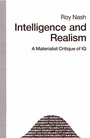
Intelligence and Realism
A Materialist Critique of I.Q.
Published in December 1990
Book
Hardback
192 pages
978-0-333-53455-7 (ISBN)
Description
The problem of IQ practice is IQ theory. Alfred Binet, the founder of mental testing made three fundamental assumptions. First that native intelligence and developed intelligence is necessary for school learning. And third that intelligence can be measured by standardized tests. The endemic crisis of IQ theory stems from these contradictory assumptions. The Spearman-Jensen theory of general intelligence, computer models of cognitive psychology and new revisions to psychometric theory have all failed to resolve the crisis. This argued investigation takes a look at the much contested issues of intelligence, heredity and measurement. Adopting a modern realist approach "Intelligence and Realism" aims to get to the bottom of the IQ question. The main features of this IQ critique is its non-technical presentation of realist arguments. Most IQ critiques are politically based and although effective with a committed audience have little influence on psychologists. This critique confronts new (post 1975) positions adopted by defenders of IQ.
More details
Language
English
Place of publication
Basingstoke
United Kingdom
Target group
College/higher education
Professional and scholarly
Illustrations
index
Dimensions
Height: 220 mm
Width: 140 mm
Weight
350 gr
ISBN-13
978-0-333-53455-7 (9780333534557)
Copyright in bibliographic data is held by Nielsen Book Services Limited or its licensors: all rights reserved.
Schweitzer Classification
Other editions
Additional editions
Book
01/1990
Palgrave Macmillan
€53.49
Shipment within 15-20 days
Content
Introduction - individual social differences; fundamental contradictions in Binet's theory; the pyschometric g reconsidered; processes of behaviour or organs of the mind? positivism and the "construct of intelligence"; the new test and measurement revisionism; intelligence and measurement revisionism; rethinking scaling and measurement in psychometry; the real problem of test bias.