

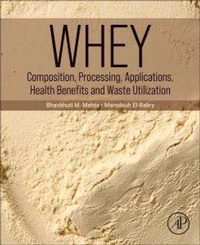
Whey
Composition, Processing, Applications, Health Benefits and Waste Utilization
Will be published approx. on 1. August 2026
Book
Paperback/Softback
485 pages
978-0-443-27648-4 (ISBN)
Description
Whey: Composition, Processing, Applications, Health Benefits and Waste Utilization covers the basics of its chemistry and composition and its more advanced aspects and applications. The nutritive, bioactive, and functional properties covered, as well as whey's uses in the texture and stability of dairy foods. Finally, whey is discussed as a by-product of foods such as cheese and yogurt, along with methods for responsible conversion into valuable products to minimize environmental impact. Written with a student and early-career audience in mind, this work offers a one-stop-shop to all aspects of a key dairy component that has exciting potential for future research.
This book will particularly benefit graduate and post graduate students, as well as post docs and early career researchers in dairy science, food science, and nutrition. Experienced scientists will also find this book useful as a starting point for new research projects.
This book will particularly benefit graduate and post graduate students, as well as post docs and early career researchers in dairy science, food science, and nutrition. Experienced scientists will also find this book useful as a starting point for new research projects.
More details
Content
Part 1: Whey: composition, its components and processing
1. Introduction: Overview of Milk Composition
2. Whey production status and types
3. Whey Chemistry
4. Whey of Different Species and Nutritional Aspects
5. Manufacturing of whey products
6. Properties and microstructure of whey protein products
7. Interactions of whey proteins during processing
8. Demineralization of whey
Part 2: Food applications
9. Cheeses and ice cream
10. Whey use in bakery and confectionery products
11. Infant formula
12. Beverages
13. Whey protein and muscle synthesis: implications for healthy aging and sports performance
14. Edible Films and Coatings
Part 3: Functional Properties and Health Effects
15. Functional Properties of whey in Food Formulation
16. Whey Protein Foams: Preparation, Types and Rheology
17. Digestion of Whey and Its Products
18. Nutritional Applications of Whey
19. Whey: a source of bioactive peptides
20. LACTOSE INTOLERANCE
Part 4: Utilization of Whey as a Dairy Waste
21. Whey as a dairy waste: treatments in effluent plant and disposal methods in environment
22. Whey: A Potential Source of microorganisms and Production of Value-Added Products
23. Whey: Production of bioplastics and Bioenergy
Part 5: Future/ Recent trends
24. Future Developments of Whey
25. Membrane Filtration Technology and Cheese Whey: Applications, Challenges and Opportunities
26. Novel whey-based products
27. Sensory Aspects of Whey and Whey Products
1. Introduction: Overview of Milk Composition
2. Whey production status and types
3. Whey Chemistry
4. Whey of Different Species and Nutritional Aspects
5. Manufacturing of whey products
6. Properties and microstructure of whey protein products
7. Interactions of whey proteins during processing
8. Demineralization of whey
Part 2: Food applications
9. Cheeses and ice cream
10. Whey use in bakery and confectionery products
11. Infant formula
12. Beverages
13. Whey protein and muscle synthesis: implications for healthy aging and sports performance
14. Edible Films and Coatings
Part 3: Functional Properties and Health Effects
15. Functional Properties of whey in Food Formulation
16. Whey Protein Foams: Preparation, Types and Rheology
17. Digestion of Whey and Its Products
18. Nutritional Applications of Whey
19. Whey: a source of bioactive peptides
20. LACTOSE INTOLERANCE
Part 4: Utilization of Whey as a Dairy Waste
21. Whey as a dairy waste: treatments in effluent plant and disposal methods in environment
22. Whey: A Potential Source of microorganisms and Production of Value-Added Products
23. Whey: Production of bioplastics and Bioenergy
Part 5: Future/ Recent trends
24. Future Developments of Whey
25. Membrane Filtration Technology and Cheese Whey: Applications, Challenges and Opportunities
26. Novel whey-based products
27. Sensory Aspects of Whey and Whey Products