


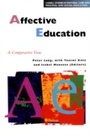
Affective Education
A Comparative View
Published on 1. August 1998
Book
Hardback
272 pages
978-0-304-33987-7 (ISBN)
Description
Affective education can be defined as that part of the educational process which concerns itself with the attitudes, feelings, beliefs and emotions of students. Central to the concept is the acknowledgement that student's feelings about themselves as learners and about their academic subjects can be at least as influential as their actual ability. This collection features the work of contributors from countries such as Belgium, Denmark, Russia, Germany, Israel, Spain and the UK. It shows how the practical approach to affective education varies from nation to nation. By analyzing the underlying theory, this text sets out to bring the different approaches closer together, to enable teachers across the continent to work towards a positive common ground.
More details
Series
Language
English
Place of publication
London
United Kingdom
Publishing group
Bloomsbury Publishing PLC
Target group
College/higher education
Professional and scholarly
Illustrations
b&w line illustratio
Dimensions
Height: 244 mm
Width: 169 mm
Weight
610 gr
ISBN-13
978-0-304-33987-7 (9780304339877)
Copyright in bibliographic data and cover images is held by Nielsen Book Services Limited or by the publishers or by their respective licensors: all rights reserved.
Schweitzer Classification
Other editions
Additional editions
Peter Lang
Affective Education in Europe
E-Book
08/1998
1st Edition
Continuum International Publishing Group Ltd.
€71.99
Available for download
Content
The place of affective education in England, Ron Best; Drug education in Europe, Brian Dobson; Affective education and quality of life in Italian schools, Maria Teresa Crucilia; Twenty years A'Growing, Una Collins; The development of altruism, Victoria Gordillo; Affective education in Israel elementary schools - principles and practice an affective education intervention programme in Israel - dealing with stress in the elementary school, Jaacov Katz; The affective dimension of the Danish "folkeskole", Neils Kryger, Kirsten Reisby; Upbringing - a role for the school? Kirsten Reisbt; Affective and aesthetic dimensions in the learning process - in a Danish historical perspective, Neils Kryger; Coping with bullying and developing positive behaviour, Peter Lang; Personal and social education in Portugal - is education really fostering development? Isabel Menezes, Bartalo Campos; Affective education in the new Spanish education reforms, Ana Maria Pampliega, Manuel Marroquin; The affective dimension in the Russian education system - Russian teachers and emerging affective trends in the Russian education systems, Alex Minaev; Continuity and welcome, Emma Urgesi Marina Zoccoli.