

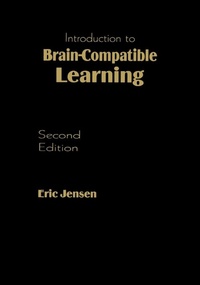
Introduction to Brain-Compatible Learning
2nd Edition
Published on 10. July 2007
Book
Paperback/Softback
136 pages
978-1-4129-5418-1 (ISBN)
Description
"As an introduction to brain-compatible learning, this book highlights some important findings of recent brain research in an easy-to-read manner."
-Andrea F. Rosenblatt, Associate Professor, Barry University
Harness the transformative power of brain-based learning!
Thoroughly updated and revised, this best-selling book by brain expert Eric Jensen explores the key features of brain-based teaching and the most recent research on how the brain learns. Educators will learn about the parts of the brain, what constitutes solid brain research, the differences between boys' and girls' brains, and what types of activities can build retention.
The author presents a reader-friendly text with clear, understandable artwork to reinforce the concepts of brain-based learning. Also included are brain-compatible activities to enhance readers' retention, a complete brain glossary, and a section on the importance of action research.
This easy-to-read book is ideal for educators new to the concepts of brain-compatible learning and is organized into three simple, practical units, covering:
Background information to provide educators with a solid foundation in brain research
Seven principles of teaching based on essential brain concepts
Next steps to put the research and principles into practice
For both novice and veteran educators, this must-have guide provides an opportunity to make a positive, significant, and lasting difference in the way all students learn!
-Andrea F. Rosenblatt, Associate Professor, Barry University
Harness the transformative power of brain-based learning!
Thoroughly updated and revised, this best-selling book by brain expert Eric Jensen explores the key features of brain-based teaching and the most recent research on how the brain learns. Educators will learn about the parts of the brain, what constitutes solid brain research, the differences between boys' and girls' brains, and what types of activities can build retention.
The author presents a reader-friendly text with clear, understandable artwork to reinforce the concepts of brain-based learning. Also included are brain-compatible activities to enhance readers' retention, a complete brain glossary, and a section on the importance of action research.
This easy-to-read book is ideal for educators new to the concepts of brain-compatible learning and is organized into three simple, practical units, covering:
Background information to provide educators with a solid foundation in brain research
Seven principles of teaching based on essential brain concepts
Next steps to put the research and principles into practice
For both novice and veteran educators, this must-have guide provides an opportunity to make a positive, significant, and lasting difference in the way all students learn!
Reviews / Votes
"As an introduction to brain-compatible learning, this book does an admirable job. It highlights some of the important findings of recent brain research and presents ideas in an easy-to-read manner." -- Andrea F. Rosenblatt, Associate Professor "A 'must' for practicing teachers and education libraries alike." -- California Bookwatch, October 2007More details
Edition
2nd Revised edition
Language
English
Place of publication
Thousand Oaks
United States
Publishing group
SAGE Publications Inc
Target group
Professional and scholarly
Edition type
Revised edition
Dimensions
Height: 254 mm
Width: 178 mm
Thickness: 8 mm
Weight
275 gr
ISBN-13
978-1-4129-5418-1 (9781412954181)
Copyright in bibliographic data and cover images is held by Nielsen Book Services Limited or by the publishers or by their respective licensors: all rights reserved.
Schweitzer Classification
Other editions
Additional editions
Eric P. Jensen
Introduction to Brain-Compatible Learning
Book
07/2007
2nd Edition
Corwin Press Inc
€70.30
Shipment within 10-20 days
Previous edition
Eric P. Jensen
Introduction to Brain-Compatible Learning
Book
02/1998
1st Edition
Brain Store Inc
€38.58
Article exhausted; check for reprint
Person
Eric Jensen is a former teacher who grew up in San Diego, California. With a Ph.D. in Human Development, he synthesizes brain research and develops practical applications for educators.
He is listed among the top 30 educators in the world at GlobalGurus.org. Dr. Jensen has authored over 30 books, including Different Brains, Different Learners, Teaching with the Brain in Mind, Turnaround Tools for the Teenage Brain, Teaching with Poverty in Mind, Engaging Students with Poverty in Mind, and Poor Students Rich Students. Dr. Jensen co-founded an academic enrichment program held in 14 countries with over 75,000 graduates. He is a member of the invitation-only Society for Neuroscience and the President's Club at Salk Institute of Biological Studies.
Dr. Jensen provides conference speaking and trainings that can be found at jensenlearning.com. Or, contact: eric@jensenlearning.com.
He is listed among the top 30 educators in the world at GlobalGurus.org. Dr. Jensen has authored over 30 books, including Different Brains, Different Learners, Teaching with the Brain in Mind, Turnaround Tools for the Teenage Brain, Teaching with Poverty in Mind, Engaging Students with Poverty in Mind, and Poor Students Rich Students. Dr. Jensen co-founded an academic enrichment program held in 14 countries with over 75,000 graduates. He is a member of the invitation-only Society for Neuroscience and the President's Club at Salk Institute of Biological Studies.
Dr. Jensen provides conference speaking and trainings that can be found at jensenlearning.com. Or, contact: eric@jensenlearning.com.
Content
Acknowledgments
About the Author
Part I. Background You Need
Introduction
What Is Brain-Compatible Learning?
The Old and New of It
When Brain Research Is Applied to the Classroom, Everything Will Change
Change Can Be Easy
We're Not in Kansas Anymore
Where's the Proof?
Tools for Exploring the Brain
Ten Reasons to Care About the Research?
The Evolution of Brain Models
Be a Brain-Smart Consumer: Recognizing Good Research
Action or Theory: Who Wants to Read All That Research?
Excellent Sources of Research
Fun Factoids on the Brain
What's in the Human Brain
Brain Teaser
The Brain Divided
The Brain Connected
Brain Geography
Brain "Cell"ebration: Far-out Facts About Brain Cells
Learning Happens... But How?
Are Today's Kids Different?
Boys' and Girls' Brain Differences
Learning Disabilities: Different Brains
The Cranial Soup Bowl: Understanding the Chemicals in Our Brains
Part II. The Foundation for Teaching Is Principles, Not Strategies
What Are the Principles?
Principle 1: The Principle of Change: Brain Is Dynamic, Not Fixed
Implications for Educators
Principle 2: The Principle of Variety: All Brains Are Unique
Implications for Educators
Principle 3: The Principle of Maturation: Developmental Sensitivity
Implications for Educators
Principle 4: The Principle of Culture: We Have a "Social Brain"
Implications for Educators
Principle 5: The Principle of Connectivity: The Brain Is an Integrated "System of Systems"
Implications for Educators
Principle 6: The Principle of Memory Malleability
Implications for Educators
Principle 7: The Principle of Resource Consumption
Necessity for Processing
Part III. So What; Now What?
Asking Big Questions: What's in a Brain-Compatible Curriculum?
Brain-Compatible Test-Taking Success Strategies
Systemic Change: The Next Level
Big Picture Analysis: Transformation Happens
Action Research Makes a Difference
The Learning Community
What's Next?
Appendix A: Brain-Smart Resources and Support
Appendix B: Glossary of Brain Terminology
References
Index
About the Author
Part I. Background You Need
Introduction
What Is Brain-Compatible Learning?
The Old and New of It
When Brain Research Is Applied to the Classroom, Everything Will Change
Change Can Be Easy
We're Not in Kansas Anymore
Where's the Proof?
Tools for Exploring the Brain
Ten Reasons to Care About the Research?
The Evolution of Brain Models
Be a Brain-Smart Consumer: Recognizing Good Research
Action or Theory: Who Wants to Read All That Research?
Excellent Sources of Research
Fun Factoids on the Brain
What's in the Human Brain
Brain Teaser
The Brain Divided
The Brain Connected
Brain Geography
Brain "Cell"ebration: Far-out Facts About Brain Cells
Learning Happens... But How?
Are Today's Kids Different?
Boys' and Girls' Brain Differences
Learning Disabilities: Different Brains
The Cranial Soup Bowl: Understanding the Chemicals in Our Brains
Part II. The Foundation for Teaching Is Principles, Not Strategies
What Are the Principles?
Principle 1: The Principle of Change: Brain Is Dynamic, Not Fixed
Implications for Educators
Principle 2: The Principle of Variety: All Brains Are Unique
Implications for Educators
Principle 3: The Principle of Maturation: Developmental Sensitivity
Implications for Educators
Principle 4: The Principle of Culture: We Have a "Social Brain"
Implications for Educators
Principle 5: The Principle of Connectivity: The Brain Is an Integrated "System of Systems"
Implications for Educators
Principle 6: The Principle of Memory Malleability
Implications for Educators
Principle 7: The Principle of Resource Consumption
Necessity for Processing
Part III. So What; Now What?
Asking Big Questions: What's in a Brain-Compatible Curriculum?
Brain-Compatible Test-Taking Success Strategies
Systemic Change: The Next Level
Big Picture Analysis: Transformation Happens
Action Research Makes a Difference
The Learning Community
What's Next?
Appendix A: Brain-Smart Resources and Support
Appendix B: Glossary of Brain Terminology
References
Index