

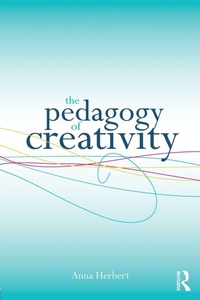
The Pedagogy of Creativity
1st Edition
Published on 22. February 2010
Book
Paperback/Softback
160 pages
978-0-415-54887-8 (ISBN)
Description
The Pedagogy of Creativity represents a groundbreaking study linking the pedagogy of classroom creativity with psychoanalytical theories. Taking a classroom-based example of poststructuralist methodology as its starting point, Anna Herbert's investigation explores the relationship between creativity seen in psychological activity, such as dreams, and creativity seen in the classroom, asking the following questions:
What might a methodology which taps into different forms of creativity look like?
Could such a methodology support current neuropsychological theories of memory and learning?
What are the consequences of imaginary and symbolic orders of knowledge for the understanding of both conscious and unconscious creativity in the classroom?
Exploring the ideas of a number of psychological analysts including Jacques Lacan's four discourses, concepts of 'the other' and the theories of Postructuralist thinkers including Levinas, Mead and Kristeva, Herbert explains how different theories can be used to develop creativity in the classroom and surmount obstacles preventing creative environments.
Clearly presenting both theoretical positions and their bearing on classroom practice, teachers at all levels will benefit from this innovative approach to creativity, as will school psychologists and all professionals interested in the links between psychoanalysis and pedagogy.
Herbert clearly communicates both theoretical positions and their bearing on classroom practice. Teacher at all levels will benefit from this innovative approach to creativity, as will school psychologists and other professionals interested in the links between psychoanalysis and pedagogy.
What might a methodology which taps into different forms of creativity look like?
Could such a methodology support current neuropsychological theories of memory and learning?
What are the consequences of imaginary and symbolic orders of knowledge for the understanding of both conscious and unconscious creativity in the classroom?
Exploring the ideas of a number of psychological analysts including Jacques Lacan's four discourses, concepts of 'the other' and the theories of Postructuralist thinkers including Levinas, Mead and Kristeva, Herbert explains how different theories can be used to develop creativity in the classroom and surmount obstacles preventing creative environments.
Clearly presenting both theoretical positions and their bearing on classroom practice, teachers at all levels will benefit from this innovative approach to creativity, as will school psychologists and all professionals interested in the links between psychoanalysis and pedagogy.
Herbert clearly communicates both theoretical positions and their bearing on classroom practice. Teacher at all levels will benefit from this innovative approach to creativity, as will school psychologists and other professionals interested in the links between psychoanalysis and pedagogy.
More details
Language
English
Place of publication
London
United Kingdom
Publishing group
Taylor & Francis Ltd
Target group
College/higher education
Product notice
Paperback (UK-B)
Dimensions
Height: 234 mm
Width: 156 mm
Thickness: 9 mm
Weight
257 gr
ISBN-13
978-0-415-54887-8 (9780415548878)
Copyright in bibliographic data and cover images is held by Nielsen Book Services Limited or by the publishers or by their respective licensors: all rights reserved.
Schweitzer Classification
Other editions
Additional editions
Anna Herbert
The Pedagogy of Creativity
Book
02/2010
1st Edition
Routledge
€205.00
Shipment within 15-20 days
Person
Anna Herbert works in the Department of Education, Lund University, Sweden.
Content
Introduction 1. Towards a poststructuralist pedagogy 2. The Symbolic order and the unconscious 3. Dreaming and the Subject of Creativity 4. Knowledge, creativity and the four discourses 5. Lecturing out there with the Other 6. Repetition and Metaphor 7. The other/Other, ethics and creativity - (on the other side of) narcissism and aggressiveness 8. Methodology