

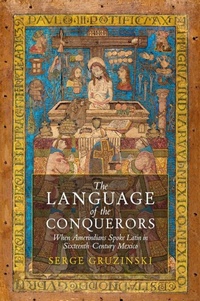
The Language of the Conquerors
When Amerindians Spoke Latin in Sixteenth-Century Mexico
1st Edition
Published on 27. February 2026
Book
Hardback
288 pages
978-1-5095-6522-1 (ISBN)
Description
One of the most decisive and irreversible consequences of the Spanish conquest of the Americas was the alphabetic revolution which changed the forms of communication in indigenous societies. Writing, paper and books arrived in the Americas with the conquistadors and they were used as weapons by the Spanish to subjugate local populations and impose Christianity on them.
The written word of the conquerors was a key medium of colonization: orders from the imperial metropole were written down, local resources and valuables were recorded and books conveyed knowledge coming from Europe. The children of indigenous elites, trained in humanist values, were soon more familiar with Latin and the Bible than with the beliefs of their ancestors, and the use of Latin instilled new modes of reasoning and thought. By imposing European languages and writing systems, the conquistadors also inculcated a belief in the superiority of the written word and even its holiness. And yet despite this, indigenous people were able to resist alphabetic colonization in other ways, thanks to their extraordinary creativity.
By putting language, writing and printing at the centre of his analysis, Serge Gruzinski develops a fresh perspective on the colonization and conversion of the indigenous people of the Americas and enables us to observe in detail how ideas intermingle when two civilizations collide.
The written word of the conquerors was a key medium of colonization: orders from the imperial metropole were written down, local resources and valuables were recorded and books conveyed knowledge coming from Europe. The children of indigenous elites, trained in humanist values, were soon more familiar with Latin and the Bible than with the beliefs of their ancestors, and the use of Latin instilled new modes of reasoning and thought. By imposing European languages and writing systems, the conquistadors also inculcated a belief in the superiority of the written word and even its holiness. And yet despite this, indigenous people were able to resist alphabetic colonization in other ways, thanks to their extraordinary creativity.
By putting language, writing and printing at the centre of his analysis, Serge Gruzinski develops a fresh perspective on the colonization and conversion of the indigenous people of the Americas and enables us to observe in detail how ideas intermingle when two civilizations collide.
Reviews / Votes
"Serge Gruzinski calls attention to the human consequences for indigenous peoples across the Americas of the drastic changes wrought by European languages and writing technologies. This book provides a vital twenty-first century counterpart to J. H. Elliott's The Old World and the New."Andrew Laird, Brown University, author of Aztec Latin
"Rapidly mastering the languages of the conquerors brought new speakers to reinvent how and what to tell, in writing. This groundbreaking book is not just a history of hegemonic alphabetization, or of indigenous resistance to Latin and Spanish. It's a history of that active reinventing, one that becomes inspirational well beyond the early modern times."
Alessandra Russo, Columbia University, author of A New Antiquity
"Very readable and full of interesting material"
The Prisma
More details
Language
English
Place of publication
Oxford
United Kingdom
Publishing group
John Wiley and Sons Ltd
Target group
Professional and scholarly
Product notice
sewn/stitched
Cloth over boards
Dimensions
Height: 232 mm
Width: 154 mm
Thickness: 26 mm
Weight
544 gr
ISBN-13
978-1-5095-6522-1 (9781509565221)
Copyright in bibliographic data and cover images is held by Nielsen Book Services Limited or by the publishers or by their respective licensors: all rights reserved.
Schweitzer Classification
Other editions
Additional editions
Serge Gruzinski
The Language of the Conquerors
When Amerindians Spoke Latin in Sixteenth-Century Mexico
E-Book
04/2026
1st Edition
Wiley
€19.99
Available for download
Serge Gruzinski
The Language of the Conquerors
When Amerindians Spoke Latin in Sixteenth-Century Mexico
E-Book
04/2026
1st Edition
Wiley
€19.99
Available for download
Serge Gruzinski
The Language of the Conquerors
When Amerindians Spoke Latin in Sixteenth-Century Mexico
Book
02/2026
1st Edition
Polity Press
€27.50
Shipment within 15-20 days
Persons
Serge Gruzinski is Director of Research at the Centre National de la Recherche Scientifique and Director of Studies at the Ecole des hautes etudes en sciences sociales in Paris.
Content
Introduction
Part One: An Alphabetic Unleashing
Chapter I. The "Aztec" Psalter
Chapter II. An alphabetic unleashing
Chapter III. The First Wave
Part Two: Learning to Read, Write and Sing
Chapter IV. The First Teachers
Chapter V. The First Pupils
Chapter VI. How the Apprenticeship Worked
Chapter VII. Indigenous Musicians
Part Three: What is Latin Good For?
Chapter VIII. A University for Indigenous Scholars
Chapter IX. A Prodigious Education Machine
Chapter X. "Reverende pater, nato, cujus casus est?" The Indians' Latin
Part Four: Novi homines, New Men
Chapter XI. Three Lives
Chapter XII. A Forest of Texts and Images
Chapter XIII. Humanists, Philologists, Political Activists
Chapter XIV. The Challenges of the First Globalized World
Part Five: A Psalmody for the Indians
Chapter XV. The Creators of the Psalmody
Chapter XVI. The Alchemy of the Psalter
Epilogue: "Dance, Dance or We Are Lost!"
Acknowledgements
List of Abbreviations
Bibliography
Notes
Index
Part One: An Alphabetic Unleashing
Chapter I. The "Aztec" Psalter
Chapter II. An alphabetic unleashing
Chapter III. The First Wave
Part Two: Learning to Read, Write and Sing
Chapter IV. The First Teachers
Chapter V. The First Pupils
Chapter VI. How the Apprenticeship Worked
Chapter VII. Indigenous Musicians
Part Three: What is Latin Good For?
Chapter VIII. A University for Indigenous Scholars
Chapter IX. A Prodigious Education Machine
Chapter X. "Reverende pater, nato, cujus casus est?" The Indians' Latin
Part Four: Novi homines, New Men
Chapter XI. Three Lives
Chapter XII. A Forest of Texts and Images
Chapter XIII. Humanists, Philologists, Political Activists
Chapter XIV. The Challenges of the First Globalized World
Part Five: A Psalmody for the Indians
Chapter XV. The Creators of the Psalmody
Chapter XVI. The Alchemy of the Psalter
Epilogue: "Dance, Dance or We Are Lost!"
Acknowledgements
List of Abbreviations
Bibliography
Notes
Index