


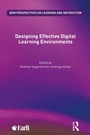
Designing Effective Digital Learning Environments
1st Edition
Published on 30. December 2024
Book
Hardback
302 pages
978-1-032-47819-7 (ISBN)
Description
Bringing together the research of leading international scholars in the field of digital learning, Designing Effective Digital Learning Environments discusses cutting-edge advancements in digital technology and presents an evidence-informed summary of best practices for effective design principles and implementation within educational settings.
Readers will benefit from a synthesis of research evidence from previous meta-analyses on how to design digital environments that support learning, motivation, and collaboration. Divided into eight thematic parts, chapters unpack:
An introduction to the design of digital learning environments
Learning with multimedia, with particular emphasis on digital reading comprehension environments and GeoGebra software
Digital videos for learning, including dynamic visualizations, instructional videos, and eye movement modeling examples
Simulated realities, including learning with pedagogical agents and immersive virtual reality environments
Game-based and sensor-based learning in digital environments
Digital learning in social contexts, including a discussion of CSCL, social media, and audience response systems
Design of digital classrooms, including flipped classroom approaches and synchronous online learning
A concluding section discussing the efficacy and design of digital learning environments
This edited volume is an essential read for any scholar, researcher, Ph.D., or Masters student working in the field of digital learning.
Readers will benefit from a synthesis of research evidence from previous meta-analyses on how to design digital environments that support learning, motivation, and collaboration. Divided into eight thematic parts, chapters unpack:
An introduction to the design of digital learning environments
Learning with multimedia, with particular emphasis on digital reading comprehension environments and GeoGebra software
Digital videos for learning, including dynamic visualizations, instructional videos, and eye movement modeling examples
Simulated realities, including learning with pedagogical agents and immersive virtual reality environments
Game-based and sensor-based learning in digital environments
Digital learning in social contexts, including a discussion of CSCL, social media, and audience response systems
Design of digital classrooms, including flipped classroom approaches and synchronous online learning
A concluding section discussing the efficacy and design of digital learning environments
This edited volume is an essential read for any scholar, researcher, Ph.D., or Masters student working in the field of digital learning.
More details
Series
Language
English
Place of publication
London
United Kingdom
Publishing group
Taylor & Francis Ltd
Target group
College/higher education
Professional and scholarly
Academic and Postgraduate
Illustrations
19 s/w Abbildungen, 11 s/w Photographien bzw. Rasterbilder, 8 s/w Zeichnungen, 8 s/w Tabellen
8 Tables, black and white; 8 Line drawings, black and white; 11 Halftones, black and white; 19 Illustrations, black and white
Dimensions
Height: 240 mm
Width: 161 mm
Thickness: 22 mm
Weight
655 gr
ISBN-13
978-1-032-47819-7 (9781032478197)
Copyright in bibliographic data and cover images is held by Nielsen Book Services Limited or by the publishers or by their respective licensors: all rights reserved.
Schweitzer Classification
Other editions
Additional editions

Andreas Gegenfurtner | Ingo Kollar
Designing Effective Digital Learning Environments
Book
12/2024
1st Edition
Routledge
€56.60
Shipment within 10-20 days
Andreas Gegenfurtner | Ingo Kollar
Designing Effective Digital Learning Environments
E-Book
12/2024
1st Edition
Routledge
€48.49
Available for download
Andreas Gegenfurtner | Ingo Kollar
Designing Effective Digital Learning Environments
E-Book
12/2024
1st Edition
Routledge
€48.49
Available for download
Persons
Andreas Gegenfurtner is a Professor of Methods in Learning Research at the University of Augsburg. He currently serves as editor of Frontline Learning Research and is on the editorial boards of the EARLI journals Educational Research Review and Learning and Instruction.
Ingo Kollar is a Professor of Psychology with a special emphasis on Educational Psychology at the University of Augsburg. He also serves on the editorial boards of Instructional Science, International Journal of Computer-Supported Collaborative Learning, and Psychology Learning and Teaching.
Ingo Kollar is a Professor of Psychology with a special emphasis on Educational Psychology at the University of Augsburg. He also serves on the editorial boards of Instructional Science, International Journal of Computer-Supported Collaborative Learning, and Psychology Learning and Teaching.
Content
Part I Introduction; 1 Design of digital learning environments: Evidence from meta-analyses; Part II Learning with multimedia; 2 The effectiveness of learning with multimedia; 3 Design of effective digital reading comprehension environments; 4 GeoGebra, a comprehensive tool for learning mathematics; Part III Learning with digital videos; 5 Dynamic visualizations: How to overcome challenges and seize opportunities; 6 Six evidence-informed tips on how to optimize learning from instructional videos; 7 Eye movement modeling examples; Part IV Learning from simulated realities; 8 Learning with pedagogical agents in digital environments; 9 Designing effective immersive virtual reality learning environments; Part V Game-based and sensor-based learning in digital environments; 10 Effectiveness of gamification in education; 11 Sensors and wearables; Part VI Digital learning in social contexts; 12 Computer-supported collaborative learning; 13 Social media in class: Problem or panacea?; 14 Clickers for effective learning and instruction: An examination of the effects of audience response systems in the classroom; Part VII Designing digital classrooms; 15 Effectiveness of flipped classrooms; 16 Designing effective synchronous online learning; 17 Impacts of web-based inquiry learning environments aligned with knowledge integration pedagogy; Part VIII Discussion; 18 Increasing the effectiveness of digital learning; 19 Design of digital learning environments: Balancing theoretical, methodological, empirical, and technological approaches