

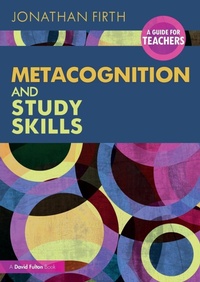
Metacognition and Study Skills: A Guide for Teachers
A Guide for Teachers
1st Edition
Published on 13. August 2024
Book
Paperback/Softback
174 pages
978-1-032-48015-2 (ISBN)
Description
Pupils often make poor choices when it comes to independent learning because they don't intuitively understand how to learn. In the classroom too, they typically misjudge how well they understand new concepts, overestimate the accuracy of their own examples and underestimate how much they forget. This book reveals how a metacognitive approach to teaching can help overcome these challenges and support pupils in their learning. This approach can help them in developing the skills to become successful, self-regulated learners.
Drawing on key research from cognitive science, this book explores how metacognition works in practice and argues that it is a complex skill best developed over months and years at school. It provides a blueprint for how 'learning to learn' alongside 'quick wins' that teachers can implement straight away. Chapters cover:
* The metacognitive processes that underpin effective learning
* Myths about learning, and how pupils' memory really works
* Quick-to-apply classroom strategies for before, during, and after tasks
* Different independent study techniques and how to embed them
* Developing a culture of metacognition
Full of practical strategies and case studies, this is essential reading for all teachers who want to help their pupils become successful learners in school as well as independent learners for their exam revision and beyond.
Drawing on key research from cognitive science, this book explores how metacognition works in practice and argues that it is a complex skill best developed over months and years at school. It provides a blueprint for how 'learning to learn' alongside 'quick wins' that teachers can implement straight away. Chapters cover:
* The metacognitive processes that underpin effective learning
* Myths about learning, and how pupils' memory really works
* Quick-to-apply classroom strategies for before, during, and after tasks
* Different independent study techniques and how to embed them
* Developing a culture of metacognition
Full of practical strategies and case studies, this is essential reading for all teachers who want to help their pupils become successful learners in school as well as independent learners for their exam revision and beyond.
More details
Language
English
Place of publication
London
United Kingdom
Publishing group
Taylor & Francis Ltd
Target group
Professional and scholarly
Professional Practice & Development and Professional Reference
Illustrations
4 s/w Abbildungen, 4 s/w Zeichnungen, 2 s/w Tabellen
2 Tables, black and white; 4 Line drawings, black and white; 4 Illustrations, black and white
Dimensions
Height: 246 mm
Width: 174 mm
Thickness: 10 mm
Weight
336 gr
ISBN-13
978-1-032-48015-2 (9781032480152)
Copyright in bibliographic data and cover images is held by Nielsen Book Services Limited or by the publishers or by their respective licensors: all rights reserved.
Schweitzer Classification
Other editions
Additional editions
Jonathan Firth
Metacognition and Study Skills: A Guide for Teachers
E-Book
08/2024
1st Edition
Routledge
€24.99
Available for download
Jonathan Firth
Metacognition and Study Skills: A Guide for Teachers
E-Book
08/2024
1st Edition
Routledge
€24.99
Available for download

Book
08/2024
1st Edition
Routledge
€197.00
Shipment within 10-20 days
Person
Jonathan Firth is a teacher, author, and researcher. Having taught psychology at secondary school level for many years, he now works at the University of Strathclyde, Glasgow, leading lectures and seminars on undergraduate and postgraduate courses, carrying out research, and supervising students.
Content
Introduction 1. The Logic of Focusing on How to Learn 2. The Shifting Sands of Memory 3. Low-Hanging Metacognitive Fruit 4. In the Classroom, pt. 1: Before the Task 5. In the Classroom, pt. 2: During the Task 6. In the Classroom, pt. 3: After the Task 7. A Metacognitive Approach to Literacy 8. Metacognition Unplugged 9. Self-Regulated Study Skills 10. Elevating Projects to the Metacognitive Level 11. A Culture of Metacognition in the Classroom 12. A Metacognition Manifesto