

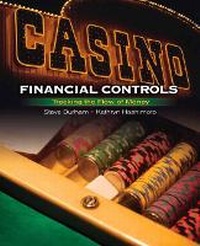
Casino Financial Controls
Tracking the Flow of Money
Published on 19. March 2009
Book
Hardback
184 pages
978-0-13-174809-5 (ISBN)
Description
Every manager and supervisor must be financially literate in order to advance their career in casino management. Managing expenses, a key aspect of performance reviews for managers, relies heavily on the ability to read financial statements. Since there is cash and cash equivalents moving around the casino facility like in no other business, the need for financial literacy is critical in the casino industry. Money exchanges hands at gaming tables and at the cage. Employees assume responsibility for banks and chip racks worth thousands of dollars. Extending credit and issuing comps have a material effect on the profitability of casinos. Money is everywhere and controls must be in place to avoid theft and embezzlement. Incredibly easy-to-understand, Casino Financial Controls: Tracking the Flow of Money gives solid explanations of accounting principles as well as examples of accounting entries. Examples of procedural controls and the reasons for each control are also included and explained in pragmatic terms. The criteria for extending credit or issuing comps are used to avoid serious damage to the bottom line. In addition, pictures and illustrations are included to help the reader to better visualize the reality behind the words.
More details
Content
Table of Contents
Chapter 1: Introduction
Chapter 2: Terminology
Chapter 3: Hold Percentage
Chapter 4: Controls in Place
Chapter 5: Paper Trail of Revenue and Payouts
Chapter 6: Conversion of Financial Data into Financial Statements
Chapter 7: Analysis of Financial Statements
Chapter 8: Purpose and History of Comps and Credit
Chapter 9: Criteria for Issuing Credit
Chapter 10: Criteria for Offering Comps
Chapter 11: Impact on Financial Results
Chapter 12: Conclusion
Chapter 1: Introduction
Chapter 2: Terminology
Chapter 3: Hold Percentage
Chapter 4: Controls in Place
Chapter 5: Paper Trail of Revenue and Payouts
Chapter 6: Conversion of Financial Data into Financial Statements
Chapter 7: Analysis of Financial Statements
Chapter 8: Purpose and History of Comps and Credit
Chapter 9: Criteria for Issuing Credit
Chapter 10: Criteria for Offering Comps
Chapter 11: Impact on Financial Results
Chapter 12: Conclusion