

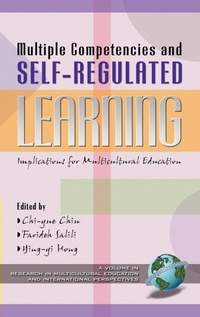
Multiple Competencies and Self-Regulated Learning
Implications for Multicultural Education
Will be published approx. on 1. January 2001
Book
Hardback
256 pages
978-1-930608-93-1 (ISBN)
Description
Although cultural diversity in classrooms is hardly a new phenomenon, its influences on teaching and learning are increasingly discussed. Cultural diversity could lead to better learning and democracy outcomes. However, it also poses challenges for educators and schools. For example, research has revealed marked cultural differences in motivation, learning attitudes, thinking styles and school achievement. Attempts have been made to assure teaching and learning quality by designing standardized curricula and giving standardized tests. However, it is questionable whether standardized tests could capture the diverse aptitudes and skills students with different cultural experiences bring to the classroom. It is also question-able whether a standardized curriculum would lead to positive learningoutcomes for all.
In 1998, we convened a conference in the University of Hong Kong, and invited experts from different parts of globe to discuss how to apply psychology to enhance learning and teaching quality. Probably because of the cultural diversity of the conference participants, multicultural education emerged as one of the dominant themes in the conference. For example, in the Opening Address, Robert Sternberg argued for the importance of cultural sensitivity in ability testing. In another keynote address, Martin Maehr discussed the implications of motivation research for designing an optimal achievement environment for culturally diverse students. Professor Sternberg's paper is included in this volume, and Professor Maehr's article was published in a previous volume we edited (Student Motivation: The Culture and Context of Learning, Plenum, 2001).
The contributors of this volume include psychologists and education researchers from Africa, Asia, Australia and North, and some of them have extensive experiences in multicultural education. Despite their diverse cultural and professional background, the contributors agree that to meet the challenges posed by cultural diversity, educators need to have the sensitivity to multiplicity of student abilities in aptitude and achievement assessment.
In 1998, we convened a conference in the University of Hong Kong, and invited experts from different parts of globe to discuss how to apply psychology to enhance learning and teaching quality. Probably because of the cultural diversity of the conference participants, multicultural education emerged as one of the dominant themes in the conference. For example, in the Opening Address, Robert Sternberg argued for the importance of cultural sensitivity in ability testing. In another keynote address, Martin Maehr discussed the implications of motivation research for designing an optimal achievement environment for culturally diverse students. Professor Sternberg's paper is included in this volume, and Professor Maehr's article was published in a previous volume we edited (Student Motivation: The Culture and Context of Learning, Plenum, 2001).
The contributors of this volume include psychologists and education researchers from Africa, Asia, Australia and North, and some of them have extensive experiences in multicultural education. Despite their diverse cultural and professional background, the contributors agree that to meet the challenges posed by cultural diversity, educators need to have the sensitivity to multiplicity of student abilities in aptitude and achievement assessment.
More details
Series
Edition
illustrated Edition
Language
English
Place of publication
Charlotte
United States
Publishing group
Emerald Publishing Inc
Target group
College/higher education
Professional and scholarly
Dimensions
Height: 240 mm
Width: 161 mm
Thickness: 18 mm
Weight
552 gr
ISBN-13
978-1-930608-93-1 (9781930608931)
Copyright in bibliographic data and cover images is held by Nielsen Book Services Limited or by the publishers or by their respective licensors: all rights reserved.
Schweitzer Classification
Other editions
Additional editions
Farideh Salili | Ying-yi Hong
Multiple Competencies and Self-regulated Learning
Implications for Multicultural Education
E-Book
01/2002
1st Edition
Information Age Publishing
from
€62.33
Available for download
Content
Introduction.
Chapter 1. The Role of Multiple Competencies and Self-regulated Learning in Multicultural Education; Chi-yue Chiu and Farideh Salili, and Ying-yi Hong.
Part I. Multiple Competencies.
Chapter 2. Intelligence Tests as Measures of Developing Expertise; Robert J. Sternberg.
Chapter 3. Authority and Learning in Confucian-Heritage Education: A Relational Methodological Analysis; David Yau-fai Ho, Si-qing Peng, and Fiona Shui-Fun Chan.
Chapter 4. Implicit Concept Mapping: Methodology and Applications in Knowledge Assessment; Eugene V. Aidman.
Chapter 5. Analogical Problem Construction as an Indicator of Understanding In Mathematics Problem Solving; Allan B. I. Bernardo.
Chapter 6. The Changing Model of Intellectual Abilities: Effects on Schooling in Hong Kong; Jimmy Chan.
Part II. Self-Regulated Learning.
Chapter 7. From Motivation to Self-regulation: Clustering Students' Motivational and Cognitive Characteristics and Exploring the Impact of Social Interaction on Learning; Jennifer Archer.
Chapter 8. Motivation and Self-regulation: A Cross-Cultural Comparison of the Effect Of Culture and Context of Learning on Student Motivation and Self-regulation; Farideh Salili, Ho-ying Fu, Yuk-yue Tong, and Diana Tabatabai.
Chapter 9. Why Pursue a College Education? The Influence of Early Reflection and Goal Orientation on Adjustment During The First Semester; Regina Conti.
Chapter 10. Motivational Change and Transition in the Transition from Primary School to Secondary School; Judith MacCallum.
Chapter 11. Implicit Theories and Coping with Achievement Setbacks; Wai-man Ip & Chi-yue Chiu.
Chapter 12. Relationship Between Academic Performance and Use of Self-Regulated Learning Strategies Among Form IV Students in Zimbabwe; Alex R. Matambo.
Chapter 13. An Investigative Research in Teaching and Learning in Chinese Societies; David Yau-fai Ho, Si-qing Peng, and Fiona Shui-fun Chan.
Chapter 1. The Role of Multiple Competencies and Self-regulated Learning in Multicultural Education; Chi-yue Chiu and Farideh Salili, and Ying-yi Hong.
Part I. Multiple Competencies.
Chapter 2. Intelligence Tests as Measures of Developing Expertise; Robert J. Sternberg.
Chapter 3. Authority and Learning in Confucian-Heritage Education: A Relational Methodological Analysis; David Yau-fai Ho, Si-qing Peng, and Fiona Shui-Fun Chan.
Chapter 4. Implicit Concept Mapping: Methodology and Applications in Knowledge Assessment; Eugene V. Aidman.
Chapter 5. Analogical Problem Construction as an Indicator of Understanding In Mathematics Problem Solving; Allan B. I. Bernardo.
Chapter 6. The Changing Model of Intellectual Abilities: Effects on Schooling in Hong Kong; Jimmy Chan.
Part II. Self-Regulated Learning.
Chapter 7. From Motivation to Self-regulation: Clustering Students' Motivational and Cognitive Characteristics and Exploring the Impact of Social Interaction on Learning; Jennifer Archer.
Chapter 8. Motivation and Self-regulation: A Cross-Cultural Comparison of the Effect Of Culture and Context of Learning on Student Motivation and Self-regulation; Farideh Salili, Ho-ying Fu, Yuk-yue Tong, and Diana Tabatabai.
Chapter 9. Why Pursue a College Education? The Influence of Early Reflection and Goal Orientation on Adjustment During The First Semester; Regina Conti.
Chapter 10. Motivational Change and Transition in the Transition from Primary School to Secondary School; Judith MacCallum.
Chapter 11. Implicit Theories and Coping with Achievement Setbacks; Wai-man Ip & Chi-yue Chiu.
Chapter 12. Relationship Between Academic Performance and Use of Self-Regulated Learning Strategies Among Form IV Students in Zimbabwe; Alex R. Matambo.
Chapter 13. An Investigative Research in Teaching and Learning in Chinese Societies; David Yau-fai Ho, Si-qing Peng, and Fiona Shui-fun Chan.