

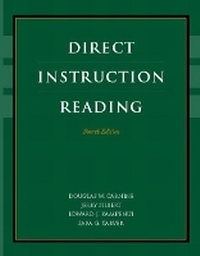
Direct Instruction Reading
4th Edition
Published on 24. July 2003
Book
Hardback
416 pages
978-0-13-112308-3 (ISBN)
Description
For courses in Direct Reading Instruction, Remedial Reading, and Reading for Special Education Students.
Thoroughly integrating the latest guidelines from the National Reading Panel, this is a practical guide to teaching reading via the direct instruction reading approach, a proven program that's especially powerful with the most vulnerable learners - those at-risk because of poverty, disability, and/or limited English. Rather than simply list method after method, these nationally known and respected authors provide a specific repertoire of carefully sequenced, highly prescriptive procedures for teaching decoding, comprehension, content reading, and study skills. For each skill to be taught, they recommend strategies, discuss optimal timing, offer examples, and explain how to correct errors. In addition, they thoughtfully examine the relationships among different reading skills.
Thoroughly integrating the latest guidelines from the National Reading Panel, this is a practical guide to teaching reading via the direct instruction reading approach, a proven program that's especially powerful with the most vulnerable learners - those at-risk because of poverty, disability, and/or limited English. Rather than simply list method after method, these nationally known and respected authors provide a specific repertoire of carefully sequenced, highly prescriptive procedures for teaching decoding, comprehension, content reading, and study skills. For each skill to be taught, they recommend strategies, discuss optimal timing, offer examples, and explain how to correct errors. In addition, they thoughtfully examine the relationships among different reading skills.
More details
Edition
4th edition
Language
English
Place of publication
United States
Publishing group
Pearson Education (US)
Target group
Professional and scholarly
Dimensions
Height: 241 mm
Width: 197 mm
Thickness: 27 mm
Weight
876 gr
ISBN-13
978-0-13-112308-3 (9780131123083)
Copyright in bibliographic data and cover images is held by Nielsen Book Services Limited or by the publishers or by their respective licensors: all rights reserved.
Schweitzer Classification
Other editions
New editions
Douglas W. Carnine | Jerry Silbert | Edward J. Kame'enui
Direct Instruction Reading
Book
05/2010
5th Edition
Pearson
Unfortunately, price unknown
Article is exhausted; no reprint
Previous edition

Douglas W. Carnine | Jerry Silbert | Edward J. Kame'enui
Direct Instruction Reading
Book
12/1996
3rd Edition
Pearson
€56.94
Article exhausted; check for reprint
Content
I: PERSPECTIVE.
1. Perspectives on Reading Instruction.
2. A Model of Reading Instruction.
3. Classroom Reading Instruction.
4. Delivery of Instruction.
II: BEGINNING READING: THE FIRST MONTHS OF INSTRUCTION.
5. An Overview of Beginning Reading.
6. Phonemic Awareness and Alphabetic Understanding.
7. Letter-Sound Correspondence.
8. Sounding Out Regular Words.
9. Sight-Word Reading.
10. Irregular Words.
11. Vocabulary and Language Skills: Beginning Stage.
12. Using Commercial and Teacher-Constructed Materials: Beginning Reading Stage.
13. Research on Beginning Reading Instruction.
III: DECODING.
14. Overview of Decoding.
15. Phonic Analysis.
16. Structural Analysis.
17. Irregular Words: Primary and Intermediate Grades.
18. Fluency Instruction and Passage Reading.
IV: COMPREHENSION.
19. Overview of Comprehension Instruction.
20. Vocabulary Instruction.
21. Specific Comprehension Skills for the Early Primary Level.
22. Specific Comprehension Skills for the Late Primary and Intermediate Levels.
23. Narrative-Comprehension Strategies.
24. Direct Instruction in Content-Area Reading.
V: SCHOOL AND CLASSROOM IMPLEMENTATION: PRIMARY AND INTERMEDIATE GRADES.
25. Using Commercial Reading Materials: Late Primary and Intermediate Grades.
26. Corrective Readers.
27. Research on Fluency, Word Recognition and Decoding Skills, and Comprehension: Late Primary and Intermediate Grades.
Appendix A: Word Lists.
Appendix B: List of 400 Common Words.
Appendix C: Outline of Lessons for Beginning Phonics Program.
Appendix D: Basic Vocabulary for Beginning Readers and Suggestions for Assessing Student Knowledge.
References.
1. Perspectives on Reading Instruction.
2. A Model of Reading Instruction.
3. Classroom Reading Instruction.
4. Delivery of Instruction.
II: BEGINNING READING: THE FIRST MONTHS OF INSTRUCTION.
5. An Overview of Beginning Reading.
6. Phonemic Awareness and Alphabetic Understanding.
7. Letter-Sound Correspondence.
8. Sounding Out Regular Words.
9. Sight-Word Reading.
10. Irregular Words.
11. Vocabulary and Language Skills: Beginning Stage.
12. Using Commercial and Teacher-Constructed Materials: Beginning Reading Stage.
13. Research on Beginning Reading Instruction.
III: DECODING.
14. Overview of Decoding.
15. Phonic Analysis.
16. Structural Analysis.
17. Irregular Words: Primary and Intermediate Grades.
18. Fluency Instruction and Passage Reading.
IV: COMPREHENSION.
19. Overview of Comprehension Instruction.
20. Vocabulary Instruction.
21. Specific Comprehension Skills for the Early Primary Level.
22. Specific Comprehension Skills for the Late Primary and Intermediate Levels.
23. Narrative-Comprehension Strategies.
24. Direct Instruction in Content-Area Reading.
V: SCHOOL AND CLASSROOM IMPLEMENTATION: PRIMARY AND INTERMEDIATE GRADES.
25. Using Commercial Reading Materials: Late Primary and Intermediate Grades.
26. Corrective Readers.
27. Research on Fluency, Word Recognition and Decoding Skills, and Comprehension: Late Primary and Intermediate Grades.
Appendix A: Word Lists.
Appendix B: List of 400 Common Words.
Appendix C: Outline of Lessons for Beginning Phonics Program.
Appendix D: Basic Vocabulary for Beginning Readers and Suggestions for Assessing Student Knowledge.
References.