

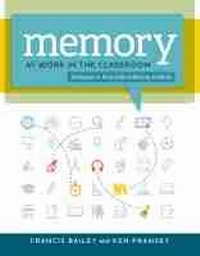
Memory at Work in the Classroom
Strategies to Help Underachieving Students
Published on 4. March 2014
Book
Paperback/Softback
221 pages
978-1-4166-1757-0 (ISBN)
Description
Why do some students struggle to understand and retain information, while other students don't? The answer may well lie in the memory system, which is the root of all learning. In Memory at Work in the Classroom, Francis Bailey and Ken Pransky expertly guide you through the aspects of human memory most relevant to classroom teachers. Real classroom examples help to deepen your understanding of how memory systems play a central role in the learning process, as well as how culture plays a sometimes surprising role in memory formation and use.
The memory systems covered in the book are: - Working Memory: the gateway to learning.
- Executive Function: the cognitive skills children need to independently orchestrate their memory systems in service to learning.
- Semantic Memory: the storehouse of a person's knowledge of the world, including academic concepts, and the part of the memory system most affected by culture.
- Episodic Memory: rich, multisensory personal memories of specific events.
- Autobiographical Memory: one's sense of self, tied directly to student motivation.
Although the techniques described apply to all students, the authors concentrate on explaining the source of struggling students' academic challenges and provide effective strategies for helping students become better learners.
Whether you're a new or a veteran teacher, this book will offer fresh insights into your students' learning difficulties and move you to explore classroom practices that align with the functioning of memory and the ways students learn.
The memory systems covered in the book are: - Working Memory: the gateway to learning.
- Executive Function: the cognitive skills children need to independently orchestrate their memory systems in service to learning.
- Semantic Memory: the storehouse of a person's knowledge of the world, including academic concepts, and the part of the memory system most affected by culture.
- Episodic Memory: rich, multisensory personal memories of specific events.
- Autobiographical Memory: one's sense of self, tied directly to student motivation.
Although the techniques described apply to all students, the authors concentrate on explaining the source of struggling students' academic challenges and provide effective strategies for helping students become better learners.
Whether you're a new or a veteran teacher, this book will offer fresh insights into your students' learning difficulties and move you to explore classroom practices that align with the functioning of memory and the ways students learn.
More details
Language
English
Place of publication
Alexandria
United States
Target group
Professional and scholarly
Dimensions
Height: 229 mm
Width: 178 mm
ISBN-13
978-1-4166-1757-0 (9781416617570)
Copyright in bibliographic data and cover images is held by Nielsen Book Services Limited or by the publishers or by their respective licensors: all rights reserved.
Schweitzer Classification