

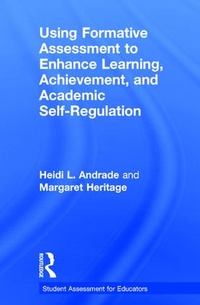
Using Formative Assessment to Enhance Learning, Achievement, and Academic Self-Regulation
1st Edition
Published on 12. July 2017
Book
Hardback
128 pages
978-1-138-65300-9 (ISBN)
Description
There is convincing evidence that carefully applied classroom assessments can promote student learning and academic self-regulation. These assessments include, but are not limited to, conversations with students, diagnostic test items, and co-created rubrics used to guide feedback for students themselves and their peers. Writing with the practical constraints of teaching in mind, Andrade and Heritage present a concise resource to help pre- and in-service teachers maximize the positive impacts of classroom assessment on teaching. Using Formative Assessment to Enhance Learning, Achievement, and Academic Self-Regulation translates work from leading specialists and explains how to use assessment to improve learning by linking learning theory to formative assessment processes. Sections on goal setting, progress monitoring, interpreting feedback, and revision of goal setting make this a timely addition to assessment courses.
More details
Series
Language
English
Place of publication
London
United Kingdom
Publishing group
Taylor & Francis Ltd
Target group
Professional and scholarly
Illustrations
7 s/w Abbildungen, 1 s/w Photographie bzw. Rasterbild, 6 s/w Zeichnungen, 12 s/w Tabellen
12 Tables, black and white; 6 Line drawings, black and white; 1 Halftones, black and white; 7 Illustrations, black and white
Dimensions
Height: 198 mm
Width: 129 mm
Weight
420 gr
ISBN-13
978-1-138-65300-9 (9781138653009)
Copyright in bibliographic data and cover images is held by Nielsen Book Services Limited or by the publishers or by their respective licensors: all rights reserved.
Schweitzer Classification
Other editions
Additional editions
Heidi L. Andrade | Margaret Heritage
Using Formative Assessment to Enhance Learning, Achievement, and Academic Self-Regulation
E-Book
07/2017
Routledge
€41.99
Available for download
Heidi L. Andrade | Margaret Heritage
Using Formative Assessment to Enhance Learning, Achievement, and Academic Self-Regulation
E-Book
07/2017
Routledge
€41.99
Available for download
Heidi L. Andrade | Margaret Heritage
Using Formative Assessment to Enhance Learning, Achievement, and Academic Self-Regulation
Book
07/2017
1st Edition
Routledge
€47.10
Shipment within 10-20 days
Persons
Heidi L. Andrade is Associate Professor of Educational Psychology and Methodology in the School of Education at the University at Albany, State University of New York, USA.
Margaret Heritage is Assistant Director for Professional Development at the National Center for Research on Evaluation, Standards and Student Testing (CRESST) at University of California Los Angeles, USA.
Margaret Heritage is Assistant Director for Professional Development at the National Center for Research on Evaluation, Standards and Student Testing (CRESST) at University of California Los Angeles, USA.
Content
List of Figures, Tables, and Boxes
Preface
Chapter 1: Introduction to Formative Assessment
Overview
What About Grading?
Three Guiding Questions
Formative Assessment Influences Learning through Feedback
Formative Assessment and Self-Regulated Learning
Classroom Culture and Formative Assessment
Chapter 2: Actionable Principles of Formative Assessment
Overview
Middle School Classroom
Elementary Mathematics Lesson
Diagnostic Items
Self-Regulated Learning, Self-Efficacy, and Motivation
Chapter 3: Clear Learning Goals and Criteria
Overview
Learning Goals Derived From Standards
Learning Goals Derived From Learning Progressions
Performance and Product Criteria
Performance Criteria
Product Criteria
Checklists
Rubrics
Goals, Criteria, and Self-Regulation
Co-Constructing Criteria With Students
Chapter 4: Collecting and Interpreting Evidence of Learning
Overview
Collecting and Interpreting Evidence as Students Work
Collecting and Interpreting Evidence of Learning From Diagnostic Items
Collecting and Interpreting Evidence of Learning From Parallel Tests
Collecting and Interpreting Evidence of Learning With Technology
Researcher-Developed Tools
Online Assessment Response Tools
Evidence Quality
Validity in Formative Assessment
Reliability in Formative Assessment
Fairness in Formative Assessment
Using the Evidence
Collecting and Interpreting Evidence of Learning From Themselves: Student Self-Assessment
Collecting and Interpreting Evidence of Learning From Peers
Student Interpretations of Feedback
Chapter 5: Taking Action
Overview
Teachers Taking Action
Continue With the Lesson as Planned
Make Immediate Instructional Adjustments
Modeling
Prompting
Questioning
Telling
Explaining
Directing
Providing Feedback
Make Plans for Subsequent Lessons
Students Taking Action: Assessment Strategies That Prompt Corrections, Rethinking, and Revisions Connected to Learning Goals and Success Criteria
Summing Up and Moving Forward
Preface
Chapter 1: Introduction to Formative Assessment
Overview
What About Grading?
Three Guiding Questions
Formative Assessment Influences Learning through Feedback
Formative Assessment and Self-Regulated Learning
Classroom Culture and Formative Assessment
Chapter 2: Actionable Principles of Formative Assessment
Overview
Middle School Classroom
Elementary Mathematics Lesson
Diagnostic Items
Self-Regulated Learning, Self-Efficacy, and Motivation
Chapter 3: Clear Learning Goals and Criteria
Overview
Learning Goals Derived From Standards
Learning Goals Derived From Learning Progressions
Performance and Product Criteria
Performance Criteria
Product Criteria
Checklists
Rubrics
Goals, Criteria, and Self-Regulation
Co-Constructing Criteria With Students
Chapter 4: Collecting and Interpreting Evidence of Learning
Overview
Collecting and Interpreting Evidence as Students Work
Collecting and Interpreting Evidence of Learning From Diagnostic Items
Collecting and Interpreting Evidence of Learning From Parallel Tests
Collecting and Interpreting Evidence of Learning With Technology
Researcher-Developed Tools
Online Assessment Response Tools
Evidence Quality
Validity in Formative Assessment
Reliability in Formative Assessment
Fairness in Formative Assessment
Using the Evidence
Collecting and Interpreting Evidence of Learning From Themselves: Student Self-Assessment
Collecting and Interpreting Evidence of Learning From Peers
Student Interpretations of Feedback
Chapter 5: Taking Action
Overview
Teachers Taking Action
Continue With the Lesson as Planned
Make Immediate Instructional Adjustments
Modeling
Prompting
Questioning
Telling
Explaining
Directing
Providing Feedback
Make Plans for Subsequent Lessons
Students Taking Action: Assessment Strategies That Prompt Corrections, Rethinking, and Revisions Connected to Learning Goals and Success Criteria
Summing Up and Moving Forward