

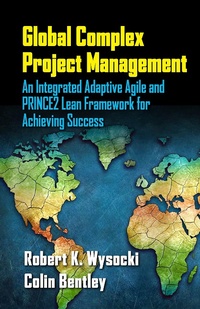
Global Complex Project Management
An Integrated Adaptive Agile and PRINCE2 Lean Framework for Achieving Success
Published on 1. August 2016
297 pages
978-1-60427-773-9 (ISBN)
Description

This completely unique reference is from two recognized thought leaders and developers of proven approaches within the diverse world and practices of project management. It provides a new and innovative framework for more effectively managing complex and mission critical projects to deliver maximum business value to organizations in both the public and private sectors around the globe. The authors draw on the strengths of different schools of thought, including their own, and best practices to develop an integrated framework that is lean, agile, flexible, and adaptable to virtually any complex project.
More details
Other editions
Additional editions
Robert Wysocki | Colin Bentley
Global Complex Project Management
An Integrated Adaptive Agile and PRINCE2 Lean Framework for Achieving Success
Book
08/2016
J Ross Publishing
€79.42
Article not available at the moment
Person
Robert K. Wysocki is a project management guru and a pioneer in business analysis, information systems management, and business process management with over 45 years of combined experienced within these fields. He has authored 25 books on project management and information systems management, including his major best-seller Effective Project Management: Traditional, Adaptive, Extreme, now in its 7th edition. His most recent book, Effective Complex Project Management: An Adaptive Agile Framework for Delivering Business Value, was published in 2014.Colin Bentley is a project management thought leader and the designer of the original PROMPTII/PRINCE Framework developed specifically for managing information technology projects and of PRINCE2, a more generic product management framework originally adopted for all UK government projects. Mr. Bentley authored all editions of the of PRINCE2 Manual, all Foundation and Practitioner exams for certification, and served as Chief Examiner until 2009. He still answers the Ask an expert questions on PRINCE2 for the APMG, an international professional certification organization.
Content
- Front Cover
- Title Page
- Copyright
- Contents
- Foreword
- About the Authors
- WAVTM
- Part 1
- Overview
- Chapter 1: Introduction
- Chapter Learning Objectives
- Introduction
- P2 and the ECPM Frameworks: Differences and Similarities
- Rationale
- ECPM Framework Foundations
- P2 Framework Foundations
- P2 Principles Align with the ECPM Framework
- P2 Themes Align with the ECPM Framework
- P2 LEAN Framework
- The Recommended ECPM Framework Artifacts
- The P2 LEAN Framework Has No Equals
- Managing a P2 LEAN Project
- The P2 LEAN Framework May Not Need a Project Board
- The P2 LEAN Framework Allows for Model Changes During Execution
- Setting Up a P2 LEAN Project
- The Future of P2 LEAN
- Why We Wrote This Book
- How This Book Is Organized
- How to Use This Book
- Who Should Use This Book
- A Note on Capitalization of Terms
- Chapter 2: Overview of the Effective Complex Project Management Framework
- Chapter Learning Objectives
- ECPM Process Flow Diagram
- Project IDEATION Phase
- Step 1: Develop a Business Case
- Step 2: Elicit Requirements
- Step 3: Write a Project Overview Statement
- Project SET-UP Phase
- Step 4: Classify the Project
- Step 5: Choose the Best-fit PMLC Model Template
- Step 6: Assess Project Characteristics
- Step 7: Modify PMLC Model Template
- Project EXECUTION Phase
- Step 8: Define Version Scope
- Step 9: Plan the Next Cycle
- Step 10: Build the Next Cycle Deliverables
- Step 11: Conduct Client Checkpoint
- Step 12: Close the Version
- The Recommended ECPM Framework Artifacts
- The ECPM Co-Manager Model
- The ECPM High-level Requirements Definition
- The ECPM Scope Triangle
- The ECPM Bundled Change Request Process
- The ECPM Scope Bank
- The ECPM Probative and Integrative Swim Lanes
- The ECPM Vetted Portfolio of Tools, Templates, and Processes
- Putting It All Together
- Chapter 3: PRINCE2 LEAN: Are You a Cook or a Chef?
- Chapter Learning Objectives
- The Complex Project Landscape
- A High-level Look at P2 and the ECPM Framework Artifacts
- ECPM Framework versus P2 Project Life Spans
- Evolutionary Development
- Time Boxing
- Project Plan
- Tolerances
- Start Point
- People Autonomy and Empowerment
- The ECPM Framework Artifacts
- P2 LEAN Framework
- The Aligned Frameworks
- Setting Up a P2 LEAN Project
- Bottom-up Construction of a P2 LEAN Model
- Starting Up a P2 LEAN Project
- Initiating a P2 LEAN Project
- Controlling a P2 LEAN Stage
- Managing Product Delivery
- Managing a P2 LEAN Stage Boundary
- Closing a P2 LEAN Project
- Planning a P2 LEAN Project
- Putting It All Together
- Chapter 4: PRINCE2 LEAN: Project Planning
- Chapter Learning Objectives
- What Is Product-based Planning?
- The Benefits of Product-based Planning
- The P2 LEAN Project Planning Hierarchy
- Initiation Stage Plan
- Benefits Realization Plan
- High-level Project Plan
- Next Stage Plan
- Team Plan
- End of Project Plan
- What Is the Product-based Planning Template?
- PL1-Designing a Plan
- PL2-Creating the Product Breakdown Structure
- PL3-Writing Product Descriptions
- PL4-Creating the Product Flow Diagram
- PL5-Identifying the Activities and Dependencies
- PL6-Defining Work Packages
- PL7-Estimating
- Similarity
- Historical Data
- Expert Advice
- Delphi Technique
- Three-point Technique
- PL8-Identifying Resource Requirements
- Facilities
- Equipment
- Money
- Materials
- People
- PL9-Scheduling
- PL10-Analyzing Risks
- PL11-Completing a Plan
- Putting It All Together
- PART 2: PRINCE2 LEAN and the IDEATION Phase
- Chapter 5: Preparing the Business Case
- Chapter Learning Objectives
- Overview
- Starting Up a P2 LEAN Project: The Business Case
- Capture Previous Lessons
- Enhanced Project Mandate
- Preparing the P2 LEAN Business Case
- What Is a P2 LEAN Business Case?
- The P2 LEAN Framework Brainstorming Process
- Divergent Phase
- Emergent Phase
- Convergent Phase
- Define the P2 LEAN Project or Projects
- Analyze and Prioritize Alternative Projects
- Cost and Benefit Analysis
- Breakeven Analysis
- Return on Investment
- Cost-Benefit Ratio
- Prioritize the Alternative Projects
- Must Do, Should Do, Could Do, Won't Do
- Forced Ranking
- Risk/Benefit Matrix
- Paired Comparisons
- Select the Project to be Proposed
- Putting It All Together
- Chapter 6: Creating the Project Product Description
- Chapter Learning Objectives
- P2 LEAN Project Product Description Process Flow
- What Is a P2 LEAN High-level Requirement?
- Appoint Product Description Task Force
- Choose Requirements Elicitation Process
- Approaches to Requirements Elicitation and Decomposition
- Which Approach Should We Use?
- Conduct Requirements Elicitation Workshop
- Elicitation and Documentation Requirements
- Prepare Product Acceptance Test Procedure
- Project Product Description Document
- Project Product Description Document Outline
- Who Should Prepare This Document?
- Putting It All Together
- Chapter 7: Preparing for the Initiation Stage
- Chapter Learning Objectives
- Introduction
- Appoint the Project Brief Task Force
- Draft The Project Brief
- Purpose of the P2 LEAN Project Brief
- Drafting the P2 LEAN Project Brief
- Definition of the P2 LEAN Project Brief
- Problem/Opportunity Statement
- Goal Statement of This Version of the Solution
- Writing the Objectives of This Version
- Defining the Acceptance Criteria
- Listing the Major Assumptions/Risks/Obstacles
- Gain Co-Managers' Approvals
- An Example P2 LEAN Project Brief
- Prioritize the Scope Triangle Parameters
- Create the P2 LEAN Initiation Stage Plan
- Authorizing the SET-UP Phase
- Putting It All Together
- PART 3: PRINCE2 LEAN and the SET-UP Phase
- Planning for the SET-UP Phase
- Chapter 8: Selecting the Project Core Team
- Chapter Learning Objectives
- The P2 LEAN Project Team Template
- Project Executive
- Co-Manager Model
- Business Systems Engineer and Business Analyst
- Development Team and Client Team
- An Overall View of the P2 LEAN Framework Project Team
- Select the P2 LEAN Project Team Process Flow
- Co-Managers Define Project Team Structure and Core Team Roles
- Co-Managers Populate the Roles with Skill Requirements
- Gain Approval of the Staffing Plan
- Putting It All Together
- Chapter 9: Designing the Project Approach
- Chapter Learning Objectives
- P2 LEAN Complex Project Set-up Phase
- Appoint Project Approach Selection Task Force
- Choose Project Quadrant
- Choose the Best-fit PMLC Model Type
- Assess Project Characteristics
- Choose and Modify the Specific PMLC Model Template
- Which Specific PMLC Model Is the Closest Fit?
- Should the Chosen PMLC Model Be Adjusted for Better Alignment?
- What if There Isn't a Good Fit with a Specific PMLC Model?
- Document Project Approach for Approval
- Putting It All Together
- Chapter 10: Preparing the Project Initiation Documentation
- Chapter Learning Objectives
- The Project Initiation Documentation
- Quality Management Plan
- Risk Management Plan
- Project Controls
- High-level Project Plan
- Create the First Draft of the Benefits Realization Plan
- Template for the PBS Plan
- Next Stage Plan
- Next Stage Team Plan
- Assemble Project Initiation Documentation
- Putting It All Together
- Part 4: PRINCE2 LEAN and the EXECUTION Phase
- Chapter 11: Preparing for the Next Stage
- Chapter Learning Objectives
- Overview
- Update the Scope Bank
- Analyze Actual versus Planned Product Deliverables
- Any Functionality and Features Planned and Integrated in the Previous Cycle
- Any Functionality and Features Planned but Not Integrated in the Previous Cycle
- Learning and Discovery
- Any Changes that Took Place in the Business Environment During the Previous Cycles
- Probative Swim Lane Results
- Integrate: An Enhancement to the Solution Has Been Identified
- Modify and Repeat: This Direction May Produce Results and Should Be Continued
- Abandon: Nothing New Has Been Identified and this Direction Should Be Abandoned for the Time Being
- Search for New Functions and Features
- Updated Scope Bank
- Tracking the Size of Probative Swim Lanes and Integrative Swim Lanes
- Scope Bank Status Reports
- Complete Bundled Change Management Process
- Review Change Requests
- Add Change Requests to Scope Bank
- At Stage Completion, Prioritize Change Requests
- Conduct Impact Study for High Priority Change Requests
- Analyze Project Impact Studies
- Prioritize Changes for Next Stage Planning
- Create the Next Stage Plan
- Create the Team Plan
- Update the Project Initiation Documentation
- Update the High-level Project Plan
- Update the Benefits Realization Plan
- Update the Business Case
- Authorize the Next Stage
- Putting It All Together
- Chapter 12: Executing the Stage Plan
- Chapter Learning Objectives
- Authorize Work Packages
- Execute Work Packages
- Review Stage Status
- Capture, Examine, and Escalate Issues and Risks
- Take Corrective Action
- Accept Work Package Products
- Deliver the Work Package Products
- Putting It All Together
- Chapter 13: Closing the Stage
- Chapter Learning Objectives
- Closing a P2 LEAN Stage
- Normal End of Stage
- Abnormal End of Stage
- All Work Packages Completed Ahead of Schedule
- Work Packages or Tasks Not Completed Within the Stage Time Box
- Review Stage Status
- Putting It All Together
- Chapter 14: Closing the Project
- Chapter Learning Objectives
- Effective Complex Project Management Process Flow Diagram
- Co-Managers Recommend Project Closure
- Authorize Project Closure
- Create the End of Project Plan
- Deploy the Accepted Solution
- Phased Approach
- Cut-over Approach
- Parallel Approach
- By-business-unit Approach
- Evaluate the Project
- 1. Was the Project Goal Achieved?
- 2. Was the Project Work Done on Time, Within Budget, and According to Specification?
- 3. Was the Client Satisfied with the Project Results?
- 4. Was Business Value Realized?
- 5. What Lessons Were Learned About Your Project Management Methodology?
- 6. What Worked? What Did Not Work?
- 7. What Was Learned About the P2 LEAN Framework?
- Prepare End of Project Report
- Observations on the Next Version
- Celebrating Success
- Putting It All Together
- Part 5: Putting It All Together
- Chapter 15: Organizational Infrastructure
- Chapter Learning Objectives
- What Is a P2 LEAN PSO?
- Establishing the PSO Mission
- PSO Objectives
- Hub and Spoke PSO Organizational Structure
- P2 LEAN PSO Support Services
- Project Support
- Consulting and Mentoring
- Methods and Standards
- Vetted Portfolio
- Software Tools
- Training
- Project Co-Manager Resources
- Staffing the EPSO and the Division Level PSO
- Other Considerations
- Portfolio Support
- Assigning Project Managers
- Career and Professional Development of Project Managers
- Putting It All Together
- Chapter 16: Benefits of the PRINCE2 Lean Framework
- Chapter Learning Objectives
- Origins of the P2 LEAN Framework
- P2 LEAN Benefits Gained from the P2 Framework
- P2 LEAN Benefits Gained from the ECPM Framework
- Complex Project Co-Manager Model
- Requirements Elicitation
- Scope Triangle
- Bundled Change Management Process
- Scope Bank
- Probative and Integrative Swim Lanes
- Vetted Portfolio of Tools, Templates, and Processes
- Putting It All Together
- Epilogue
- Appendix A: Glossary
- Appendix B: Reference Bibliography
- Index
