


International Law and the Classification of Conflicts
1st Edition
Published on 2. August 2012
568 pages
978-0-19-163222-8 (ISBN)
Description

This book comprises contributions by leading experts in the field of international humanitarian law on the subject of the categorisation or classification of armed conflict. It is divided into two sections: the first aims to provide the reader with a sound understanding of the legal questions surrounding the classification of hostilities and its consequences, the second includes ten case studies that examine practice in respect of classification. Understanding how classification operates in theory and practice is a precursor to identifying the relevant rules that govern parties to hostilities. With changing forms of armed conflict which may involve multi-national operations, transnational armed groups and organized criminal gangs, the need for clarity of the law is all-important. The case studies selected for analysis are Northern Ireland, DRC, Colombia, Afghanistan (from 2001), Gaza, South Ossetia, Iraq (from 2003), Lebanon (2006), theso-called war against Al-Qaeda, and future trends. The studies explore the legal consequences of classification particularly in respect of the use of force, detention in armed conflict, and the relationship between human rights law and international humanitarian law. The practice identified in thecase studies allows the final chapter to draw conclusions as to the state of the law on classification.
More details
Other editions
Additional editions
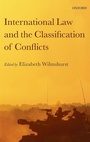
Elizabeth Wilmshurst
International Law and the Classification of Conflicts
Book
08/2012
Oxford University Press
€182.20
Shipment within 15-20 days
Content
- Cover
- Table of Contents
- Table of Cases
- Table of Treaties and Other Instruments
- List of Abbreviations
- List of Contributors
- PART I
- 1. Introduction
- 2. The Nature of War and the Character of Contemporary Armed Conflict
- 1. Introduction
- 2. Clausewitz and the nature of war
- 3. The changing characteristics of modern armed conflict
- 4. Conclusions
- 3. Classification of Armed Conflicts: Relevant Legal Concepts
- 1. Introduction
- 2. History of the distinction between international and non-international armed conflicts
- 3. Consequences of the distinction between international and non-international armed conflicts
- 4. Why does the distinction exist and should it be abolished?
- 5. The scope of application of international humanitarian law: international armed conflicts
- 6. The scope of application of international humanitarian law: non-international armed conflicts
- 7. Foreign intervention in non-international armed conflicts
- 8. Intervention by multinational forces under UN command or authorized by the UN
- 9. Extraterritorial conflicts with non-state armed groups
- 4. Conflict Classification and the Law Applicable to Detention and the Use of Force
- 1. Introduction
- 2. Applicable law-an overview
- 3. Detention in armed conflict
- 4. The use of force in armed conflict
- 5. Concluding remarks
- PART II
- 5. Northern Ireland 1968-1998
- 1. Introduction
- 2. General summary of the conflict
- 3. Classification of the hostilities
- 4. The application of force
- 5. Detention
- 6. Other issues
- 7. Conclusions
- Chronology
- 6. The Democratic Republic of the Congo 1993-2010
- 1. Introduction
- 2. The legacy of Colonialism and the Cold War: March 1993-summer 1996
- 3. The First Congo War: from a global site of conflict to a regional one (July 1996-July 1998)
- 4. The Second Congo War: Africa's World War (2 August 1998-July 2003)
- 5. Transition or repetition? (2003-2011)
- 6. Conclusion: Framing the DRC within the law
- Chronology
- 7. Colombia
- 1. Introduction
- 2. Brief outline of the Colombian hostilities
- 3. Classification of the Colombian conflict by the relevant actors
- 4. Authors' classification of the Colombian conflict
- 5. Rules on opening fire
- 6. Rules on detention
- 7. Operation Phoenix
- 8. Conclusions
- Chronology
- 8. Afghanistan 2001-2010
- 1. Introduction
- 2. October 2011 to the installation of Hamid Karzai
- 3. The installation of Hamid Karzai to the present
- 4. Rules on opening fire
- 5. Rules on detention
- 6. International human rights law
- 7. Conclusions
- Chronology
- 9. Gaza
- 1. Introduction
- 2. Description of the situation
- 3. The views of States and others on the classification of the conflict
- 4. Author's analysis of the classification of the conflict
- 5. Rules on application of force
- 6. Rules on capture and detention
- 7. Other significant problems of international humanitarian and human rights law
- 8. Conclusions
- Chronology
- 10. South Ossetia (2008)
- 1. Introduction
- 2. The hostilities
- 3. Views of the parties and others on conflict classification
- 4. Author's analysis of classification
- 5. Use of force and detention
- 6. Conclusions
- Chronology
- 11. Iraq (2003 onwards)
- 1. Introduction
- 2. Classification of the conflict
- 3. Rules on capture and detention
- 4. Rules on use of force
- 5. Other significant problems of international humanitarian law
- 6. Conclusions
- Chronology
- 12. Lebanon 2006
- 1. Introduction
- 2. The views of the relevant States and others on the classification of the conflict
- 3. Author's analysis of the classification of the conflict
- 4. The rules governing the application of force
- 5. Rules on capture and detention
- 6. Conclusions
- Chronology
- 13. The War (?) against Al-Qaeda
- 1. Introduction
- 2. Background to the hostilities
- 3. Views of the parties and of others on conflict classification
- 4. Author's analysis of the classification (or existence) of the conflict
- 5. Rules on application of force
- 6. Rules on detention
- 7. Rules on other significant problems of international humanitarian law
- 8. Conclusions
- 14. Classification in Future Conflict
- 1. Introduction: understanding future conflict
- 2. Cyber warfare
- 3. Transnational terrorism
- 4. Complex battlespaces
- 5. Law's influence on future conflict
- 6. Conclusions
- PART III
- 15. Conclusions
- 1. Introduction
- 2. Case studies: problems of classification
- 3. Case studies: the legal and practical consequences of classification
- 4. Conclusions
- Index
- A
- B
- C
- D
- E
- F
- G
- H
- I
- J
- K
- L
- M
- N
- O
- P
- Q
- R
- S
- T
- U
- V
- W
- Y
- Z
