

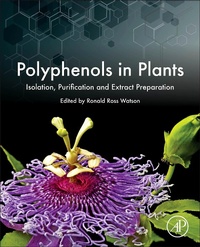
Polyphenols in Plants
Isolation, Purification and Extract Preparation
1st Edition
Published on 17. January 2014
360 pages
978-0-12-398491-3 (ISBN)
Description

Polyphenols in Plants assists plant scientists and dietary supplement producers in assessing polyphenol content and factors affecting their composition. It also aids in selecting sources and regulating environmental conditions affecting yield for more consistent and function dietary supplements.
Polyphenols play key roles in the growth, regulation and structure of plants and vary widely within different plants. Stress, growth conditions and plant species modify polyphenol structure and content. This book describes techniques to identify, isolate and characterize polyphenols, taking mammalian toxicology into account as well.
- Defines conditions of growth affecting the polyphenol levels
- Describes assay and instrumentation techniques critical to identifying and defining polyphenols, critical to researchers and business development
- Documents how some polyphenols are dangerous to consume, important to dietary supplement industry, government regulators and lay public users
More details
Other editions
New editions
E-Book
08/2018
2nd Edition
Academic Press
€131.00
Available for download
Additional editions
Book
03/2014
Academic Press
€120.50
Shipment within 15-20 days
Content
Part 1: Modification by plant growth and environment
1. Cultivar and production effects on bioactive polyphenols
2. Plant polyphenol profiles as a tool for traceability and valuable support to biodiversity
Section A: Stress and polyphenol in plants
3. Phenolic compounds and saponins in plants grown under different irrigation regimes
4. Lichen phenolics: environment effects Section B: Plant systems of polyphenol modification
5. Modulation of plant endogenous antioxidant systems by polyphenols
6. Plant polyphenols: do they control freshwater planktonic nuisance phototrophs?
Part 2: Isolation and analysis of polyphenol structure
Section A: Analysis techniques for polyphenols
7. Gas chromatography - mass spectrometry analysis of polyphenols in foods
8. Novel techniques towards the identification of different classes of polyphenols
9. Characterization of polyphenolic profile of citrus fruit by HPLC/PDA/ESI/MS-MS
Section B: Isolation and extraction techniques
10. Non-extractable polyphenols in plant food: nature, isolation and analysis
11. Resin adsorption and ion exchange to recover and fractionate polyphenols
12. Polyphenolic compounds from flowers of Hibiscus: characterization and bioactivity
13. Hydrothermal processing on phenols and polyphenols vegetables
Part 3: Polyphenols identification and occurrence
14. Improved characterization of polyphenols using liquid chromatography
15. Characterization and quantification of polyphenols in fruits
16. Determination of polyphenols, flavonoids, and antioxidant capacity in seeds
