

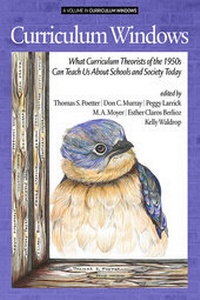
Curriculum Windows
What Curriculum Theorists of the 1950s Can Teach Us About Schools and Society Today
1st Edition
Published on 11. January 2019
223 pages
978-1-64113-820-8 (ISBN)
Description

Curriculum Windows: What Curriculum Theorists of the 1950s Can Teach Us about Schools and Society Today is an effort by students of curriculum studies, along with their professor, to interpret and understand curriculum texts and theorists of the 1950s in contemporary terms.
The authors explore how key books/authors from the curriculum field of the 1950s illuminate new possibilities forward for us as scholar educators today: How might the theories, practices, and ideas wrapped up in curriculum texts of the 1950s still resonate with us, allow us to see backward in time and forward in time - all at the same time? How might these figurative windows of insight, thought, ideas, fantasy, and fancy make us think differently about curriculum, teaching, learning, students, education, leadership, and schools? Further, how might they help us see more clearly, even perhaps put us on a path to correct the mistakes and missteps of intervening decades and of today?
The chapter authors and editors revisit and interpret several of the most important works in the curriculum field of the 1950s. The book's Foreword is by renowned curriculum theorist William H. Schubert.
The authors explore how key books/authors from the curriculum field of the 1950s illuminate new possibilities forward for us as scholar educators today: How might the theories, practices, and ideas wrapped up in curriculum texts of the 1950s still resonate with us, allow us to see backward in time and forward in time - all at the same time? How might these figurative windows of insight, thought, ideas, fantasy, and fancy make us think differently about curriculum, teaching, learning, students, education, leadership, and schools? Further, how might they help us see more clearly, even perhaps put us on a path to correct the mistakes and missteps of intervening decades and of today?
The chapter authors and editors revisit and interpret several of the most important works in the curriculum field of the 1950s. The book's Foreword is by renowned curriculum theorist William H. Schubert.
All prices
More details
Other editions
Additional editions
Thomas S. Poetter | Don C. Murray | Peggy Larrick
Curriculum Windows
What Curriculum Theorists of the 1950s Can Teach Us About Schools and Society Today
Book
11/2019
Information Age Publishing
€62.60
Shipment within 3-4 weeks
Thomas S. Poetter | Don C. Murray | Peggy Larrick
Curriculum Windows
What Curriculum Theorists of the 1950s Can Teach Us About Schools and Society Today
Book
11/2019
Information Age Publishing
€111.40
Shipment within 3-4 weeks
Content
- Cover
- Series page
- Curriculum Windows
- Library of Congress Cataloging-in-Publication Data
- Contents
- Foreword
- Preface
- Introduction
- CHAPTER 1: Calling a Truce
- CHAPTER 2: There Were Bugs in the Window
- CHAPTER 3: We Will Not Teach in Fear
- CHAPTER 4: Creativity and the Windowless Classroom
- CHAPTER 5: A Personal Exploration of My Journey From Nongraded to Graded
- CHAPTER 6: Bloom's Taxonomy
- CHAPTER 7: Looking in the Residence Hall Window to the Future
- CHAPTER 8: Creating the World Outside Your Window
- CHAPTER 9: 2016: The New 1957
- CHAPTER 10: The Tyler Rationale
- CHAPTER 11: Florence Stratemeyer
- CHAPTER 12: Tea With Taba
- ABOUT THE CO-EDITORS

