

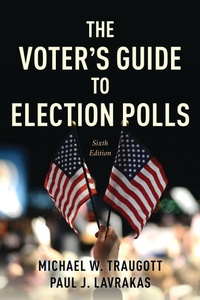
The Voter's Guide to Election Polls
6th Edition
Published on 20. November 2023
272 pages
978-1-5381-8740-1 (ISBN)
Description

Everything you need to know about election polls can be found in this compact, conversational, and current volume. When it comes to tapping the public's opinion on candidates and issues at the ballot box, the stakes are high. Acclaimed scholars Michael W. Traugott and Paul J. Lavrakas-who also have regularly conducted polls, not just studied them-cover the latest technologies used for data collection and data analysis, including internet polls, as well as how polls are used in campaigns and media organizations.
In straightforward language and an accessible question-and-answer format, the authors cover issues such as: How do political candidates and organizations use poll data? How do news organizations collect and report polls? Why do pollsters use samples? Can internet polls really reflect a representative swath of the population? They also examine common problems and complaints about polls, such as the increasing use of "push polls" and whether polls can impact how citizens vote. Their decades of experience and insight not only answer the nuts and bolts questions, but most importantly, why it all matters in American democracy.
In straightforward language and an accessible question-and-answer format, the authors cover issues such as: How do political candidates and organizations use poll data? How do news organizations collect and report polls? Why do pollsters use samples? Can internet polls really reflect a representative swath of the population? They also examine common problems and complaints about polls, such as the increasing use of "push polls" and whether polls can impact how citizens vote. Their decades of experience and insight not only answer the nuts and bolts questions, but most importantly, why it all matters in American democracy.
More details
Edition
6th edition
Language
English
Place of publication
New York
United States
Publishing group
Bloomsbury Publishing Plc
Illustrations
4 tables; 1 graph
ISBN-13
978-1-5381-8740-1 (9781538187401)
Copyright in bibliographic data and cover images is held by Nielsen Book Services Limited or by the publishers or by their respective licensors: all rights reserved.
Schweitzer Classification
Other editions
Additional editions
Michael W. Traugott | Paul J. Lavrakas
The Voter's Guide to Election Polls
Book
11/2023
6th Edition
Rowman & Littlefield Publishers
€99.30
Shipment within 3-4 weeks
Michael W. Traugott | Paul J. Lavrakas
The Voter's Guide to Election Polls
Book
11/2023
6th Edition
Rowman & Littlefield Publishers
€42.80
Shipment within 3-4 weeks
Persons
Michael W. Traugott, PhD, is a political scientist and survey methodologist. He is professor emeritus at the University of Michigan. He has served as the president of the American Association for Public Opinion Research (AAPOR) and the World Association for Public Opinion Research.
Paul J. Lavrakas, PhD, is a research psychologist and methodological research consultant. He was the founding faculty director of survey centers at Northwestern and Ohio State universities, a chief methodologist for Nielsen Media Research, as well as former president of the AAPOR.
Paul J. Lavrakas, PhD, is a research psychologist and methodological research consultant. He was the founding faculty director of survey centers at Northwestern and Ohio State universities, a chief methodologist for Nielsen Media Research, as well as former president of the AAPOR.
Content
Introduction
Chapter 1 What Are Polls and Surveys? And Why Are They Conducted?
Chapter 2 What Are Election Polls? How Are They Conducted?
Chapter 3 How Do Political Candidates and Organizations Use Poll Data?
Chapter 4 How Do News Organizations Collect and Report Poll Data?
Chapter 5 Why Do Pollsters Use Samples?
Chapter 6 How Are Questionnaires Put Together?
Chapter 7 How Are Data Gathered for Election Polls?
Chapter 8 How Do Media Organizations Analyze Polls?
Chapter 9 How Can I Evaluate Published Poll Results?
Chapter 10 What Are Some Common Problems and Complaints about Polls and the Media's Use of Them?
Epilogue
Appendix A: Standards for Disclosing Information about the Methodology of Public Polls
Appendix B: Sample Tolerances (Sampling Errors) for Samples of Different Sizes
Glossary
Selected References
About the Authors
Chapter 1 What Are Polls and Surveys? And Why Are They Conducted?
Chapter 2 What Are Election Polls? How Are They Conducted?
Chapter 3 How Do Political Candidates and Organizations Use Poll Data?
Chapter 4 How Do News Organizations Collect and Report Poll Data?
Chapter 5 Why Do Pollsters Use Samples?
Chapter 6 How Are Questionnaires Put Together?
Chapter 7 How Are Data Gathered for Election Polls?
Chapter 8 How Do Media Organizations Analyze Polls?
Chapter 9 How Can I Evaluate Published Poll Results?
Chapter 10 What Are Some Common Problems and Complaints about Polls and the Media's Use of Them?
Epilogue
Appendix A: Standards for Disclosing Information about the Methodology of Public Polls
Appendix B: Sample Tolerances (Sampling Errors) for Samples of Different Sizes
Glossary
Selected References
About the Authors
