

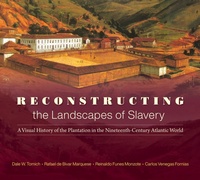
Reconstructing the Landscapes of Slavery
Description

Assessing a unique collection of more than eighty images, this innovative study of visual culture reveals the productive organization of plantation landscapes in the nineteenth-century Atlantic world. These landscapes—from cotton fields in the Lower Mississippi Valley to sugar plantations in western Cuba and coffee plantations in Brazil’s Paraíba Valley—demonstrate how the restructuring of the capitalist world economy led to the formation of new zones of commodity production. By extension, these environments radically transformed slave labor and the role such labor played in the expansion of the global economy. Artists and mapmakers documented in surprising detail how the physical organization of the landscape itself made possible the increased exploitation of enslaved labor. Reading these images today, one sees how technologies combined with evolving conceptions of plantation management that reduced enslaved workers to black bodies. Planter control of enslaved people’s lives and labor maximized the production of each crop in a calculated system of production. Nature, too, was affected: the massive increase in the scale of production and new systems of cultivation increased the land’s output. Responding to world economic conditions, the replication of slave-based commodity production became integral to the creation of mass markets for cotton, sugar, and coffee, which remain at the center of contemporary life.
More details
Other editions
Additional editions

