

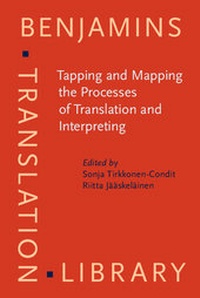
Tapping and Mapping the Processes of Translation and Interpreting
Outlooks on empirical research
1st Edition
Published on 24. November 2000
X, 176 pages
978-90-272-8447-1 (ISBN)
Description

This volume brings together cognitive psychologists, interpreting scholars and translation researchers, who look at the process phenomena involved in translation and interpreting (T/I) from various linguistic vantage points.
The focus is on methodology and the problems that loom large in a multidisciplinary discipline. The authors include Annette de Groot, Juliane House, Kirsten Malmkjaer and Miriam Shlesinger.
The topics discussed range from simultaneous interpreting, subtitling, translating in pairs, the sub-skills involved in T/I, to expertise and management issues.
Three major challenges emerge from T/I process research as it is portrayed in this book:
- How to maintain a clear vision of the object of study?
- How to ensure methodological sobriety?
- How to transfer the emerging knowledge of expertise to translation pedagogy?
The focus is on methodology and the problems that loom large in a multidisciplinary discipline. The authors include Annette de Groot, Juliane House, Kirsten Malmkjaer and Miriam Shlesinger.
The topics discussed range from simultaneous interpreting, subtitling, translating in pairs, the sub-skills involved in T/I, to expertise and management issues.
Three major challenges emerge from T/I process research as it is portrayed in this book:
- How to maintain a clear vision of the object of study?
- How to ensure methodological sobriety?
- How to transfer the emerging knowledge of expertise to translation pedagogy?
More details
Other editions
Additional editions
Sonja Tirkkonen-Condit | Riitta Jaeaeskelaeinen
Tapping and Mapping the Processes of Translation and Interpreting
Outlooks on empirical research
Book
11/2000
John Benjamins Publishing Co
€100.70
Shipment within 10-15 days
Persons
Content
- TAPPING AND MAPPING THE PROCESSES OF TRANSLATION AND INTERPRETING
- Editorial page
- Title page
- Copyright page
- Table of contents
- Foreword
- Challenges and Priorities in Process Research
- Part I: Interpreting:How to get access to SI processes?
- Interpreting as a Cognitive Process: How can we know what really happens?
- Introduction
- Is the Process Decomposable?
- Distinguishing Cognitive Processes per se from Norm-Driven Strategies
- Imponderables of the Experimental Design
- Conclusion
- References
- The Interpreters' Comments in Interpreting Situations
- Introduction
- Data and Subjects
- Method
- Analysis
- Discussion
- References
- The Use of Retrospection in Research on Simultaneous Interpreting
- Theoretical Basis and Methodological Criteria of Protocol-based Introspection
- Background to Present Research
- Designing the Retrospective Study: Research and Methodological Issues
- Analysis of Processing Problems in SI Protocols - Classification and Frequency Data
- Monitoring
- General Discussion of the Problem and Monitoring Data
- General Conclusions
- Notes
- References
- A Complex-skill Approach to Translation and Interpreting
- Part-task Training versus Whole-task Training
- The Importance of Automaticity: An Example
- Training Components of Interpreting and Translation
- Simultaneity of Comprehension and Production
- Control of Attention
- Concluding Remarks
- References
- Part II: Methodology: How to glean information from data?
- Focuson Methodology in Think-aloud Studies on Translating
- Introduction
- Pre-experimental Testing
- Thinking Aloud vs. Joint Translating
- Interference from Thinking Aloud
- Remedial Action
- Notes
- References
- Is (Cognitive) Linguistics of any Use for (Literary)Translation?
- The Theory
- The Practice
- Conclusions
- References
- Thinking-aloud Protocol - Interview - Text Analysis
- Background
- The Experiment
- Conclusion
- References
- What Do Real Translators Do? Developing the Use of TAPs from Professional Translators
- Professional Translators - a Largely Untapped Resource
- Emerging Themes and Focuses
- Mapping Future Areas of Work
- Conclusion
- References
- Part III: Featuring the Processes
- Uncertainty in Translation Processes
- Introduction
- Material
- Method of Analysis
- Processes and Uncertainty
- Translator Profiles
- Conclusion
- Notes
- References
- Management Issues in the Translation Process
- References
- Consciousness and the Strategic Use of Aids in Translation
- Introduction
- Consciousness and Translation Process Research
- Design of the Study
- Results and Discussion
- Conclusion and Prospects for Future Research
- References
- Appendix
- Postscript
- Multidisciplinarity in Process Research
- The Inherent Multidisciplinarity of Translation Studies
- Potential Problems of Multidisciplinarity
- References
- Author Index
- Subject Index
