

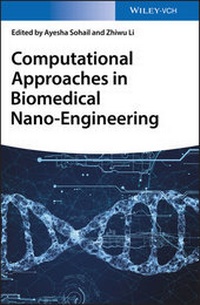
Computational Approaches in Biomedical Nano-Engineering
Description

More details
Other editions
Additional editions
Persons
ZhiWu Li received his B.S., M.S., and Ph.D. degrees in Mechanical Engineering, Automatic Control, and Manufacturing Engineering, respectively, all from Xidian University, Xi'an, China, in 1989, 1992, and 1995, respectively. He joined Xidian University in 1992. Over the past decade, he was a Visiting Professor at the University of Toronto, Technion (Israel Institute of Technology), Martin-Luther University, Conservatoire National des Arts et Métiers (Cnam), Meliksah Universitesi, King Saudi University, and the University of Cagliari. His current research interest includes Petri net theory and application, supervisory control of discrete event systems, workflow modeling and analysis, system reconfiguration, game theory, and data and process mining. He is a member of Discrete Event Systems Technical Committee of the IEEE Systems, Man, and Cybernetics Society, and a member of IFAC Technical Committee on Discrete Event and Hybrid Systems from 2011 to 2014. He serves(d) as the Associate Editor IEEE Transactions on Automation Science and Engineering (2008-2013), IEEE Transactions on Systems, Man, and Cybernetics Part A (2010-2012), IEEE Transactions on Systems, Man, and Cybernetics: Systems (2012-2016), and Information Sciences (2014-). Professor Li is a recipient of an Alexander von Humboldt Research Grant, Alexander von Humboldt Foundation, Germany, and Research in Paris, France and he is also a Fellow of IEEE.
Content
Biomedical Nano-Engineering - An Overview
2. Nanotechnology Applications - The Future Arrived Suddenly
3. Biosynthesized Nanobullets for Microbes and Biofilms
4. The Physics of Nanosensor Systems in Medicine and the Development of Physiological Monitoring Equipment
5. Non-Linear Multi-Physical Laminar Nanofluid Bioconvection Flows: Models and Computation
6. Exploring Nanotechnology Applications in Medicine
7. Microtubules: Nanobiomechanical Simulation
8. Simulations of Flowing Red Blood Cells with and without Nanoparticles Dispersion using Particle Based Numerical Methods
9. Impact of Nanofluid in Medical Treatment by Mathematical Modeling
10. Physiological Modeling and Simulation of Fluid Flows
1
Computational Approaches in Biomedical Nanoengineering: An Overview
Ayesha Sohail1 and ZhiWu Li2, 3
1 COMSATS University Islamabad, Lahore Campus, Defence Road, Off Raiwind Road, Lahore, Pakistan
2 Macau University of Science and Technology, Institute of Systems Engineering, Wailong Avenida, Taipa, Macau, SAR
3 Xidian University, School of Electro-Mechanical Engineering, No. 2 South Taibai Road, Xi'an, 710071, China
1.1 Introduction
Nanobiotechnology - a revolution in "biomedical engineering," "nanomaterials synthesis," and characterization activities - rules the subfield of biomedicine. One nanometer, or meters, is the length of a single sugar molecule. A cubic nanometer provides only enough room for a few hundred carbon atoms. Since it may never be possible to create novel arrangements of subatomic particles, a nanometer represents the approximate lower limit on the size of technology. The dream of nanoscale computing was first brought to prominence by Richard Feynman in his 1959 speech to the American Physical Society. As he put it, "there's plenty of room at the bottom."
This emerging technology will usher in new possibilities in computation: molecular electronics, DNA computing, disease diagnosis, target-specific drug delivery, molecular imaging, and more. Nanoscale architectures must function correctly even when individual devices fail.
In a layman's terminology, applying nanotechnology for treatment, diagnosis, monitoring, and control of diseases is usually referred to as "nanomedicine." Nanobiotechnology deals with the construction and application of various nanomaterials particular to pharmacy and medicine; it has enormous potential to solve critical issues of important human diseases. For example, the advanced drug delivery, imaging/diagnosis, theranostics and biosensors, and their application to cure patients with cancer, diabetes, cardiovascular disease, and other diseases reflect the advancement in the field of nanotechnology.
Nanotherapeutics and nanodevices, since explored, have proved to shed enormous positive impacts on human health. Examples include nanoparticles (NPs) for the delivery of small molecule drugs, proteins, DNAs, siRNAs, and messenger RNA (mRNAs) for different kinds of therapy (e.g. chemotherapy, gene therapy, immunotherapy, etc.) via different administration pathways (e.g. oral administration, intravenous injection, inhalation, etc.), brand-new nanomaterials for novel treatment approaches (e.g. photothermal therapy, photodynamic therapy, radiotherapy, etc.), and multifunctionalized nanoagents for imaging (e.g. photoacoustic tomography, fluorescent imaging, computed tomography, magnetic resonance imaging, etc.), as well as the development of novel nanotechnology-based diagnosis/detection approaches.
Implementation of nanobiotechnology in pharmacology means that "nanoformulations and nanodevices" are technically designed to interact with organ/tissue/cell/subcell levels (see Figure 1.1) of the body with special multistage and multiscale properties, achieving maximum efficacy with minimal side effects.
Figure 1.1 Organ/tissue/cell/subcell levels.
The superparamagnetic NPs are used in the field of biomedicine for multiple applications. These magnetic nanoparticles () when manipulated by magnetic fields can be used for the hyperthermia treatment of cancerous cells and for the purification and separation of biomolecules and whole cells. Lee et al. (2010) verified through laboratory experiments that the composite NPs can be used for the separation and sensing of template molecules (the human serum albumin in urine). Some routes to NP synthesis are presented in Figure 1.2. Thus the MNPs are used in a variety of ways in the field of biomedicine and therapeutics, and their successful application in all such fields requires detailed understanding of their pre- and post-application requirements.
Figure 1.2 Nanoparticle synthesis routes. Source: Sohail et al. (2017). Reproduced with permission of Elsevier.
Computational approaches, when interfaced, allow the modeling and simulation of complex nanometer-scale structures. The predictive and logical power of computation is essential to success since the insight provided by computation should allow us to reduce the development time of a working "dry" nanotechnology (derived from surface science and physical chemistry) to a few decades and it will have a major impact on the "wet" (study of biological systems that exist primarily in a water environment) side as well.
Computational nanobiotechnology encompasses not only research into these exciting new approaches but also how to interface them. Theoretical, computational, and experimental investigations of target-specific drug therapy and methods for early diagnosis and treatment of diseases are all a part of the paradigm, breaking set of concepts we call "computational nanobiotechnology." Development of computational approaches to deal with noise at nanoscale is challenging. For example, computational nanotechnology can deal with the stochastic assembly and fault-tolerant (two fundamental and complex challenges, not specific to a particular type of manufacturing process) issues more swiftly. One important feature of computational research is that it can not only analyze the physical problems in temporal and spatial frames and different levels (see Figures 1.1 and 1.3) separately but also can further analyze the different molecular, cellular, and subcellular interactions and dynamics using multiscale and multiphase approaches.
Figure 1.3 Time scales for biological processes.
In this chapter, we have made an attempt to summarize elementary as well as recent advances in the field of computational nanobiotechnology. This chapter is divided into five sections: Section provides an overview of the concept, and the rest (Sections , and ) provide an overview of the subfields of nanobiotechnology, i.e. the disease diagnosis, treatment and drug delivery, and corresponding computational approaches. In Section , some traditional as well as some novel computational techniques are summarized.
1.2 Nanobiotechnology in Disease Diagnosis
Currently, physical properties such as cell stiffness (cell mechanobiology) are being used in different fields of biomedicine, such as in the field of oncology, and Young's modulus is used to distinguish malignant cancerous cells from benign cells (Suresh 2007; Guo et al. 2018). The peptide self-assembly, which relates structures to molecular activities and mechanical properties, has also been studied recently. As reported by Knowles et al. (2014), there are now approximately 50 disorders, with a multitude of disparate symptoms. The pathological protein components inside the cerebral spinal fluid () and blood undergo macro- to nanolevel physical changes. Such changes include the formation of protein aggregates that reflect disease advancement. The nanoscale characterization may help to detect these components and their physical changes during the aggregation. Such approach(es) may be termed as new class of "physical biomarkers" for disease diagnosis.
Nanosphere (Northbrook, Illinois) is one of the companies that developed techniques to optically detect the genetic compositions of biological specimens. Nanogold particles studded with short segments of DNA form the basis of the easy-to-read test for the presence of any given genetic sequence. The engineering of nonlinear nanoplasmonic materials for biological applications requires detailed understanding of their physical properties. Recently, Lachaine et al. (2016) provided important physical insights on the influence of materials on nanocavitation and simulation-based design. Recently, Yue et al. (2017) presented their results and proposed that this approach may provide a potential measure to determine how alterations to the nanomechanics and nanomorphology of proteins in patients' CSF and blood reflect and affect Alzheimerâ?Ts disease onset and pathogenesis. Similarly, Wong (2006) discussed the role of nanotechnology in salivary diagnostics.
1.2.1 Application of Nanoparticles for Discovery of Biomarkers
Biomarkers are combined with NPs (Chinen et al. 2015; Lin et al. 2016; Howes et al. 2014) for the medical diagnostic applications. Such biomarkers are usually based on proteins, antibody fragments, and DNA and RNA molecules. This technology is promising in a sense that it will make the early detection and treatment of cancer possible in the near future, as reported by Altintas (2017). Similarly, the modeling and characterization of kinetic regulatory mechanisms in human metabolism with response to external perturbations by physical activity is reported by Breit et al. (2015). Their presented modeling approach demonstrates high potential for dynamic biomarker identification and the investigation of kinetic mechanisms in disease or pharmacodynamics studies using multiple sclerosis (MS) data from longitudinal cohort studies.
The quantitative structure-activity relationship () is another emerging subfield of...
